 PlaceTube
Zagreb (Croatia) Vacation Travel Video Guide
Open in PlaceTube Watch on YouTube
Places in this video
- Upper Town (Gornji Grad) ▶ 0:26
The historic upper town that grew from two rival medieval settlements, Kaptol and Gradec, and holds many memories of the Danubian monarchy.
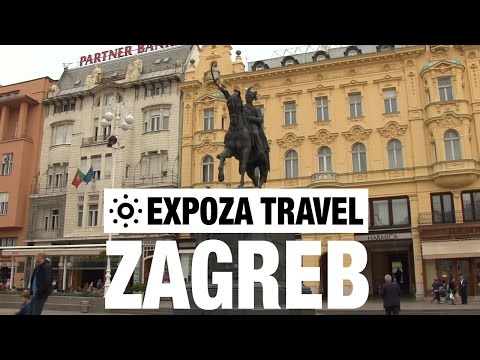
- Ban Jelačić Square ▶ 0:59
The main square with the equestrian monument of Ban Jelačić, the national hero who once helped put down a revolt in Budapest.
- Kaptol ▶ 1:33
The Catholic heart of Croatia since the Middle Ages, with a row of capitular buildings inhabited from the 15th to 18th century.
- Zagreb Cathedral ▶ 2:23
The cathedral dominates the Kaptol district with its two steeples, combining Romanesque, Gothic and Neo-Gothic elements, with a Baroque pulpit and the sarcophagus of Bishop Stepić behind the main altar.
- Franciscan Monastery ▶ 4:01
The cathedral grounds and Franciscan Monastery are well worth a visit; the Gothic structure has stained glass windows by Ivo Dulčić and a chapel decorated with stucco and Baroque paintings.
- Tkalčićeva Street ▶ 5:31
An old lane now a pedestrian zone lined with the gardens of the area's main cafes and several historic buildings, a popular destination.
- Museum of the Poor Clares Convent ▶ 5:52
The former Convent of the Poor Clares is now a museum with archaeology from antiquity and prehistory, including Illyrians, Romans, Slavs and Avars, plus paintings and documents tracing the city's history since 1094.
- St. Mark's Church ▶ 7:39
The colorful Gothic landmark on St. Mark's Square, first mentioned in documents in 1256, where a market was once held in front of it.
- Stone Gate ▶ 8:16
The last of the four town gates separating the Upper and Lower Town, containing an image of Mary still worshipped today, found after a devastating fire.
- St. Mark's Square (Old Town Square) ▶ 8:31
A stone road leads up to the Old Town Square past the town hall and the city's oldest pharmacy.
- Manduševac Fountain ▶ 9:06
An impressive fountain created in 1910 by artist Simon Rendi, showing a water-spouting fisherman with a snake.
- Dverce Palace ▶ 9:23
A palace next to the square with a stone portal, designed and lived in by Jesuit monks, now a cultural center with galleries in the Kovačić courts.
- St. Catherine's Church ▶ 9:55
On the narrow Catherine Square, built by the Jesuits as part of their monastery complex, with stone figures of four evangelists and St. Catherine set within the church after a devastating earthquake.
- Blood Bridge (Krvavi Most) ▶ 10:54
The so-called Blood Bridge was for centuries the natural border between the two cities and the scene of many bloody massacres; the bridge no longer exists, built into a narrow lane.
- Church of St. Mary ▶ 11:23
Formerly situated on a creek, the monastery church became a parish church and was extended with three naves and splendid furnishings, with 18th-century statues and paintings by Slovenian artists.
- Dolac Market ▶ 12:13
The vast marketplace next to the city center, called the belly of Zagreb, with a colorful range of products from Central and Southern Europe and the Balkans.
- Strossmayer Promenade (Strossmayerovo šetalište) ▶ 12:47
Created after the demolition of the southern city wall, planted with chestnut trees and lanterns, with a bench of the poet Antun Gustav Matoš and a splendid view over the city's rooftops.
- Lotrščak Tower ▶ 13:38
Built to protect one of the city's four gates, the tower offers a remarkable view of the Lower City and Upper Town; a cannon is fired from it promptly at noon each day.
- Zagreb Funicular ▶ 14:28
Since 1889 the cable car has connected the Upper Town to the Lower Town, built by an Austrian company, and is very popular with one and all.
- Ilica ▶ 15:21
The busy Lower Town street explored by tram, circling the city and traveling between its two main districts, designed by architect Milan Lenuci.
- Britanski trg (British Square) ▶ 16:08
Reached via Ilica, where each Sunday there's a well-attended and unusual flea market, and on weekdays a normal but quite expensive market.
- Flower Square (Cvjetni trg) ▶ 16:43
A pedestrian zone in the Lower Town framed by a beautiful church and town houses, with a statue of Croatian poet Petar Preradović in the middle.
- Croatian National Theatre ▶ 17:20
Inaugurated in 1895, it dominates the center of Tito Square, created by the two main architects of the Austro-Hungarian monarchy, Fellner and Helmer.
- Trešnjevka ▶ 17:55
The district south of the Central Station, integrated into the city in 1927, where many buildings were constructed for the large number of industrial workers.
- Jarun ▶ 18:35
A recreation area on the southwestern outskirts, a paradise for water lovers with a small lake and canals formed by the Sava River; it hosted the 1987 Universiade and is a favorite weekend destination.
- Court of the Three Mažuranić Brothers ▶ 19:09
A typical Lower Town courtyard with floral tranquility, a green oasis surrounded by residential buildings and a relaxing place amid a busy city.
- Zagreb Botanical Garden ▶ 19:44
Located in the south, it contains 10,000 tree and plant varieties including Alpine, Mediterranean and exotic species, with small ponds across its 4.7 hectares.
- Maksimir Park ▶ 20:35
The city's largest and oldest park, with a large main gate, several avenues and artificial ponds designed in English landscape style.
- Zagreb Zoo ▶ 21:09
A zoo located near one of the lakes in the vast Maksimir park, containing animals from all over the world, including lions and bears.
- Mirogoj Cemetery ▶ 22:23
An imposing arcaded facade forms the entrance to this cemetery laid out as a park, an artistic masterpiece where leading sculptors built tombs for famous personalities, now an open-air museum and one of Europe's most beautiful cemeteries.
- Medvedgrad Fortress ▶ 23:23
A narrow mountain road leads up to Medvednica Nature Park outside the city gates, where the medieval Medvedgrad Fortress sits on a rock with double fortified walls and mighty gun turrets, built in the 13th century when the Tatars attacked.
- Medvednica Nature Park ▶ 23:23
The nature park outside the city gates, with 23,000 hectares of natural landscape and a stone chapel dedicated to Saints Philip and James.