 PlaceTube
Bhutan (Asia) Vacation Travel Video Guide
Open in PlaceTube Watch on YouTube
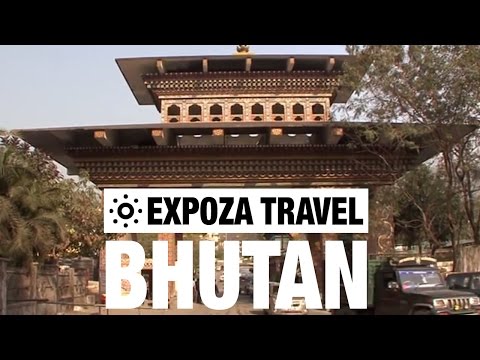
Places in this video
- Thimphu ▶ 0:28
The capital of Bhutan, 2,300 m above sea level, described as a challenging place to travel to and not a typical capital city, dominated by Buddhism.
- Changgangkha Temple ▶ 1:19
One of the oldest Lhakhangs in the Thimphu Valley, built in the 15th century by a descendant of the founder of the Drukpa school and renovated at the end of the 20th century.
- Pangri Zampa Temple ▶ 2:46
Two impressive white buildings on the banks of the Wang River where Shabdrung Ngawang Namgyal lived after arriving in 1616; today a monastic school of astrology sits behind a long prayer wall.
- Centenary Farmers' Market ▶ 3:53
A colorful meeting place for farmers and traders with a fine display of vegetables, fruit, spices and all kinds of goods.
- National Memorial Chorten ▶ 4:08
An impressive monument with a golden top built in 1974 in honor of the late Third King, containing only a photo of him.
- Tashichho Dzong ▶ 4:39
The 'Fortress of Auspicious Religion', built at the command of the Shabdrung, summer residence of King and clergy and seat of government since 1641.
- Simtokha Dzong ▶ 4:57
A typical Bhutanese fortress south of Thimphu where the streets diverge, the 'Palace of profound tantric teachings' designed in 1634 to ward off attack.
- Dochula Pass ▶ 6:34
The road to Punakha crosses this pass where 108 chortens appear in the mist, containers for religious offerings that symbolize Buddha's consciousness.
- Druk Wangyal Lhakhang ▶ 7:06
A temple that suddenly appears out of the fog on a nearby hill, said to be inspired by the model of Zangdok Palri, the copper palace of Guru Rinpoche, in memory of the Fourth King.
- Lobesa ▶ 8:33
About two hours' drive from Thimphu, a settlement on a crossroad leading to Punakha and Wangdue Phodrang, developing quickly with attractive buildings and a street market.
- Punakha Dzong ▶ 9:45
A monastery castle strategically located at the meeting of two rivers, Bhutan's winter capital for over 300 years, blessed by Guru Rinpoche and built after the Shabdrung's prophetic dream.
- Punakha Tshechu ▶ 11:25
The sacred victory festival in Punakha, a three-day celebration where thousands fill the courtyard for religious processions, masked ritual dances, clowns and singing groups.
- Chimi Lhakhang ▶ 15:12
An idyllic temple on a hill in the Punakha valley surrounded by paddy fields, a pilgrimage place for infertile women, founded by Ngawang Chögyel in 1499.
- Wangdue Phodrang Dzong ▶ 16:07
A fortified monastery high above the Puna Chang River, built in the shape of a sleeping bull after a deity appeared in a dream; charming, rustic and built in various stages.
- Paro ▶ 18:23
A town settlement founded in 1985 that has developed rapidly along the river, with a bridge decorated with prayer flags and a main street lined with small shops.
- Druk Choeding Temple ▶ 19:12
A temple in Paro built in 1525 by the great-grandfather of the Shabdrung as a residence on his arrival in the Paro Valley.
- Dangla Lhakhang ▶ 20:03
A small temple shaped like a Tibetan chorten, built according to legend above the cave where a nine-headed turtle monster once lived.
- Paro Dzong ▶ 20:51
One of the most beautiful buildings in Bhutan, a mighty fortress that once controlled the route by which Tibetan armies invaded, with a central tower and temple in its courtyard.
- Kyichu Lhakhang ▶ 21:54
A temple on a slope above Paro, one of 108 temples built on the body of a giant female demon to prevent the spread of Buddhism, placed on her left foot.
- Drukgyal Dzong ▶ 22:56
A fortress at the end of the valley about 15 km from Paro, now only ruins recalling its heroic role defending against Tibetan incursions, with the village of Tsento at its foot.
- Paro Taktsang (Tiger's Nest) ▶ 24:01
One of the most remote monasteries in the world, reached by an arduous ascent on horseback and foot, nestling in steep rock at 2,950 m where Guru Rinpoche landed on the back of a flying tigress.
Cities in these videos
Thimphu · Lobesa · Punakha · Wangdue Phodrang · Paro