 PlaceTube
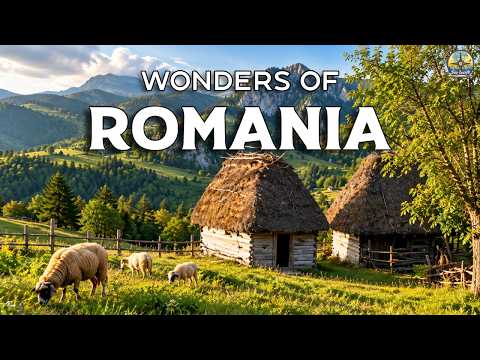
Romania: Europe’s Last True Wilderness and Medieval Villages | 4K Travel Documentary
Open in PlaceTube Watch on YouTube
Places in this video
- Alba Carolina Citadel ▶ 1:59
The Habsburg star-shaped fortress begun in 1715, with baroque carvings over the main gate and a cathedral inside its walls where King Ferdinand and Queen Marie were crowned in 1922.
- Bran Castle ▶ 4:13
A castle perched on a cliff above the Transylvanian forests, completed in 1388 as a military fortress and customs station, later Queen Marie's summer residence and now Romania's first private museum.
- Vidraru Dam ▶ 6:24
A 166 m curved concrete dam built between 1960 and 1965, whose reservoir swallowed a village; the Transfăgărășan road runs across its top.
- Lake Vidraru ▶ 7:11
A turquoise reservoir surrounded by forested ridges, where boats weave between sheer cliffs.
- Iron Man Statue ▶ 8:01
A 10 m stainless steel figure holding a lightning bolt on Plescia Mountain, built in memory of the dam workers.
- Bigar Waterfall ▶ 8:41
The moss-covered waterfall in Miniș Canyon that spreads into dozens of thin strands, ranked among the world's most unique waterfalls.
- Cetățuia Monastery ▶ 10:48
A fortified monastery built 1669–1672 by Gheorghe Duca on one of Iași's seven hills, with watchtowers and vineyards still surrounding its walls.
- Brașov Old Town ▶ 13:09
The Saxon citadel founded as Kronstadt, heavily fortified in the 15th century, whose historic center remains largely intact.
- Council Square ▶ 14:11
The commercial and social heart of the old town for centuries, lined with yellow, ochre and pale blue baroque and renaissance facades.
- Black Church ▶ 14:33
The largest Gothic structure in Romania, just south of Council Square.
- Tâmpa ▶ 14:33
The green mountain rising behind the old town, rusty orange in fall.
- Council House ▶ 15:01
The 1420 building in the center of the square that now houses the Brașov County Museum of History.
- Neamț Citadel ▶ 15:38
A 14th-century fortress at 480 m overlooking the Moldova Valley, reinforced by Stephen the Great, restored in 2015 and reached by a long wooden bridge.
- Decebalus Rock Sculpture ▶ 17:33
The colossal face of King Decebalus carved into the cliff at the Iron Gates on the Danube near Orșova.
- Peleș Castle ▶ 19:15
King Carol I's castle powered by its own stream, filled with some 60,000 artworks, with seven terraces of statues and Carrara marble, now the Peleș National Museum.
- Lake Izvorul Muntelui ▶ 21:28
The largest artificial lake on Romania's interior rivers, created by the Bicaz Dam, where visitors boat and kayak beneath the Ceahlău mountains.
- Brașov Citadel Fortress ▶ 24:03
A hilltop fort begun in wood in 1524 and rebuilt in stone, with a 1580 gate, later a prison and warehouse, now housing a restaurant and weapons exhibit.
- Piatra Craiului Mountains ▶ 26:09
A 25 km limestone ridge and nature reserve since 1938, home to chamois, bears, wolves and over 1,100 plant species.
- Corvin Castle ▶ 28:14
A 1446 castle on a rocky outcrop commissioned by John Hunyadi, one of Europe's largest castles, with a legendary well dug by Turkish prisoners.
- Râșnov Citadel ▶ 30:27
A peasant refugee fortress on a hilltop with sheer cliffs on three sides, breached only once in 1612, now undergoing restoration.
- Timișoara Orthodox Cathedral ▶ 32:13
A cathedral of multicolored brick and geometric towers combining many architectural traditions, its bells harmonized by composer Sabin Drăgoi.
- Bicaz Gorge ▶ 34:19
A narrow canyon in the eastern Carpathians where limestone cliffs close in so tightly a tunnel was carved through the rock; a spectacular drive connecting Transylvania to Moldavia.
- Lake Bâlea ▶ 36:15
A glacial lake in the Făgăraș Mountains reached only via the Transfăgărășan, with red-roofed wooden chalets along its shore.
- Pișoaia Waterfall ▶ 37:38
An 18 m waterfall coated in orange amber travertine, dissolving into dozens of streams over the mossy cliffside, just 500 m from the road to Vidra.
- Pelișor Castle ▶ 39:08
King Carol I's 1899–1903 Art Nouveau residence for Ferdinand and Queen Marie, with 99 rooms and one of Romania's most unique royal collections.
- Brașov city walls ▶ 40:37
Walls begun in 1395 that by 1641 had 28 watchtowers and eight guild-maintained bastions, once over 3 km long and 12 m high.
- Ialomița Cave ▶ 42:05
A cave at 1,530 m in the Bucegi Mountains whose huge portal sheltered the 16th-century Ialomița Monastery; 400 m are open to visitors.
- Emerald Lake ▶ 43:36
A turquoise lake in an abandoned basalt quarry, colored by algae and fed by spring water, surrounded by vertical basalt walls.
- Racoș Volcano ▶ 45:23
An extinct volcano with a deep crater of red and black scoria, ash and basalt columns, once mined by quarry workers.
- Sighișoara Clock Tower ▶ 47:34
A 64 m tower standing since the 14th century as the entrance to the citadel, with a 1648 clock and seven rotating wooden figurines; now a UNESCO World Heritage site.
- Mocănița Railway ▶ 49:20
Europe's last active steam-powered logging railway, a 21 km, six-hour round trip at 30 km/h through the narrowing valley.
- Bârsana Monastery ▶ 51:10
A Maramureș wooden church complex with Gothic structure and baroque decoration, its 57 m bell tower once the tallest wooden structure in Europe, UNESCO-listed in 1999.
- Făgăraș Fortress ▶ 53:11
A moat-ringed fortress existing since 1310, expanded into a square castle with five watchtowers, now a museum of regional history.
- St. John the Baptist Cathedral ▶ 54:58
A modern cathedral with a gilded dome standing in deliberate contrast to the medieval fortress nearby.
- Aiud Citadel ▶ 56:25
A 14th-century stronghold at the heart of town, containing a Gothic Calvinist church, a Lutheran church and a princely palace housing the Aiud History Museum.
- Bega Canal ▶ 57:14
A canal dug from 1728 running over 100 km to the Tisza in Serbia, with a 1910 hydroelectric plant and now a 70 km cycling path along its banks.
- Alexandru Ioan Cuza Park ▶ 59:16
Bucharest's IOR Park, built 1965–1970 with trees planted by local children, its Titan Lake split by a road with five small islands.
- Moldoveanu Peak ▶ 1:00:46
The highest point in Romania, in the Făgăraș Range, where villages above 1,200 m remain permanently inhabited and cable cars run in summer.
- Cantacuzino Castle ▶ 1:02:39
A 1911 neo-Romanian castle at the foot of the Bucegi Mountains, whose visitor numbers soared after it appeared in Wednesday.
- Bârsana wooden church ▶ 1:04:44
One of the eight UNESCO-listed wooden churches of Maramureș, rebuilt by hand after a 1717 Tatar raid, with a 57 m bell tower.
- Salina Turda ▶ 1:06:46
An ancient salt mine opened to the public in 1992, with a 120 m deep mine and underground lake for boating, the Rudolph Mine, and salt-saturated air at 11–13°C.
- Transfăgărășan ▶ 1:08:59
A 151 km national road built 1970–1974 as a military mountain pass, with 27 viaducts and bridges and continuous curves.
- Viscri Fortified Church ▶ 1:11:04
A fortified church begun around 1100 and reinforced in the 15th century, in a Saxon village of whitewashed houses and red tiled roofs; UNESCO-listed in 1999.
- Palace of Culture ▶ 1:12:54
Begun in 1906 to compensate Iași for losing its capital status, a neo-Gothic ivory-white palace housing four museums, with a statue of Stephen the Great before its gate.
Cities in these videos
Alba Iulia · Bran · Arefu · Bozovici · Iași · Brașov · Târgu Neamț · Orșova · Sinaia · Bicaz · Zărnești · Hunedoara · Râșnov · Timișoara · Cârțișoara · Vidra · Moroeni · Racoș · Sighișoara · Vișeu de Sus · Bârsana · Făgăraș · Aiud · Bucharest · Victoria · Bușteni · Turda · Viscri