 PlaceTube
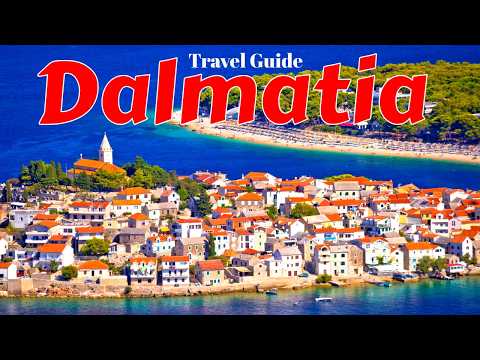
Dalmatia | Croatia #dalmatia #croatia #opatija #pula #plitvice
utifilm ·
Open in PlaceTube Watch on YouTube
Places in this video
- Rijeka ▶ 1:37
The third biggest city on the coast, lying on the northern part of Kvarner Bay, framed by mountains, with a harbor dating to 1719 that was the Austro-Hungarian monarchy's main sea port.
- Korzo ▶ 2:58
The ever-busy pedestrian main street starting from Jadranski Square near the harbor, known for elegant shops, cafes with terraces and intimate restaurants.
- Trsat Castle ▶ 3:10
The old castle of the Frankapani family sits on top of the mountain above the promenade along the old city wall, a pleasant hiking spot today.
- City Clock Tower ▶ 3:48
The crown of the promenade is the town gate with the clock tower, decorated with Rijeka's coat of arms featuring an eagle and crown, with baroque statues of Leopold I and Charles IV.
- Opatija ▶ 4:33
A health resort whose Austro-Hungarian villas recall Carlsbad or Bad Ischl, with over 2,500 sunny hours, landscaped promenades and clean sandy swimming spots.
- Zadar ▶ 6:47
A city with a unique layout: a modern new town along the bay and an old town crowded with monuments on a peninsula opposite, linked by a footbridge.
- Church of St. Chrysogonus ▶ 7:55
The Romanesque St. Chrysogonus church, whose high altar and frescos date from the 13th century, contrasts with the elegant colonnade of the street front.
- Church of St. Mary ▶ 8:50
Renovated in Baroque style, its bell tower is almost 900 years old, the oldest bell tower in Dalmatia.
- Church of St. Donatus ▶ 10:20
The fortress-like pre-Romanesque church beside the Roman forum, built in the 9th century with Roman stones, is Zadar's most significant monument and hosts classical concerts thanks to its acoustics.
- Roman Forum ▶ 10:24
The forum surfaced after World War II bombing; a Corinthian pillar that served as a pillory in the Middle Ages stands among the ruins.
- People's Square ▶ 11:10
The current main square where street musicians entertain tourists eating ice cream, with the Renaissance city loggia and guard loggia built in 1565 and a Baroque clock tower added in the 18th century.
- Church of St. Simon ▶ 12:05
Home to the famous 250 kg silver coffin of St. Simon, decorated with scenes of King Louis I's deeds and held by two bronze angels made from recycled Ottoman cannons.
- Five Wells Square ▶ 12:50
The square of the five wells, with the classical Pet Bunara building, stairs leading up to the city park and the huge angular fortress tower Babakula at its corner.
- Biograd na Moru ▶ 13:40
Once called Tengerfehérvár, it was the coronation site of Croatian kings from 1019 and where King Coloman was crowned Croatian king in 1102; today a small holiday resort on a peninsula.
- Krka National Park ▶ 15:43
The 45 km Krka River and its special waterfalls became Croatia's seventh nature reserve in 1985; boats and buses bring visitors, and the falls of Skradinski buk enchant everyone.
- Skradinski Buk ▶ 18:50
The most spectacular waterfall of Krka, with 17 steps created by limestone sediment, where braver visitors can swim in the lake or stand under the cascading water.
- Šibenik ▶ 20:15
Less well known than Dubrovnik, Rijeka or Split, its gorgeous old town of white stone medieval houses and narrow lanes sits near Krka National Park and the Kornati Islands.
- St. James Cathedral ▶ 22:48
The main work of sculptor and architect Juraj Dalmatinac, who worked on it from 1431 to 1473; its western gate depicts Jesus and the apostles, the northern gate Adam and Eve.
- St. Michael's Fortress ▶ 25:06
The Venetian fortress rises 80 m above the town, offering beautiful views of Šibenik Bay, St. Anthony Channel and the Krka estuary; sailors still signal boats with flags from the top.
- Primošten ▶ 26:03
Once an island settled in the 16th century by Bosnians fleeing the Ottomans, now a romantic small town of 1,400 that wants to become an art village, nicknamed 'Snob City' by locals.
- Trogir ▶ 28:20
A town that once could match Ragusa or Venice, with a palm-lined promenade, zigzag medieval streets and a UNESCO-listed old town on a former island.
- St. Lawrence Cathedral ▶ 30:07
Perhaps the most beautiful monument of Trogir, harmonically mixing Roman, Gothic and Renaissance elements.
- Kamerlengo Castle ▶ 31:07
The fortress at the end of the island, begun under the Venetians and finished by them, with zigzag walls and a corner bastion; defenders once blocked the harbor with huge iron chains.
- Diocletian's Palace ▶ 33:48
Split's most famous monument, a UNESCO World Heritage site built of white stone from Brač with 66 ft high walls, still inhabited by thousands of people today.
- Cathedral of Saint Domnius ▶ 35:16
Its bell tower surpasses the palace walls; the entrance was once guarded by two black granite sphinxes brought from Egypt, of which only one remains in place.
- Grgur Ninski statue ▶ 39:23
The enormous statue by Ivan Meštrović of Archbishop Gregory holding the Bible is believed to bring luck if you rub its toe.
- Makarska ▶ 40:37
A holiday resort on a horseshoe bay protected by the St. Peter and Osejava peninsulas, with a palm boulevard behind its mile-long gravel beach and the Biokovo mountain shielding it from rain clouds.
- St. Mark's Church ▶ 41:43
The 18th-century church stands on the main square, framed by green blooming trees on a hill dwarfed by the high mountain behind.
- Dubrovnik ▶ 43:48
The ancient town, once Ragusa, has suffered wars and earthquakes but has regained its glory with new red roofs and white stone walls; its thick walls and Stradun make it unmissable.
- Stradun ▶ 46:13
The perpendicular 298 m long, 20 m wide main street, called Placa in Croatian, reached from Pile Gate along steep stairs among houses.
- Franciscan Church and Monastery ▶ 46:57
Its huge bell tower dominates the town picture, with three floors in three different styles, from Gothic to late Gothic to simple loopholes.
- Sponza Palace ▶ 47:14
Its bell tower's clock symbolizes the sun, with an elongated ray showing the exact time.
- Church of St. Blaise ▶ 47:46
The three-nave Baroque church built in 1715 honors the city's patron saint, shown holding the city in his hand.
- Orlando's Column ▶ 48:06
Made by master Antun Dubrovčanin in 1418, it symbolized the city's independence and was also used as a pillory; its forearm served as a unit of measurement.
- Onofrio's Fountain ▶ 48:25
The little fountain by Petar Martinov of Milan, decorated with dolphins and gargoyles, spouts water next to the guard building.
- Dubrovnik city walls ▶ 52:08
You can climb the walls right of Pile Gate; 15 bastions offer a fascinating view over the city along nearly 2 km of walls.
- Dubrovnik Cathedral ▶ 52:29
The huge Baroque three-nave Our Lady Cathedral, built at the turn of the 15th and 16th centuries, has an altarpiece by Titian and pictures by Raphael; its treasury holds the bones of St. Blaise.
- Rector's Palace ▶ 53:26
The Senate held congresses here and Ragusa was governed from this palace, above whose gate a carved sentence told politicians to forget private business and deal with public matters.
- Church of St. Ignatius ▶ 54:19
Reached by a nice Baroque staircase, the Jesuit church was designed by Roman architect Andrea Pozzo, built under the influence of the Counter-Reformation.
- Pile Gate ▶ 56:25
Tourists usually enter the old town through this gate, a round-arched bastion with medieval drawbridges that were raised and closed every night.
- Large Onofrio's Fountain ▶ 56:25
The 16-sided domed fountain by Neapolitan master Onofrio della Cava stands in the square behind Pile Gate, its gargoyles depicting human and animal faces.
Cities in these videos
Rijeka · Opatija · Zadar · Biograd na Moru · Šibenik · Primošten · Trogir · Split · Makarska · Dubrovnik