 PlaceTube
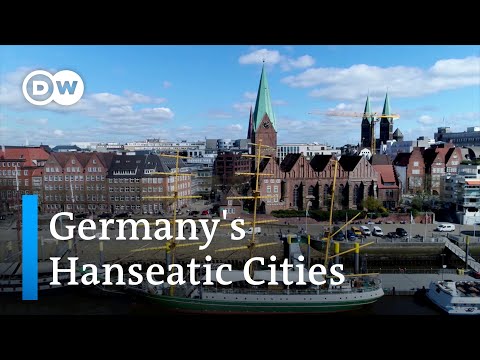
A Flying Guide: Germany's Hanseatic Cities | From Hamburg to Wismar | Cities in Germany's North
Open in PlaceTube Watch on YouTube
Places in this video
- Hamburg ▶ 0:40
Hamburg is one of the oldest members of the Hanseatic League, located on the Elbe with Germany's largest seaport.
- Speicherstadt ▶ 1:02
The Speicherstadt is the largest historical warehouse complex in the world and part of a UNESCO World Heritage Site.
- Kontorhaus Quarter and Chilehaus ▶ 1:17
The Kontorhaus quarter with the Chilehaus is part of the UNESCO World Heritage Site; the Chilehaus was considered Hamburg's first high-rise with its ten floors.
- Elbphilharmonie ▶ 1:37
Hamburg's new landmark, the Elbphilharmonie Concert Hall, was built on an old warehouse, connecting history with modernity.
- Lübeck ▶ 1:54
Lübeck was for many years the leading city of the alliance, known as the "Queen of the Hanseatic League".
- European Hanseatic Museum ▶ 2:09
The European Hanseatic Museum in Lübeck documents the rise and fall of this trading power.
- Holstentor ▶ 2:09
The famous Holstentor Gate, a late gothic building and remnant of the city fortification, is the landmark of Lübeck.
- Bremen Market Square ▶ 2:27
Bremen's history is evident around the marketplace, where the town hall and Roland statue stand as symbols of the city's freedom.
- Bremen Town Hall ▶ 2:44
The town hall and the Roland statue are both part of a World Heritage Site.
- Roland Statue ▶ 2:44
The Roland statue is a symbol of Bremen's freedom and part of a World Heritage Site.
- Wismar ▶ 3:08
Wismar on the Baltic Sea has imposing brick churches, restored gabled houses and a harbor; its old town is a UNESCO World Heritage Site.
- Gewölbe ▶ 3:08
An eye-catcher in Wismar is the red and white half-timbered house called the Gewölbe (vault).
- Stralsund ▶ 3:40
Stralsund is located on a strait and known as the gateway to the island of Rügen; its medieval center in Brick Gothic style is a UNESCO World Heritage Site.
- Lüneburg ▶ 4:07
Lüneburg, known as the Hanseatic City on the Salt, was an important supplier of salt and is characterized by typical North German red-brick architecture.