 PlaceTube
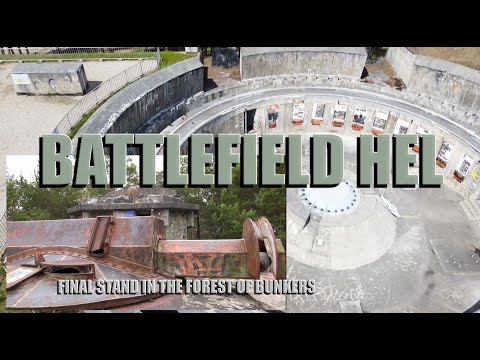
BATTLEFIELD HEL(L) - THE FINAL STAND IN THE FOREST OF BUNKERS special episode
Lost Battlefields w Tino Struckmann ·
Open in PlaceTube Watch on YouTube
Places in this video
- Hel Fortified Area ▶ 0:04
The presenter introduces the Hel Peninsula as one of his most interesting battlefields, a large fortified area built by the Polish Army from 1931 onward with concrete artillery positions, bunkers and underground power plants.
- Hel Peninsula ▶ 0:21
He explains the peninsula became part of Poland after WWI and that its narrowest point is only about 90-200 meters wide, making it a natural bottleneck for any attacking army.
- Gdynia ▶ 0:21
The Polish naval base constructed on the peninsula was to defend the main naval port of Gdynia, mentioned as the key harbor the Hel guns protected.
- Westerplatte ▶ 1:27
He describes the small Polish base at Westerplatte where just over 200 soldiers quietly reinforced their positions and held out for almost a week against overwhelming German numbers and air raids.
- Free City of Danzig ▶ 1:27
He notes the Free City of Danzig was mostly pro-German with its own Nazi party, SA and SS regiment, and that the peninsula is barely visible from it.
- Westerplatte building (opening shot site) ▶ 4:04
Standing at a building on Westerplatte, he corrects the myth that the Schleswig-Holstein's fire here was the opening shot, noting another town was shelled seven minutes earlier.
- Polish coastal bunker line ▶ 6:46
He walks the Polish bunker line across the neck of the peninsula, with anti-tank ditches, mines and trenches, where 400 troops held the German advance for 32 days.
- Polish heavy bunker and command post ▶ 9:13
Inside a heavy Polish bunker and command post he shows the 37 mm anti-tank gun position, machine gun domes, thick walls, ventilation and a working bunker stove.
- Polish bunker interior displays ▶ 11:27
He explores the preserved interior of a Polish bunker with Maxim machine gun mounts, close-defense positions, steel dome embrasures and displays of munitions.
- Polish bunker with dry closet ▶ 18:27
In another Polish bunker he examines the Maxim position, the Polish dry closet similar to the German bunker toilet, and the ventilation and fighting positions.
- Beach bunkers on Hel ▶ 25:56
He visits the sand-covered bunkers by the beach, with steel domes, firing positions facing the ocean and speaking tubes, noting the beach is right there.
- Helus Laskowski Battery ▶ 33:25
He shows the four-gun battery of 152 mm Bofors guns named after Heliodor Laskowski, now with a Soviet 130 mm gun in place, which fired for all 32 days of the battle.
- Museum of Coastal Defense ▶ 37:13
The battery buildings were turned into a museum; the director explains the society of four enthusiasts created the Museum of Coastal Defense with no funding and now over 100,000 visitors a year.
- Emergency power station bunker ▶ 40:05
With a local expert he tours the 1939 emergency power station bunker with its original electrical equipment, radio room, ventilation filters and command shelter three meters underground.
- German 40.6 cm gun pits ▶ 46:25
He explains the Germans built on the Polish defenses, installing three huge 40.6 cm Adolf guns and the Würzburg radar before the guns were moved to France as the Lindemann battery.
- Hel military museum ▶ 48:03
He calls the island practically one large museum, with gun pits, bunkers and observation towers turned into a fantastic collection run by a dedicated group of volunteers.
- Ammunition train ▶ 49:05
He rides the ammunition train that still runs between the ammunition bunker and one of the large gun pits, and later through the railway museum in a munition bunker.
- Shooting range in gun pit ▶ 49:21
The second large gun pit has been turned into a shooting range where visitors can test their aim, though the pit was filled in for it.
- Railway museum in munition bunker ▶ 1:03:03
He visits a small railway museum inside one of the munition bunkers, following the route the munition train would have taken.
- Park of guns and artillery ▶ 1:04:38
The munition train takes him to a park full of guns, cannons and artillery pieces, mostly Cold War, where visitors are allowed to touch and climb on the exhibits.
- German observation tower ▶ 1:06:31
He climbs the heavily reinforced, camouflaged German observation tower with a 10.5 m rangefinder on top with a 50 km range, passing displays and a doctor's office in the base.
- Würzburg radar observation tower ▶ 1:14:37
He finds a post-war observation tower built on the foundations of the German Würzburg radar mounting, noting the Russians built on top of it.
- German rangefinder bunker ▶ 1:18:35
He climbs to a 1940 German 4-meter rangefinder still in place, then explores the fire-control bunker with its observation room, speaking tubes and rotating platform.
- Flak tower and gun positions ▶ 1:28:36
Near the railroad he examines a small flak tower with a cooling basin, several overgrown large flak positions and octagonal munition stores.
- Second rangefinder bunker ▶ 1:33:09
He is astonished to find a second rangefinder bunker with its steel observation dome and rangefinder still inside, then explores its underground rooms and tunnels.
- Polish underground command shelter ▶ 1:45:03
He crawls into a large Polish underground shelter and command post with gas filters, machine room, airlock, crew quarters and a water heater, built next to the German fire control center.