 PlaceTube
Monks Mound
Collinsville, United States · Videos: 41 · Map (Approximate location)
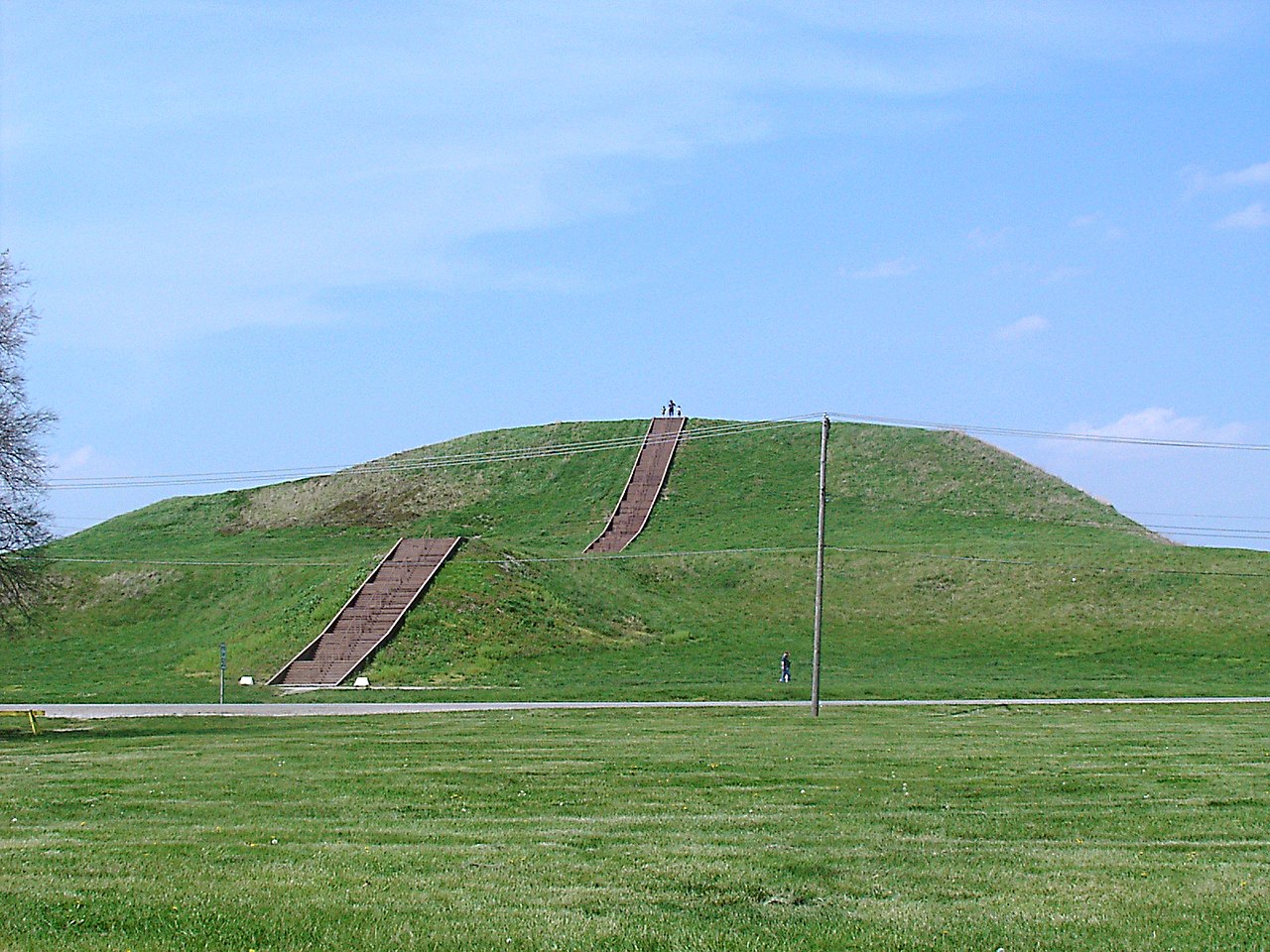
Largest Pre-Columbian earthwork in the Americas
Monks Mound is the largest Pre-Columbian earthwork in the Americas and the largest pyramid north of Mesoamerica. The beginning of its construction dates from 900 to 955 CE. Located at the Cahokia Mounds UNESCO World Heritage Site near Collinsville, Illinois, the mound size was calculated in 1988 as about 100 feet high, 955 feet long including the access ramp at the southern end, and 775 feet wide. This makes Monks Mound roughly the same size at its base as the Great Pyramid of Giza (13.1 acres). The perimeter of its base is larger than the Pyramid of the Sun at Teotihuacan. As a platform…
What travel creators say
The presenter describes Monks Mound as the largest pre-Columbian earthwork in the Americas, about 30 metres tall with a base larger than the Great Pyramid of Giza, built by hand in stages.
The immense earthen platform dominated the city's center, with the great plaza opening beside it; its scale is easy to see today, though the life once around it is harder to recover.
The largest earthwork built in the Americas before Columbus, about 30 meters high with a base covering some 5.5 hectares, all carried by hand in woven baskets; a great building once stood on its summit.
The video examines this immense earthen platform mound at the center of Cahokia, about 30 meters high and covering more than five hectares, and discusses how it was built by hand from basket loads of earth.
The video describes Monks Mound at Cahokia, an artificial earthen mound about 100 ft tall built from countless baskets of earth, the largest prehistoric earthen mound in North America.
Cahokia's hundred-foot central mound of over twenty-five million cubic feet of earth, cited as the kind of scale that seems to demand a throne behind it.
They make the big climb up Monk's Mound, sweating in the humid swamp weather, and spot the St. Louis Arch from the top.
The largest of Cahokia's more than 100 mounds, its base covers about 14 acres and it rises in terraces to roughly 100 feet, with a large building for the elite on top; visitors can still climb it today.
The largest earthen structure in the Americas, rising nearly 100 feet; climb to the top at sunrise for a breathtaking view.
The largest earthwork in the Americas north of Mexico, about 100 feet tall and built from an estimated 22 million cubic feet of earth carried by hand.
The largest mound at Cahokia, with a footprint bigger than the Great Pyramid of Giza; the hosts climb it in the heat for views toward St. Louis.
The flat-topped earth pyramid rising 100 feet from the city's heart, with a base wider than the Great Pyramid of Giza and a red-painted temple on its summit.
The narrator stands at the base of Monks Mound, a 100-foot earthen pyramid whose summit holds the ruler's temple; its base covers 14 acres, larger than the Great Pyramid of Giza, and was built entirely by human hands.
The presenter describes Monks Mound as a 30-meter earthen pyramid whose base covers more ground than the Great Pyramid of Giza, built in stages over 300 years, with the ruler's palace on top; today you can walk up it and look out over the river.
The largest mound covers 14 acres at its base and rises 100 feet, built by hand with 55 million cubic feet of earth. The presenter says you can climb it and stand on the summit where rulers once stood, and notes it got its name from 19th-century French monks who built a monastery on top.
The presenter describes Monks Mound as an earthen pyramid whose base was larger than the Great Pyramid of Giza, crowned with temples from which leaders and priests looked over the plazas.
The largest prehistoric earthen mound in the Americas, begun around 950 AD; they climb its many stairs to the windy top and spot the St. Louis Arch from up there.
The largest pre-Columbian earthwork in the Americas, rising nearly 100 feet with four terraces; visitors can climb the long stairwell to the top for expansive views, including St. Louis and its Arch.
The presenter points out Monks Mound behind a tree, the massive earthen pyramid at the center of the site, and later notes people walking up it.
The largest earthen monument in North America, built with nearly 15 million basket loads of dirt, with a base larger than the Great Pyramid of Cheops and a temple on top.
Described as the largest earthen mound in North America, roughly 100 feet tall and covering 14 acres at its base, likely used for ceremonial purposes and possibly supporting a temple or elite residence.
Described as the largest prehistoric earthwork in the Americas, rising 100 feet with a base covering over 14 acres, all hand-carried in baskets.
The city's most iconic feature, the largest manmade mound in North America at almost 30 meters tall, with a flat top holding a building thought to be the leader's residence and three terraces of temples and storerooms.
The largest pre-European earthwork in the Americas, about 100 feet high and 15 acres, built from 14 million baskets of earth, with a chief's building once on its summit.
The largest mound at Cahokia, visible throughout the video; the presenter notes people walking up it and points out slumping from heavy rain.
The narrator describes Monks Mound as a four-terraced earthen pyramid over 100 feet tall with a base larger than the Great Pyramids, built from nearly 100 million cubic feet of basket-transported soil and topped by structures for rulers and priests.
The presenter climbs Monks Mound, noting it covers about 14 acres, rises about 100 feet, and was built with roughly 22 million cubic tons of earth, and describes the view over the surrounding mounds.
The largest and central structure of the city, a four-terraced step pyramid reaching about 100 feet in height, offering visitors a fantastic view of the area.
Robert climbs to the top of the largest manmade earthen mound in North America, from where he can see St. Louis in the distance.
The presenter stands on top of Monks Mound at the Cahokia World Heritage Site, noting it was once a thriving city of 30,000+ people.
From videos in other languages
Il tumulo maggiore raggiunge circa trenta metri di altezza e oltre cinque ettari alla base; le sue terrazze raccontano una costruzione articolata nel tempo e sulla sommità sorgeva un grande edificio di legno legato all'autorità del centro.
卡霍基亚遗址中最大最著名的土墩,基底约4万平方米、高约30米,呈阶梯状梯形金字塔,被认为是宗教、政治和社会中心;名字源于19世纪附近曾建修道院的修道士。
Gundukan tanah terbesar di Cahokia setinggi 30 meter dengan luas sama dengan Piramida Giza, dinamai dari biarawan Prancis yang pernah tinggal di sana; presenter menaiki tangga ke teras atas dan memandang St. Louis dari sana.