 PlaceTube
Cueva de las Manos
Perito Moreno, Argentina · Videos: 51 · Map
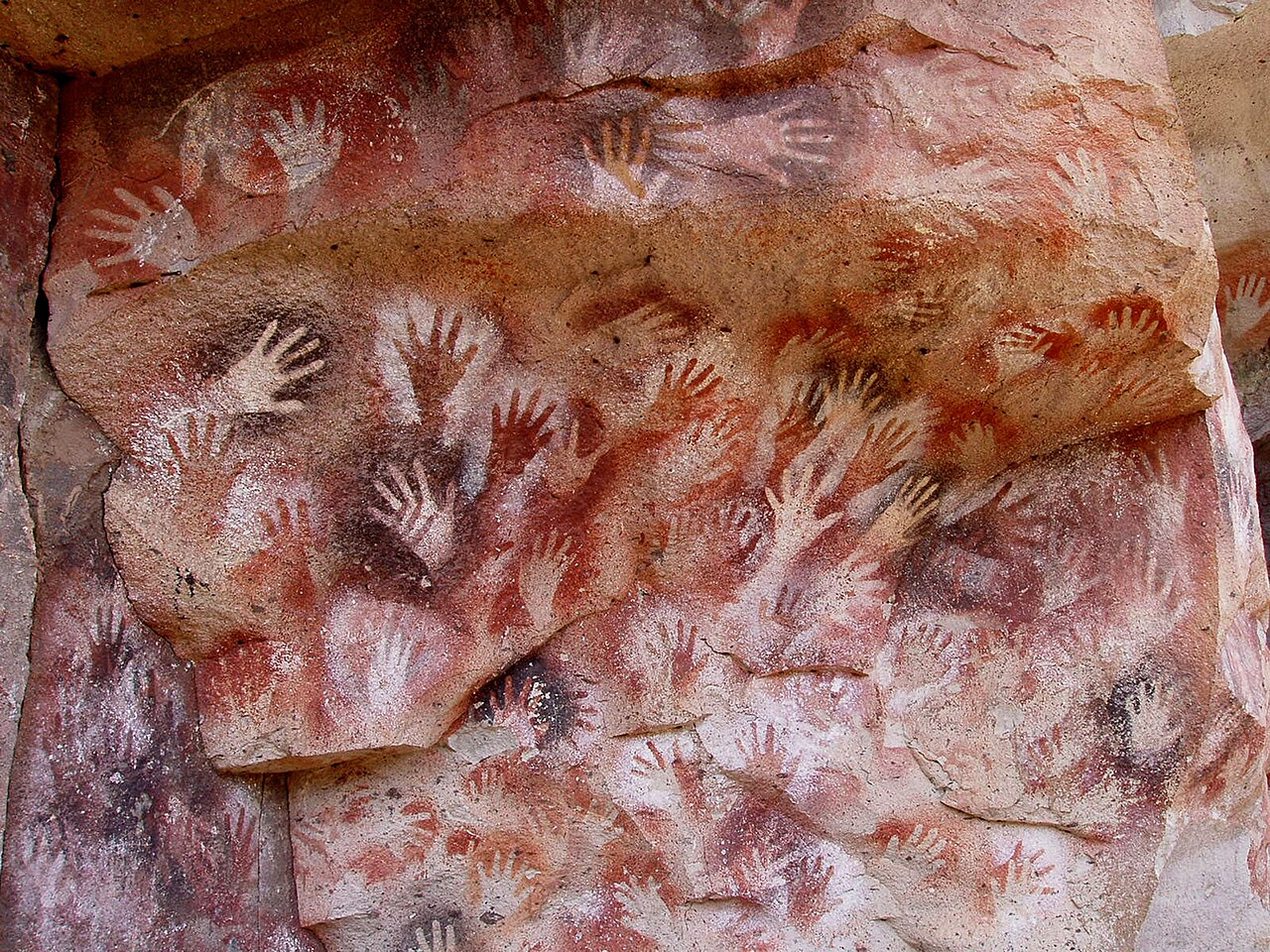
Cave with paintings in Santa Cruz, Argentina
Cueva de las Manos (Spanish for Cave of the Hands or Cave of Hands) is a cave and complex of rock art sites in the province of Santa Cruz, Argentina, 163 kilometres south of the town of Perito Moreno. It is named for the hundreds of paintings of hands stenciled, in multiple collages, on the rock walls. The art was created in several waves between 7,300 BC and AD 700, during the Archaic period of pre-Columbian South America. The age of the paintings was calculated from the remains of bone pipes used for spraying the paint on the wall of the cave to create the artwork, radiocarbon dating of the…
What travel creators say
The video visits the Pinturas River Canyon in Patagonia, where 829 human handprints, one with six fingers, were painted beneath a stone overhang over 9,000 years. UNESCO named it a World Heritage Site in 1999.
The Cave of the Hands, where Tehuelche people left hundreds of handprints over more than 6,000 years, some with six fingers.
After two hours of driving through the desert, the presenter reaches this famous archaeological site hidden in a canyon, where 9,000-year-old handprints and paintings of guanacos, hunting scenes and symbols are preserved.
In the remote canyon of the Pinturas River lies one of the most significant archaeological sites in Patagonia, Cueva de las Manos or the cave of hands. It was designated a UNESCO World Heritage site because of its exceptional prehistoric rock art.
The presenter describes the Cave of Hands in Patagonia, with over 800 handprints dating back 9,000 years, and notes that tourism has forced fences and guided tours to protect the art.
A UNESCO World Heritage cave known for ancient art including stenciled paintings of human hands, reached via the town of Perito Moreno.
The presenter describes this prehistoric site famous for hundreds of stenciled human handprints in vivid colors adorning the rock walls.
The presenter describes this ancient Patagonian cave with over 800 handprints and animal paintings dating back 9,000 years, and discusses theories about their meaning.
The Patagonian cave of the hands dates to an astonishing 7,300 BCE.
One of the oldest archaeological sites in Aysén, near Villa Cerro Castillo.
The presenter introduces the Cave of the Hands, a prehistoric rock shelter covered in hand paintings, and explains it is one of the most famous examples of rock art in the world.
The video introduces Cueva de las Manos as Argentina's prehistoric masterpiece and a UNESCO World Heritage treasure trove of stories spanning 13,000 years, famous for its hand prints.
The presenter arrives at the Cave of the Hands after a windy off-road drive and describes it as a cave where the first inhabitants of these lands painted their hands, with more than 800 painted hands dating back 7,000 to 9,000 years.
The family visits this famous cave in Santa Cruz province, entering from Bajo Caracoles after 47 km of rough gravel; tickets cost $600 for national residents and the guided tour lasts about an hour and a half.
A must-see UNESCO World Heritage cave known for ancient art, especially paintings of human hands.
A World Heritage site with ancient paintings from 7300 BC, though it is in the middle of nowhere and takes long travel to reach.
The presenter visits this remote cave site famous for its ancient hand paintings, describing the long gravel-road journey to reach it and the history of the artwork.
A visit to the Cave of the Hands, the famous prehistoric rock art site.
The video opens with the Cave of the Hands, the ancient rock-art site in Patagonia, and returns to it at the end of the trip footage.
On the way south along Highway 40 you pass the famous painted hands of Cueva de las Manos.
From videos in other languages
ثلاثة أشكال بشرية متوجهة بالأحمر ونقش هندسي وأفعى مرقّطة تحت حافة الصخر تجتمع كلها في كويفا دي لاس مانوس، حيث نُفخت الصبغة حول نحو 800 يد قبل 9000 سنة.
En la cueva observan pinturas rupestres: una figura biomorfa llamada 'gualicho', escenas de caza de guanacos y puntos rojos en el techo. Explican que era un lugar sagrado y de rito de iniciación para los jóvenes.
El video se centra en esta cueva con pinturas rupestres de hasta 9300 años de antigüedad, con negativos de manos y escenas de caza. Destacan la visita guiada, las pasarelas adaptadas desde 2005 y que es el único lugar del mundo con pinturas rupestres de esta magnitud al aire libre.
Cueva de las manos. En un cañón de la meseta patagónica, las paredes de roca guardan el mensaje más antiguo de América del Sur.
약 9천~1만3천 년 전 수렵채집인의 손바닥 스텐실 암각화로 유명한 유네스코 세계유산. 과나코와 사냥 장면, 기하학적 무늬도 남아 있으며 건조한 기후 덕에 잘 보존되어 있다고 소개한다.
En la Cueva de las Manos, cientos de manos estarcidas hace nueve mil años hablan desde la piedra; es uno de los sitios arqueológicos más importantes del mundo, con escenas de caza de guanacos y rituales.
En el museo hay una réplica de la Cueva de las Manos de Santa Cruz, con manos en positivo y negativo y la técnica de la pelotita de pintura lanzada al techo.
La menciona como testimonio de las migraciones de los tehuelches, relativamente cerca de El Calafate para las distancias patagónicas, sobre la ruta 40.
Cueva situada en el cañón del río Pinturas, declarada Patrimonio de la Humanidad por la UNESCO en 1999, famosa por sus siluetas de manos pintadas en negativo y en positivo, con arte rupestre de hasta 8.000 años de antigüedad.
Pinturas rupestres de entre 9000 y 13000 años en un cañón remoto de la Patagonia, halladas en 1876 por Francisco Moreno.
Os apresentadores vão até a caverna, patrimônio da humanidade, e falam da ansiedade para conhecer as pinturas rupestres e da trilha para chegar lá.
Sitio Patrimonio de la Humanidad con pinturas rupestres de más de 9000 años, donde distintas tribus dejaron impresiones de manos y figuras de choiques y pumas; la visita dura una hora y media por 2 km de pasarelas con guía.
Пещера с примерно 800 отпечатками ладоней древних людей возрастом 9–13 тысяч лет; посещение только с экскурсоводом за несколько долларов.
Les Indiens Tehuelches y ont laissé des centaines d'empreintes de mains réalisées sur plus de 6000 ans, dont certaines affichent un sixième doigt.
El guía muestra los paneles con pinturas rupestres de hasta 9300 años, los negativos de manos, escenas de cacería de guanacos y la famosa cueva de 25 m de profundidad, declarada Patrimonio de la Humanidad en 1999.
Llega al estacionamiento y recorre el sendero Bajada de los Toldos hasta la renombrada Cueva de las Manos, donde con guía explica las pinturas rupestres de negativos de manos y escenas de caza de hace miles de años.
Se presenta como sitio arqueológico Patrimonio de la Humanidad, famoso por sus pinturas rupestres de hace unos 9,000 años, ideal para recorrer con guía.
Le présentateur visite cette grotte classée au patrimoine mondial, où l'on voit les vraies peintures rupestres vieilles de 9300 ans, avec des empreintes de mains et des guanacos, contrairement à Lascaux où l'on ne voit qu'une reproduction.
Sitio de arte rupestre con pinturas de manos en negativo de entre 12.000 y 15.000 años de antigüedad.
Sitio arqueológico Patrimonio de la Humanidad, a 88 metros sobre el Río Pinturas, con pinturas rupestres de hasta 9300 años, en su mayoría manos hechas con la técnica del negativo.