 PlaceTube
Mausoleum of Theodoric
Ravenna, Italy · Videos: 26 · Map (Approximate location)
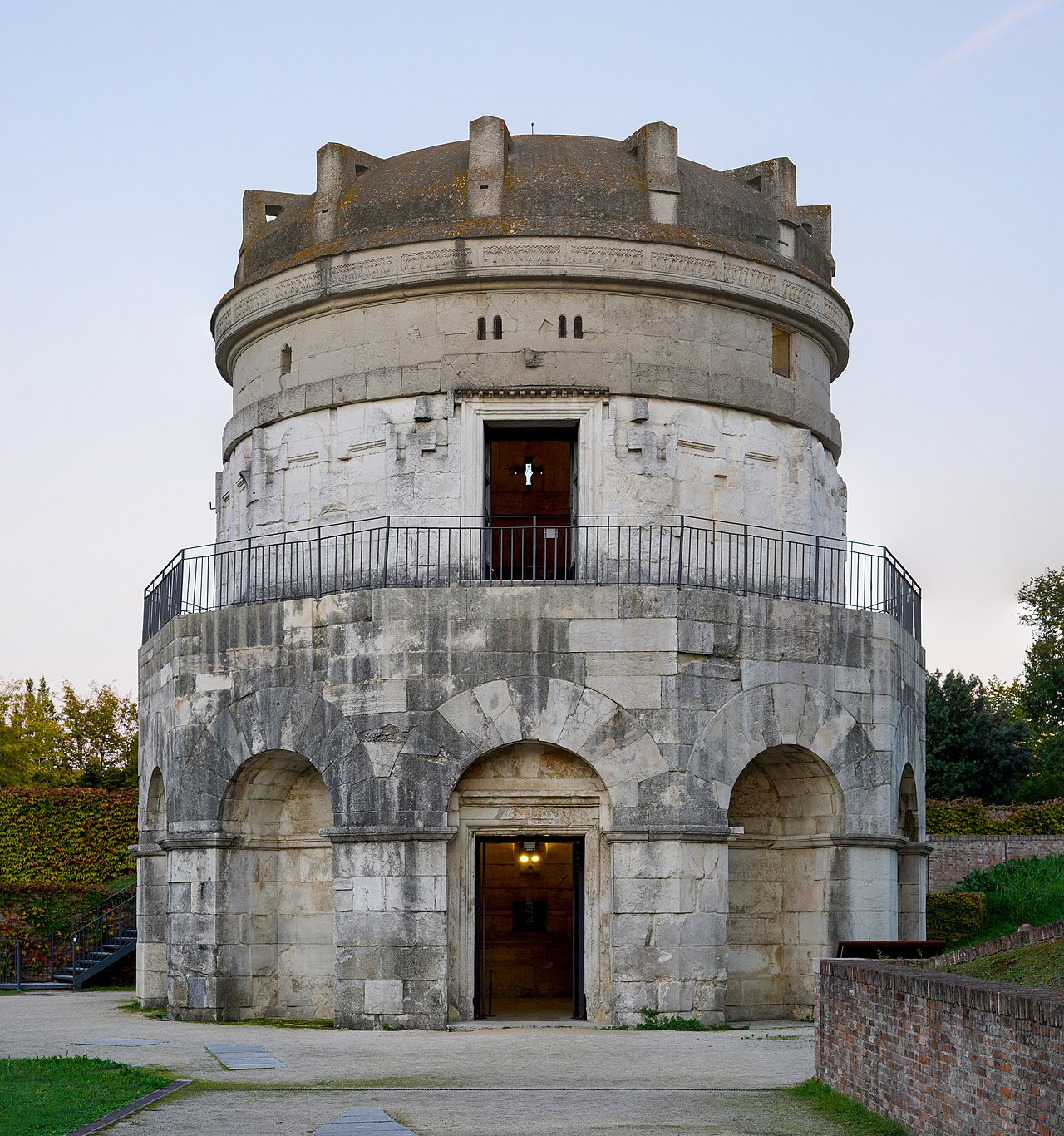
Ancient monument in Ravenna, Italy
The Mausoleum of Theodoric (Mausoleo di Teodorico) is an ancient monument just outside Ravenna, Italy. It was built in AD 520 by Theodoric the Great, king of the Ostrogoths, as his future tomb.
What travel creators say
The presenter introduces the Mausoleum of Theodoric, a two-story tomb just outside Ravenna's old city walls, reached by a 20-minute walk from Ravenna Central Station. He explains it was commissioned around 520 AD by the Ostrogothic king Theodoric the Great.
A feat of raw barbarian engineering topped with a single 300-ton stone slab roof, about a 25-minute walk from the train station in the opposite direction of the other sights.
He notes this mausoleum of the barbarian king Theodoric was built at the beginning of the 6th century CE.
The presenter describes this unique, colossal stone block as the signature of Theodoric, a king who sought to merge the sword's brute force with the sanctity of law.
visit the Mausoleum of Theodoric. Built entirely from massive stones.
The presenter visits the Mausoleum of Theodoric, one of Ravenna's UNESCO monuments.
Then step into the open air again and visit the mosoleum of Theodoric. Built entirely from massive stones, including a single 300 ton roof slab.
Not far from the Rocca Brancaleone, the mausoleum built in 520 AD entirely of Istrian stone, with a circular porphyry tub where Theodoric is thought to have been buried.
A unique stone structure with a monolithic dome, a testament to Ravenna's architectural prowess.
The Mausoleum of Theodoric was constructed in 520 AD for the Ostrogoth king.
The last stop in the city, a stone funerary monument topped by a single block weighing 290 tonnes; legend says the crack in the dome came from a divine lightning bolt punishing Theodoric's sins.
A stone mausoleum on the northeast side of the city, famous for its dome made from a single 230-ton piece of Istrian stone quarried over 400 km away; open in the morning, tickets about 4 euros.
Built by Theodoric and listed among Ravenna's eight UNESCO World Heritage monuments.
North of Ravenna, the presenter visits the mausoleum built by Theodoric in 520 AD as his burial place, noting its roof made of a single 230-ton Istrian stone and the impressive stonework.
The most original building of the period, wholly made of Aurisina marble, with a decagonal lower cell and a huge 230-ton monolith dome.
An ancient monument just outside Ravenna, built in 520 AD by Theodoric the Great as his future tomb, topped by a single 300-ton Istrian stone roof 10 meters in diameter.
From videos in other languages
Prezenter ogląda surowe, białe mauzoleum Teodoryka Wielkiego z monolityczną kopułą ważącą około 300 ton. Opowiada legendę o piorunie i o tym, że szczątki ariańskiego króla usunięto.
Im Theoderich-Park steht das ungewöhnliche Mausoleum von Theoderich dem Großen aus dem 6. Jahrhundert, die größte Bauleistung der Ostgoten in Italien, mit einem roten Porphyrsarkophag im Obergeschoss.
I due si dirigono verso il Mausoleo di Teodorico per una tappa, sperando che sia aperto a Pasqua o almeno visibile dall'esterno con il parco.
L'unico mausoleo ariano arrivato fino a noi, un tempo affacciato al mare; il tetto è una pietra intera di 230 tonnellate tenuta insieme dal solo peso.
Visitan el mausoleo que el rey ostrogodo Teodorico se hizo construir a las afueras de Rávena, con su cúpula de una sola pieza traída de Istria, y comentan el parque que lo rodea.
Construcción funeraria de mármol blanco del siglo VI, la más importante de los pueblos ostrogodos, de planta circular y muros decagonales, situada en el parque homónimo.
A soli dieci minuti d'auto da Ravenna, è uno dei più grandi esempi di architettura degli ostrogoti, fatto costruire da Teodorico intorno al 520 come luogo funerario con grossi blocchi di pietra d'Istria; è patrimonio UNESCO.
Prezenter wspomina Teodoryka, władcę rezydującego w Rawennie, i pokazuje jego grobowiec, którego płyta podobno składa się z jednej bryły kamienia.
Am nördlichen Stadtrand erhebt sich die monumentale schneeweiße Grabkapelle des Ostgotenkönigs Theoderich, deren Kuppel eine fast elf Meter breite Kugel aus einem einzigen Kalksteinblock abschließt.
Celebre costruzione funeraria del re ostrogoto Teodorico, fatta di grandi massi di pietra incastrati senza malta; la sua cupola è un unico monolite di oltre 10 metri di diametro e 230 tonnellate, ancora oggi avvolto nel mistero.