 PlaceTube
Yumen Pass
Dunhuang, China · Videos: 24 · Map
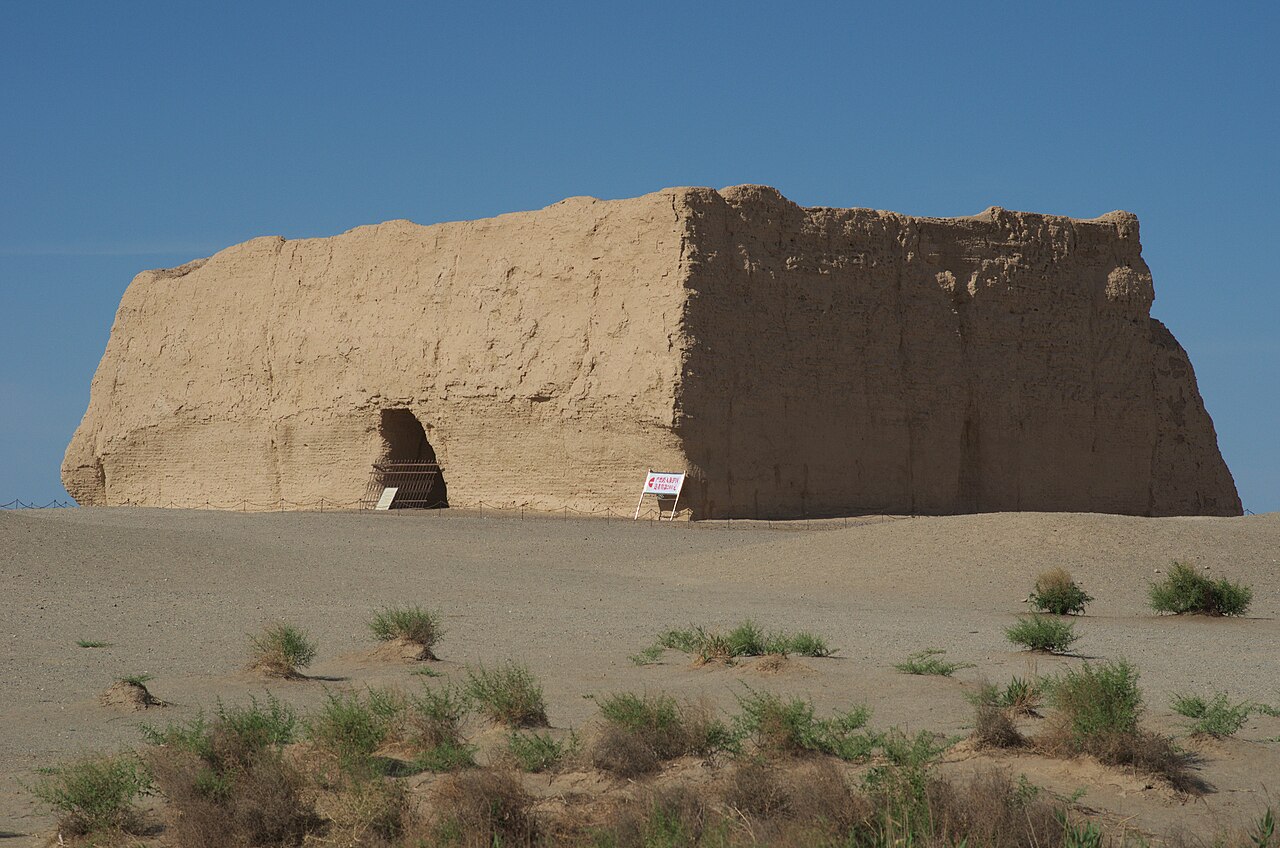
Pass of the Great Wall in China
Yumen Pass, or Jade Gate or Pass of the Jade Gate, is the name of a pass of the Great Wall located west of Dunhuang in today's Gansu Province of China. During the Han dynasty, this was a pass through which the Silk Road passed, and was the one road connecting Central Asia with East Asia (China), the former called the Western Regions. Just to the south was the Yangguan pass, which was also an important point on the Silk Road. These passes, along with other sites along the Silk Road, were inscribed in 2014 on the UNESCO World Heritage List as the Silk Roads: the Routes Network of…
What travel creators say
Surviving earthen walls mark a pass that once controlled an important Silk Road route between Imperial China and lands farther west.
About 80 km northwest of Dunhuang stood the Yumen Pass, the Jade Gate, beyond which the road ran west; it became World Heritage in 2014 as part of the Silk Roads.
The other of the 'Two Passes' controlling the Hexi Corridor; the site includes the Han Great Wall, Big Fangpan Castle and Small Fangpan Castle, reached by shuttle bus.
Northwest of Dunhuang, Yumen Pass survives as a compact earthen stronghold whose isolated walls give visible shape to a frontier remembered through trade and movement.
West of Dunhuang, Yumen Pass and sections of the Han Great Wall reduce empire to clay, reeds, watchtowers and distance; confirm permits, road conditions and return time with a reliable operator.
About 90 km from the city, the final customs checkpoint for merchants hauling jade and silk before entering the Taklamakan Desert. Huge historical significance but little visual spectacle, requiring a full day of driving.
Another key Silk Road gateway controlling the movement of troops and merchants, showing how dramatically different the Great Wall can look across deserts and frontier landscapes.
Listed among the sights reachable by a longer walk or short taxi ride from the hotel.
The presenter notes Yumenguan and Yangguan as two Han Dynasty Great Wall passes that became romanticized symbols of the imperial frontier in poetry.
The video describes Yumen Pass, one of the two strategic passes established in Dunhuang Commandery as the western gateway of the Han Empire.
The presenter visits this Han Dynasty pass, where only one of the beacon towers remains, and describes it as an old Silk Road port with stunning views.
The presenter visits this Han Dynasty pass, the only gateway for the northern Silk Road route and a UNESCO World Heritage site, noting its role in the jade trade and its well-preserved ruins.
The ancient Silk Road winds between Dunhuang and Yumen Pass, where caravans of camels once traveled; the pass was built outside Dunhuang at the western end of the Hexi Corridor.
Called a strategic outpost on the Silk Road, with an ancient fortress and reconstructed gates where caravans once passed.
The presenter stands in the endless Gobi beyond the Yang Pass, quoting the famous line about having no old friends west of it, and discusses Dunhuang as a Han dynasty frontier.
The presenter calls Yumen Pass the sandy doorway where ancient China looked toward the Silk Road, a Han Dynasty checkpoint about 56 miles northwest of Dunhuang.
From videos in other languages
봉화대 유적과 한나라 시대 곡창 유적을 보고 마지막으로 옥문관을 관람했다.
博主提到王之涣《凉州词》中的玉门关遗址也在敦煌,与阳关一南一北撑起古代边防。
둔황에서 주천 일정에 여유가 있으면 가볼 수 있다고 언급한다.
视频提到玉门关与阳关同为汉代公元前一世纪建立的重要军事关隘,是丝绸之路上见证无数战事与商旅往来的古关。
हान सम्राट वू के समय रेशम मार्ग की रक्षा के लिए यह दर्रा स्थापित किया गया था, जो दुनहुआंग के ऐतिहासिक महत्व को दर्शाता है।
प्रस्तुतकर्ता बताता है कि दुनहुआंग प्राचीन समय में पश्चिम से जुड़ने का एकमात्र चीनी मार्ग था, और हान सम्राट वू के शासनकाल में युमेनगुआन और यांगगुआन जैसे दर्रे स्थापित किए गए थे।
सम्राट वूदी के शासनकाल में युमेन दर्रा और यांग दर्रा स्थापित किए गए, जिससे सिल्क रोड पर व्यापार फला-फूला।
玉門関から10キロ西にある「大方盤城」と呼ばれる巨大な建物跡。頂上を守る兵士たちの食料などを貯蔵した場所だった。