 PlaceTube
Gate of the Sun
Tiwanaku, Bolivia · Videos: 31 · Map
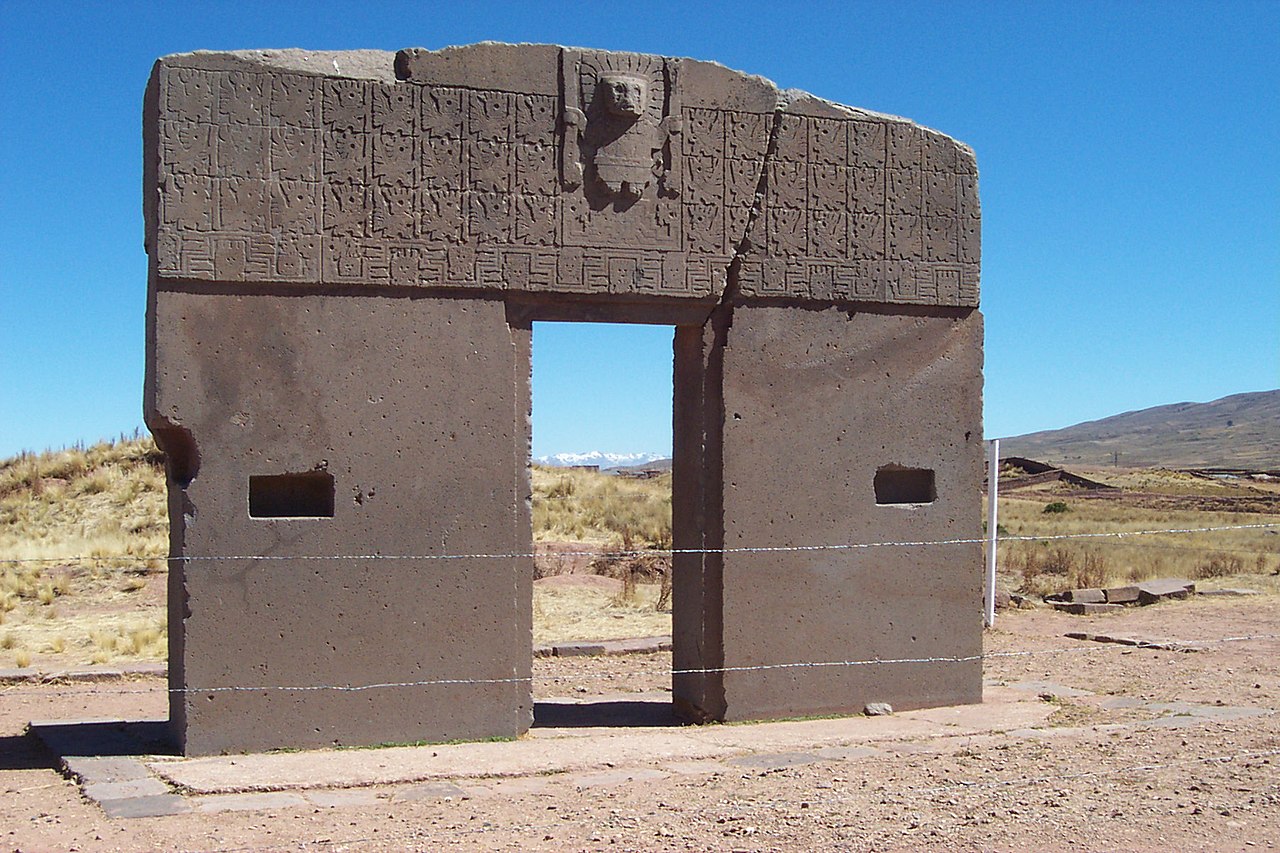
Bolivian monolith
The Gate of the Sun, also known as the Gateway of the Sun, is a monolithic gateway at the site of Tiahuanaco, built by the Tiwanaku culture, an Andean civilization of Bolivia that thrived around Lake Titicaca in the Andes of western South America around AD 500–950.
What travel creators say
A gateway cut from a single block of andesite nearly four metres wide, carrying a figure holding a staff in each hand; it was found broken in two and set upright in 1908.
The mysterious carved stone monument that makes Tiwanaku famous.
Carved from a single 10-ton block of andesite inside Kalasasaya, it features a central Sun God or Viracocha figure surrounded by 30 winged attendants and may encode calendrical data.
A single-piece andesite monolith weighing about 10 tons, carved with anthropomorphic figures and astronomical symbols that some believe form a solar and lunar calendar.
A single-block andesite portal about 3 meters high with undeciphered carvings, possibly an astronomical calendar, centered on the staff god Viracocha.
The presenter describes the Puerta del Sol as a monolithic gateway chiseled out of stone, located inside the Kalasasaya temple and bearing intricate reliefs including a central deity possibly Viracocha.
A freestanding andesite monolith in the Kalasasaya, carved with a calendar of three rows of eight figures and argued by Posnansky to be astronomically aligned to a much older date.
The presenter calls the Gate of the Sun the most famous of the site's temple gates and an iconic symbol of Tiwanaku.
A huge arch among the notable structures in the ruined city of Tiwanaku.
The presenter calls the Gate of the Sun perhaps the most impressive thing at the site, pointing out the central deity carving holding a chicha vessel and a snuff tablet, and noting it was found cut in two pieces.
The carved stone gate weighing about 10 tons and 2.88 meters high, made from rock brought from Peru, dating to around 800 AD.
He shows the Gate of the Sun, carved from one solid piece of stone, nine feet high and 13 feet wide, weighing over 10 tons, with 48 carvings around a central figure believed to be a god.
The most predominant structure is the Gate of the Sun, carved from one solid piece of rock weighing over 10 tons, doubling as an astronomical calendar with a central figure of the god Viracocha.
From videos in other languages
太陽門是蒂亞瓦納科最具代表性的文物,中央有人像雕刻,兩側的人向中間靠攏;考古學家認為石材是從秘魯的火山運來,重達約十噸。
導遊說這是太陽門,由一整塊石頭雕刻而成,原本放在神廟正中央,因西班牙人殖民時缺石材而被移動,上面有清晰的雕刻紋路。
紀元800〜1000年頃に作られた石の門で、現在のペルーにある火山から運ばれたと考えられている。
Le présentateur parle de portes monolithiques sculptées dans l'andésite, dont la Porte du Soleil de Tiwanaku pesant dix tonnes, avec des encastrements suggérant un mécanisme d'ouverture.
Il présente la Porte du Soleil, retrouvée à terre et coupée en deux puis redressée, en décrivant le dieu créateur, les apôtres et le calendrier de 290 jours gravés dessus.
Sunucu, tek bir taş bloktan yapılmış Güneş Kapısı'nı gösteriyor; ortasındaki Viracoça figürünü ve puma, kondor gibi sembolleri anlatıyor.
Sulla Porta del Sole è raffigurato Viracocha con 24 raggi solari attorno alla testa, in ginocchio su un altare e con i simboli del comando; dagli occhi gli escono lacrime d'oro.
Das Sonnentor diente als Kalender, unterteilt in vierzehn Monate zu achtundzwanzig Tagen, mit dem Tag der Sommersonnenwende in der Mitte.
蒂亞瓦納科的標誌性建築,門楣由整塊安山岩打造,重約10噸,飾帶上有16個太陽與48個圖騰,中央是流淚持權杖的創世神維拉科查,1908年才重新豎立。
до подлинно точно неизвестно как народ юнака использовал эти врата солнца
Monolito de una sola pieza de andesita de unas 10 toneladas, con tallas de figuras antropomorfas y símbolos astronómicos que algunos interpretan como un calendario solar y lunar.
Прославленный объект, покрытый рельефами; некоторые учёные считают его древним солнечно-лунным календарём.
La guía explica que la Puerta del Sol es el monolito más representativo de Tiwanaku, tallado en un solo bloque de andesita de unas 10 toneladas, con el Dios Viracocha y figuras de cóndores de posible significado calendárico.
En su parte central está el Inti Willka Tata o Señor de los Báculos, con mascarón solar, cabezas de pumas y un altar de tres niveles que representa cielo, tierra e inframundo.
重達130噸的太陽門是提瓦那庫最具代表性的建築,橫飾帶中央雕刻著維拉科查的肖像,兩側共有24個手持器械的圖形,底部還刻有大象頭顱。
Portal lítico de unas 10 toneladas, mundialmente conocido, situado dentro del Templo de Kalasasaya.
La describe como el símbolo de la ciudad, una enigmática roca tallada de diez toneladas de peso que servía como puerta ritual.
Nejznámější památkou je 3 metry vysoká a 3,75 metru široká Sluneční brána z jednoho bloku andezitu, která se při zemětřesení převrátila a rozlomila na dvě části; v roce 1908 byla znovu postavena.