 PlaceTube
Little Skellig
Portmagee, Ireland · Videos: 13 · Map
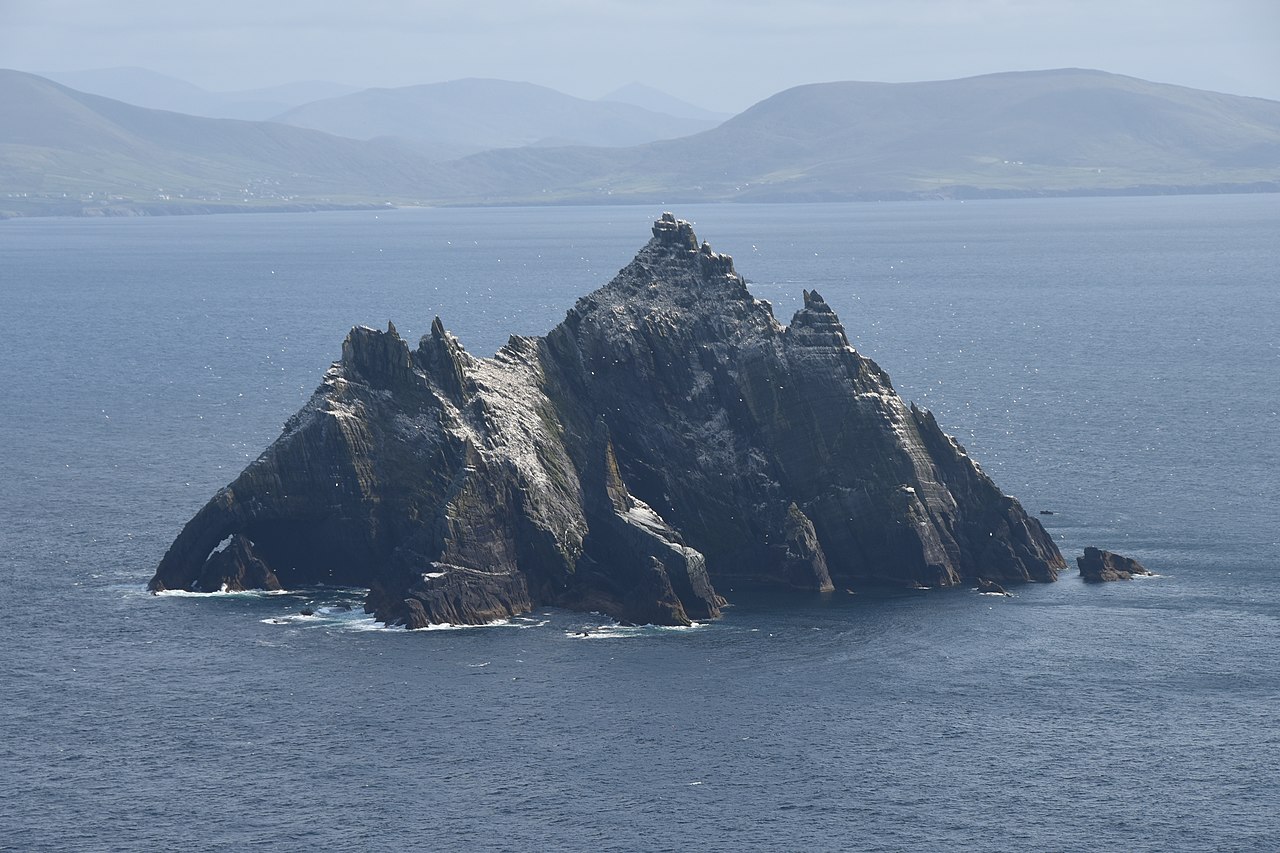
Island in the Atlantic Ocean
Little Skellig is a small, steep rocky island in the Atlantic Ocean, 11 km off the Iveragh Peninsula of County Kerry, Ireland. It is one of the two Skellig Islands, together with the larger Skellig Michael. Little Skellig is a nature reserve and bird colony. Landing on Little Skellig is not allowed.
What travel creators say
The smaller rock next door, home to huge colonies of gannets whose eggs and meat were a staple for the monks.
A major seabird nesting ground hosting the second largest northern gannet colony in the world; monks rowed here to harvest eggs, leaving a temporary shelter.
The eco tour cruises slowly around Little Skellig (Skellig Beg) and Skellig Michael with captain's commentary and time for photos.
The smaller of the two islands, a bird sanctuary where you cannot disembark; what looked like guano from afar turned out to be thousands of birds themselves.
The boat makes a lap around Little Skellig, which looks snowcapped from afar but is actually home to over 25,000 seabirds, and seals can sometimes be spotted on the rocks.
Their boat first circles Little Skellig, whose sheer cliffs host nesting sites for thousands of northern gannets during breeding season.
Mentioned alongside Skellig Michael as one of the two Skellig Islands off the southwest coast of Ireland.
The smaller of the two rocky islands in the area, also lying in the Atlantic off the Kerry coast and used by breeding seabirds.
He says this uninhabited island is home to one of the largest colonies of northern gannets in the world, and that you could sure smell them.
The neighboring island holds the world's second-biggest gannet colony with almost 30,000 pairs of birds and is closed to the public as a bird sanctuary.
The neighbouring island is a bird sanctuary that boasts 66,000 nesting pairs of gannets.
From videos in other languages
Isola piccolina accanto a Skellig Michael, coperta non di neve ma di cacca di uccelli: una delle colonie più grandi al mondo di sule, circa 35.000 coppie.
La petite île culmine à 134 mètres, un gros rocher escarpé et inhospitalier pour l'homme mais abritant de nombreuses colonies d'oiseaux marins.