 PlaceTube
Barranquilla Carnival
Barranquilla, Colombia · Videos: 38 · Map
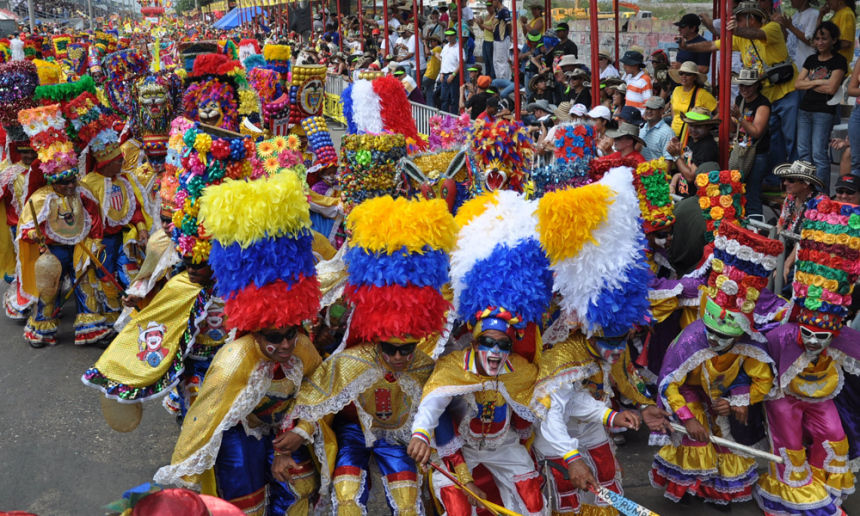
Colombian folklore festival
The Barranquilla Carnival is one of Colombia's most important folkloric celebrations, and one of the biggest carnivals in the world. The carnival has traditions that date back to the 19th century. Four days before Lent, Barranquilla decks itself out to receive national and foreign tourists to join together with the city's inhabitants to enjoy four days of intense festivities. During the carnival, Barranquilla's normal activities are put aside as the city gets busy with street dances, musical and masquerade parades. The Carnival Of Barranquilla includes dances such as the Spanish paloteo…
What travel creators say
Bursts with color, music, and dance, showcasing the nation's vibrant culture.
The Carnival of Barranquilla bursts with color, music and dance, showcasing the nation's vibrant culture.
A recreation of the Carnival of Barranquilla performed by dancer Angie and an artistic group that has performed the carnival for 28 years.
The Carnival of Barranquilla bursts with color, music, and dance, showcasing the nation's vibrant culture.
The presenter says UNESCO declared the Carnival of Barranquilla a masterpiece of intangible heritage, with about 2 million people filling the city for the four days before Lent.
Bursts with color, music and dance, showcasing the nation's vibrant culture.
A lively festival bursting with color, music, and dance that showcases the nation's vibrant culture.
The presenter calls it a living expression of Caribbean Colombian identity, describing the Battle of the Flowers, the Gran Parada, the carnival queen and King Momo, and the African, indigenous and Spanish roots of the four-day celebration held before Lent.
The video captures the music and dancing of the Barranquilla Carnival, though the presenter gives no spoken commentary.
The presenter describes the carnival's parade along Via 40, with costumes like La Marimonda, El Garabato, and El Congo, and music such as cumbia and mapalé.
The Carnival of Barranquilla bursts with color, music and dance, showcasing the nation's vibrant culture.
The presenter sees leftover evidence of the famous Barranquilla Carnival, which he avoided due to the crowds, and explains it is one of Colombia's most important folkloric celebrations held before Lent.
Once a year the city explodes with music, costumes and parades; it's one of the world's largest carnivals and a UNESCO heritage event.
She says the carnival before Ash Wednesday is the epicenter of Colombia's carnival celebrations, with parades, folk groups, food and dancing.
He says the city is really only worth visiting for Carnival — come for it, stay a week or two max, and book months in advance.
One of the world's most vibrant carnivals, held around February or March, with pre-carnival activities starting weeks earlier.
Called the most exciting dance display, an enormous carnival celebrating salsa and cumbia.
The local friend explains the carnival turns the whole city into a party for four days, but calls it somewhat overrated and clique-based.
The presenter attends the press conference for the 2024 Carnival queen, then joins the parade with Jorge's garabato dancers and dances in the streets through the official celebration days.
They attend the carnival, buying wristbands, watching performers and dancing in the street; the presenter notes tickets aren't free and warns about pickpockets.
He says he'd like to come back for Carnival or in December for the holidays.
The presenter attends the annual Carnaval de Barranquilla, showing the huge lines, entrances, and crowds of people partying at the event.
She says the Carnaval de Barranquilla is the second most famous carnival after Rio, a four-day parade of traditional dances and music held every year in late February or early March in the port city.
The presenter explains that Carnival in Barranquilla is considered the second biggest carnival in the world, held in February or March, and gives tips on booking flights and accommodation around it.
The presenter says this carnival on the Caribbean coast is known as the second largest after Rio de Janeiro, attracts 1.5 million people, and has parades on different days with different topics, a carnival princess and bands playing.
From videos in other languages
Celebración de desfiles, bailes y trajes coloridos que lleva las tradiciones culturales a las calles y es patrimonio inmaterial de la UNESCO.
L'événement pour lequel Leo est venu, mais il découvre que le défilé est clôturé et accessible uniquement avec des billets achetés en ligne, au milieu d'entrepôts de recyclage.
Leo cerca il carnevale di Barranquilla, descritto come il secondo più grande dell'America Latina, ma si ritrova tra recinzioni, bagarinaggio e un'atmosfera caotica.
O apresentador vai ao carnaval, mas encontra a área cercada e com venda de ingressos, num bairro com galpões de reciclagem ao redor.
El presentador acude al carnaval de Barranquilla, pero se encuentra con una zona desolada, vallas, reventa de entradas y un ambiente que no se corresponde con lo que esperaba.
Quattro giorni di festa dichiarati patrimonio immateriale dell'umanità dall'UNESCO, punto d'incontro delle eredità indigena, africana e spagnola, dove nasce la cumbia.
바랑키아 카니발 전주에 열리는 가장 큰 행사로, 오후 4~5시부터 밤까지 거리 행진과 춤, 술이 이어진다고 소개한다.
남미 전체가 앞두고 있는 카니발로, 콜롬비아 사람들이 즐기러 바랑키야에 올 정도로 유명하다고 설명한다.
영상 말미에 한 구독자가 바랑키야 카니발이 유명하다며 자기 도시에 꼭 와보라고 자료를 보내줬다고 언급한다.
दुनिया के सबसे बड़े कार्निवल में से एक बताया गया है जो शहर को रंग, संगीत और नृत्य के दंगे में बदल देता है।
El video se centra en el Carnaval de Barranquilla, el segundo carnaval más grande del mundo después del de Brasil, con desfiles, comparsas, música y fiestas callejeras durante varios días.
Lo señalan como el segundo carnaval más grande del mundo, organizado cada año en Barranquilla.
El programa se graba durante el Carnaval de Barranquilla, la fiesta que presentan como el mejor carnaval del mundo; muestran cómo la prensa obtiene su carnet y los souvenirs, y recorren la fiesta con la gente.