 PlaceTube
Pichincha
Quito, Ecuador · Videos: 53 · Map
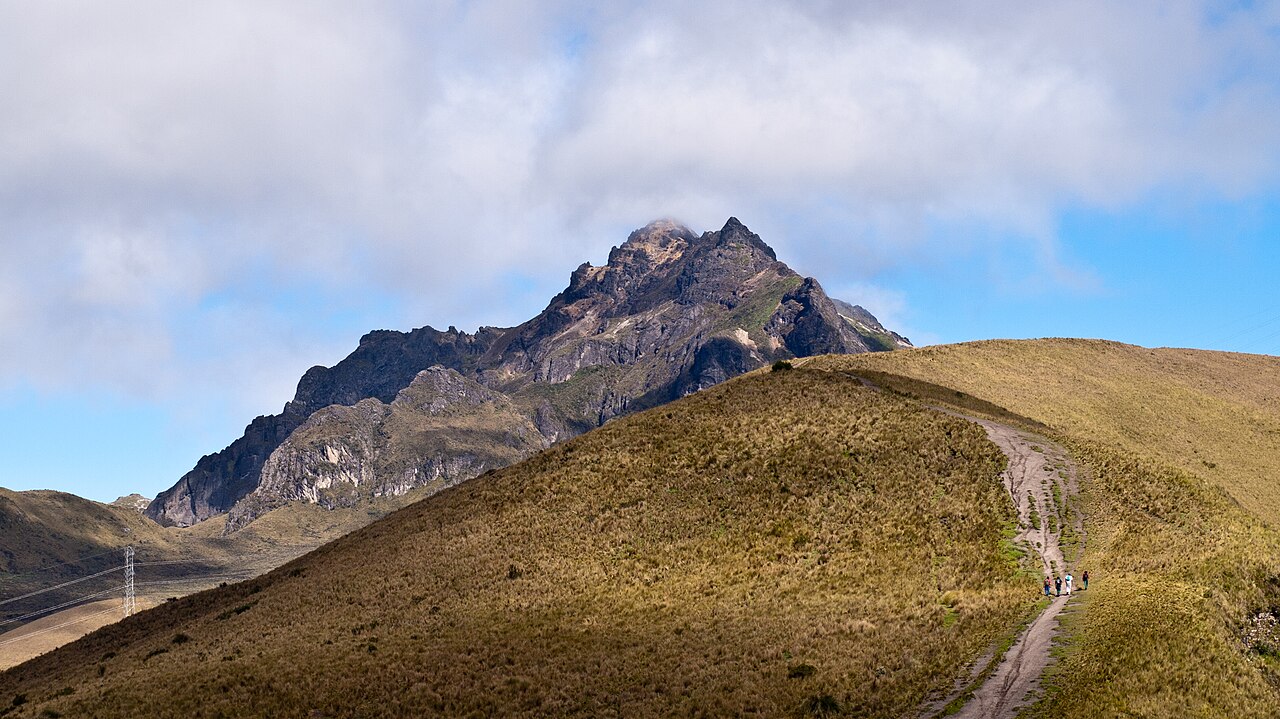
Volcano in north-central Ecuador
Pichincha is a stratovolcano in Ecuador. The capital Quito wraps around its eastern slopes.
What travel creators say
The dramatic volcanic massif rising behind Quito; the cable car brings you close to Rucu Pichincha, where hiking trails lead through rugged Andean landscapes with spectacular views over the valley.
The presenter says that in the dry months you get crystal-clear morning views of the towering Pichincha volcano before the mountain fog rolls in.
After a 20-minute Uber and a cable car ride up, he meets friends to hike the volcano, enjoying the views, a swing and horse rides near the top.
The tram ascends the slopes of the Pichincha volcano, rising thousands of feet and shrinking the city below.
Mentioned as a place in Quito with beautiful views, reached via the TelefériQo.
Mentioned as a volcano that watches over Quito from above and a starting point for exploring the surroundings.
The active volcano that looms directly over the city, with its last major eruption in 1999 and smaller ones in 2002.
An active volcano with two peaks, Guagua Pichincha and Rucu Pichincha, dominating Quito's skyline and site of the 1822 Battle of Pichincha.
He points out the volcano looming over Quito at about 19,000 feet, easily seen from within the city.
The top of the TelefériQo sits at the base of this volcano, and they hike toward the best lookout hoping for views of the surrounding volcanoes.
At the top they walk around Pichincha, an active volcano, admiring the Polylepis paper trees, llamas, and the high-altitude scenery.
The presenter warns that the five-hour round trip hike to the 4,680-meter summit should only be attempted after acclimatizing in Quito for a couple of days.
A 7-mile roundtrip ridge hike to the volcano's caldera with many overlooks; watch the weather for storms.
The presenter mentions you can hike up to Pichincha Volcano at about 4,700 meters, a fairly easy acclimatization hike, but they skip it because the summit was in clouds.
Andrew stands at 14,000 feet atop Rucu Pichincha, the dormant 'sleeping volcano' overlooking Quito, and points out the active Guagua Pichincha peak nearby.
The cable car goes up to this volcano, offering amazing views of it and the surrounding volcanoes.
From the top of the cable car there are hiking trails up to this volcano, and on a clear day you can spot it among the seven volcanoes; they saw vapor coming from Cotopaxi.
The presenter attempts to hike up the Rucu Pichincha volcano, noting the thin air and unpredictable weather along the trail.
They hiked toward the summit of this active stratovolcano, reaching 4,500 meters before altitude sickness forced them to turn back.
A roughly four-hour hike to the peak from the cable car; go early because it gets foggy and the weather is unpredictable.
The presenter suggests taking the gondola up the Pichincha Volcano to see both halves of the city, noting the historic battle fought on its slopes that led to Quito's liberation in 1822.
The presenter suggests taking the gondola up the Pichincha Volcano to see both halves of the city, noting the historic battle there that led to Quito's liberation from Spain in 1822.
The presenter takes the gondola up the Pichincha Volcano to see both halves of Quito at once, noting that a historic battle for Quito's liberation from Spain took place on these slopes in 1822.
From videos in other languages
Menciona la caminata de 3 a 4 horas para ascender a este volcán desde la estación Cruz Loma, recompensada con vistas aún más impresionantes.
主持人说从皮钦查火山可以俯瞰基多,红色屋顶、街道和教堂都变小了,整座城市面对巨大的安第斯山。
Se sube en teleférico hasta el volcán Pichincha para ver Quito desde lo alto.
Kito'nun batısında yükselen, iki zirveli volkan anlatılıyor; 1999'daki Guagua Pichincha patlaması ve Rucu Pichincha zirvesine teleferikle ulaşma deneyimi konu ediliyor. 1824 Pichincha Muharebesi'nin bağımsızlık için önemi vurgulanıyor.
O majestoso vulcão é citado como ponto de partida para explorar a natureza ao redor de Quito, vigiando a cidade desde as alturas.
主持人說登山或戶外愛好者可以挑戰海拔4696公尺的Rucu Pichincha山峰,爬上去大約需要3到4小時,溫差很大要做好保暖。
Вулканът над Кито, висок близо 4700 м, с лифт и преходи; Стефи го пропуска, за да разглежда центъра в последния си ден.
La ruta desde el teleférico lleva hasta el Rucu Pichincha, a 4696 m; Franklin sube hasta el columpio y luego baja por el frío y la hora.
El teleférico asciende por las laderas del volcán Pichincha, y desde la estación superior comienzan rutas de senderismo como el ascenso hacia la cumbre del Rucu Pichincha.
El volcán que vigila la ciudad desde las alturas y es un excelente punto de partida para explorar los alrededores de Quito.
Il vulcano dormiente appena fuori Quito, meta dell'escursione: il presentatore sale fino alla cima a 4700 m sfidando l'altitudine.
Il vulcano Pichincha veglia sulla città come un nonno silenzioso.
ภูเขาไฟที่ล้อมรอบกีโต ตูนขึ้นไปถึงระดับประมาณ 4,300 เมตร เดินชมวิวและเส้นทางไฮกิ้ง พร้อมเห็นภูเขาไฟรอบเมืองหลายลูก
Comenta que desde la cima del teleférico, en un día despejado, se pueden ver los volcanes, y menciona la ruta de senderismo de varias horas por la montaña.
Активный вулкан высотой 4784 метра, популярное место среди туристов и местных жителей; с вершины открывается панорама Кито.
Sube a más de 4000 metros en el cerro Pichincha, donde se ve un páramo y la iglesia más alta de Ecuador, y comenta el peligro de los volcanes que rodean Quito.
Se menciona como la cumbre a la que llega el teleférico y como puerta de entrada para caminatas y aventuras en sus rutas de montaña.
基多坐落在皮钦查火山东坡的山谷中,这座层状火山有两个峰顶:瓜瓜峰海拔4784米,鲁库峰海拔4698米,距基多仅约10公里,1999年曾喷发。
Hacen un trekking señalizado hasta la cumbre a 4.696 metros, con subida de 2 horas 10 minutos y un tramo final muy duro y empinado.
Desde la cima del teleférico se puede caminar hasta la cumbre del Rucu Pichincha, una caminata de ida y vuelta de 4 km.