 PlaceTube
Plain of Jars
Phonsavan, Laos · Videos: 66 · Map
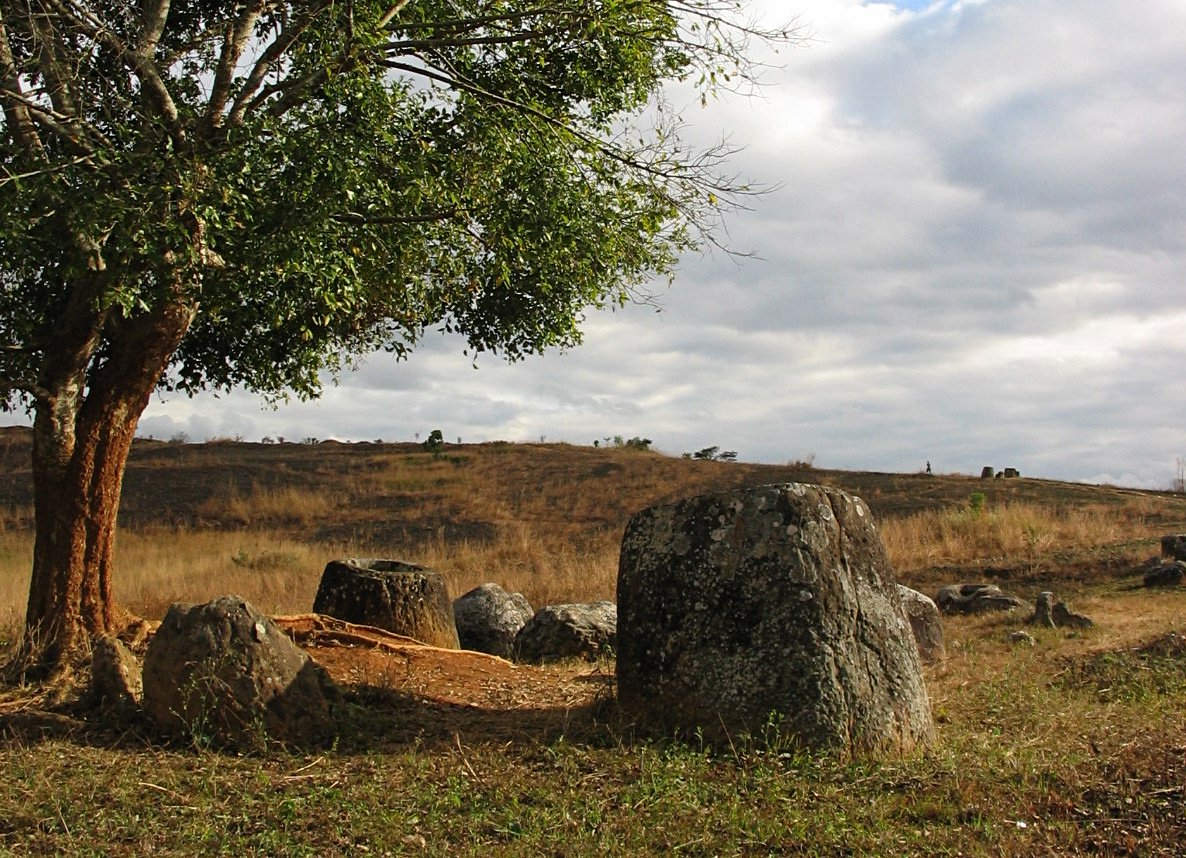
Megalithic archaeological landscape in Laos
The Plain of Jars is a megalithic archaeological landscape in Laos. It consists of thousands of stone jars scattered around the upland valleys and the lower foothills of the central plain of the Xiangkhoang Plateau. The jars are arranged in clusters ranging in number from one to several hundred.
What travel creators say
The video describes thousands of giant stone jars on the Plain of Jars plateau, possibly used for burial, with a local legend about brewing rice wine.
Stone jars scattered across the misty valleys of Xieng Khouang, thought to have been used for ancient burial rites.
Scattered across the hills of Laos, thousands of enormous stone jars rise from the landscape.
More than 2,000 giant stone jars up to nearly 10 feet tall lie scattered across the Xieng Khouang Plateau, dated to the Iron Age and made a UNESCO World Heritage Site in 2019.
They visit the Plain of Jars, a UNESCO site established in 2019, starting at Site 1 with human-sized stone jars, bomb craters and a cave used during the war.
A mysterious archaeological site with hundreds of massive stone jars across open grasslands, with several sites near Phonsavan.
On a wind-swept plateau in the north central highlands, scattered across the grasslands in their thousands, stand enormous jars of solid stone... The place has only one possible name, the Plain of Jars.
The presenter walks among the 2,000-year-old sandstone jars, some weighing 6 tons, across 90 sites on the Xieng Khouang Plateau, noting the bomb craters between them.
The main jar site, reached by electric buggy, with a museum, the largest 15-ton jar, a cave and hilltop views; Kong explains the jars' origins and legends.
One of Laos's most mysterious archaeological sites, with thousands of ancient stone jars scattered across open fields, hinting at ancient rituals and civilizations.
The presenter explores the Plain of Jars in northern Laos, thousands of giant stone jars of unknown purpose, and explains that unexploded bombs and erosion threaten the site.
The Plain of Jars near Phonsavan is presented as a mysterious megalithic archaeological landscape of giant stone jars.
A different experience where you move among thousands of ancient stone jars scattered across the fields.
The guide introduces Site 1 as the most popular of the Plain of Jars sites, about 10 km from Phonsavan, with more than 334 stone jars across five sections.
The presenters finally reach the Plain of Jars, a UNESCO World Heritage site established in 2019, and marvel at the human-sized stone jars and the huge bomb craters nearby.
An archaeological mystery across Xieng Khouang province with thousands of ancient stone jars weighing up to six tons, possibly 2,000-year-old burial urns; some sites are still being cleared of unexploded ordnance.
The video describes the Plain of Jars in northern Laos as a landscape scattered with thousands of massive stone vessels whose purpose remains a mystery.
Thousands of massive stone jars scattered across the hills of Xieng Khouang, an archaeological mystery over 2,000 years old, with local legends of giants and lingering wartime UXO.
He does a self-guided walking tour of Site 1, climbing the hill, examining the huge carved stone jars, lids, bomb craters and a cave, and pondering their burial purpose.
The presenter describes the Plain of Jars on the Xieng Khouang plateau, with over 2,100 ancient stone jars whose purpose remains a mystery, now a UNESCO World Heritage Site.
One of Southeast Asia's most enigmatic archaeological sites, with thousands of massive stone jars believed to date back to the Iron Age.
The video discusses the mystery of Cambodia's stone jars, comparing them to the better-known Plain of Jars in Laos, with unique carvings and possible burial rituals.
The Plain of Jars is presented as a mysterious archaeological site of massive ancient stone jars, with visitors restricted to cleared paths because of unexploded ordnance.
A UNESCO site of mysterious stone jars, some weighing 600 kg, believed to be ancient tombs; the presenter sees bomb craters and jars split by tree roots.
A mysterious archaeological landscape on the Xiangkhoang Plateau dotted with thousands of massive stone jars linked to Iron Age burial practices, set among undulating green hills.
One of Xieng Khouang's most famous sites, mentioned as the final destination though the presenter admits she didn't film much of it.
He explores the most informative of over 50 jar sites, with thousands of giant stone jars, bomb craters from the secret war, a cave used as a crematorium, and the unsolved mystery of who made the jars.
Thousands of stone jars carved from granite, sandstone and limestone, over 2,000 years old, dot the plateau; archaeologists believe they were used for burial.
A fascinating site with thousands of ancient stone jars scattered across the fields, whose mysterious purpose visitors can ponder while walking among them.
The ancient Plain of Jars near Phonsavan is a fascinating archaeological site with mysterious stone jars.
From videos in other languages
Tong Hin, la plaine des jares. Sur des kilomètres au milieu de nulle part, le paysage est jaloné d'urne dont l'origine et la signification reste encore un mystère.
Miles de enormes jarras de hasta 30 toneladas, posiblemente usadas como tumbas o reservas de alimentos.
主持人来到石缸平原,先在这里吃午饭,随后前往世界遗产石缸平原参观。
Pierwsze i największe stanowisko kamiennych słoi; prezenterzy opowiadają o legendach, pochówkach i badaniach naukowych, a także o niebezpieczeństwie niewybuchów.
Ngày thứ hai khám phá cánh đồng Chum, di sản văn hóa thế giới với hàng ngàn chiếc chum đá cổ hàng ngàn năm tuổi vẫn còn là bí ẩn.
石缸平原分布着90多个石缸遗址,石缸高和直径在1米到3米之间,距今三四千年,来源与用途至今成谜,是世界文化遗产和世界四大石器之谜之一。
Znane miejsce wpisane na listę światowego dziedzictwa; bilet kosztuje 35 000 kipów (ok. 7 zł). Prezenter omawia hipotezy dotyczące pochodzenia dzbanów.
Долина кувшинов в провинции Сиангкхуанг — тысячи каменных горшков возрастом 1500–2000 лет на более чем 60 площадках; в 2019 году объект получил статус всемирного наследия ЮНЕСКО.
Anh đến cánh đồng Chum ở tỉnh Xiengkhuang, di sản UNESCO với hơn 300 chum đá hơn 2.000 năm tuổi, bàn về công dụng bí ẩn và việc chỉ một chum có nắp.
Ведущий рассказывает о Долине кувшинов — плато с сотнями каменных сосудов неизвестного происхождения, самый большой из которых весит 6 тонн; гулять нужно только по обозначенным тропам из-за неразорвавшихся мин.
약 2000년 전 유적으로 추정되는 거대한 돌 항아리들이 놓인 유적지로, 이 평원에만 약 400여 개의 항아리가 있다고 소개한다. 항아리의 용도는 무덤설, 왕의 술잔설 등으로 의견이 갈린다고 전한다.
Area del nord del paese con resti archeologici di una cultura megalitica: enormi blocchi di pietra usati come recipienti per resti umani cremati, in parte distrutti dai bombardamenti.
広大な平原に高さ1〜3.5mの数千個の石壺が点在する約2000年前の遺跡。巨人の伝説や骨壺・雨水貯蔵用だったという学者の説が紹介される。