 PlaceTube
Obelisk of Axum
Axum, Ethiopia · Videos: 29 · Map
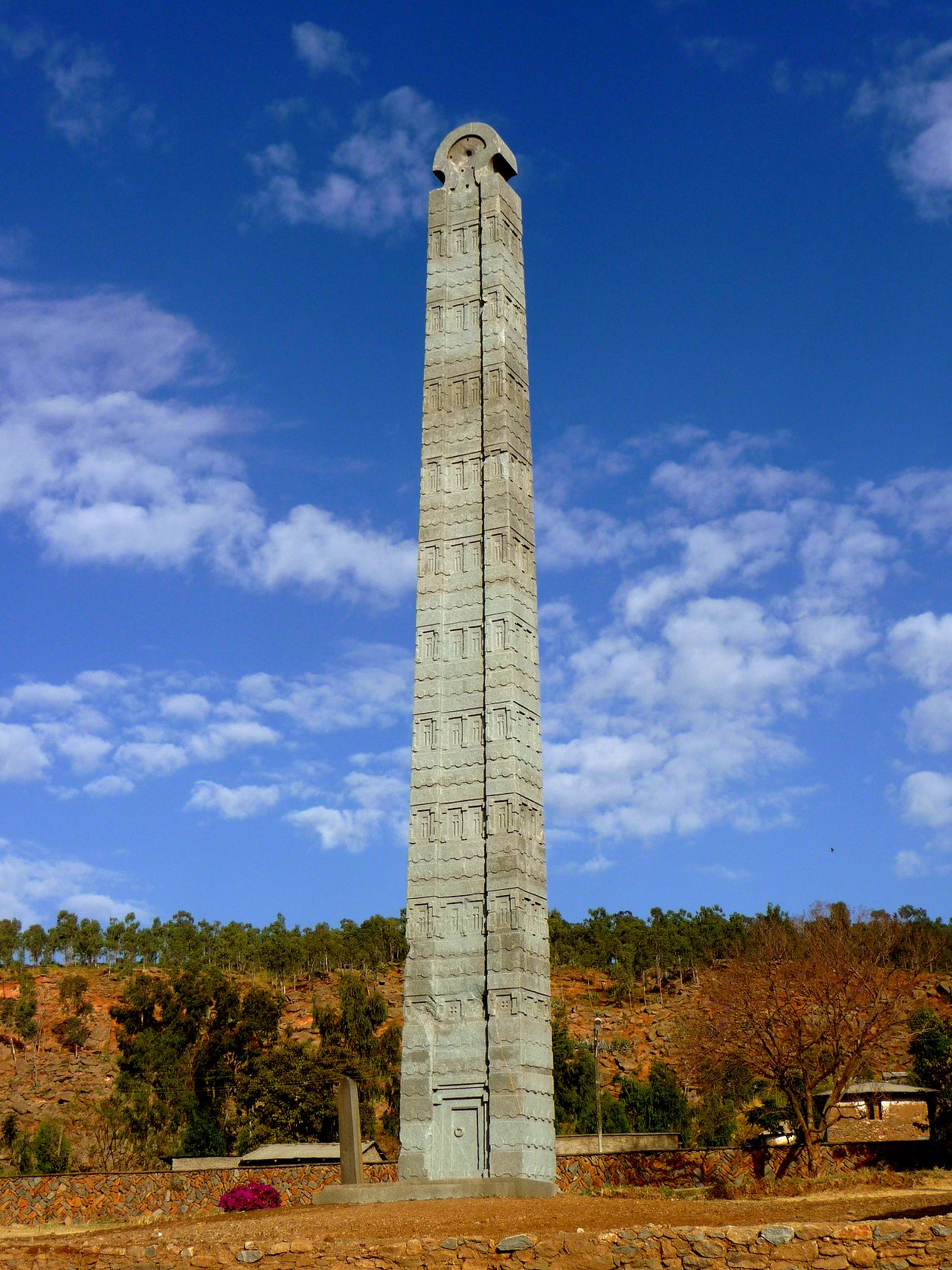
4th-century phonolite stele in Axum, Tigray Region, Ethiopia
The Obelisk of Axum is a 4th-century AD, 24-metre (79 ft) tall phonolite stele, weighing 160 tonnes, in the city of Axum in Ethiopia. It is ornamented with two false doors at the base and features decorations resembling windows on all sides. The obelisk ends in a semi-circular top, which used to be enclosed by metal frames.
What travel creators say
Towering stone pillars stand in Axum.
The presenter describes massive granite obelisks over twenty metres tall, carved from single stones to mark royal burial chambers, still standing in Aksum today.
The stolen obelisk taken by Mussolini in 1935 was returned from Italy in 2008, a moment of national pride for Ethiopia.
The Axum Stele is the largest raised stone in the world, because it measures 33 meters in length.
The video describes Axum as a great ancient civilization built through power, with towering granite obelisks decorated with carved doors and windows and burial chambers beneath them.
The obelisk of Axum, a monument standing roughly 79 ft tall and restored after its return from Italy, displays the detailed architectural patterns of ancient Axumite palaces.
The towering steeli stand like ancient guardians over a city that once ruled a vast empire.
The towering steli stand like ancient guardians over a city that once ruled a vast empire
The video opens on the towering granite obelisks of the Kingdom of Axum, some nearly 110 feet tall, carved with false windows and doors like stone skyscrapers for the dead.
The presenter stands at the giant single-stone obelisks, some over 1,700 years old, marking the tombs of Axumite kings and wonders how they were carved and raised.
the mighty obelisks of Axom stand as eternal monuments to an empire that commanded the ancient world
The video highlights the towering obelisks and intricate palaces built by the Aksumites, noting that these structures still stand today as testaments to their engineering skills.
The towering granite stelae, some over 30 meters high, served as funerary monuments for royal tombs and showcase Aksumite craftsmanship; the Great Stele remains the largest known monolith of the ancient world.
The famed obelisks of Axum are described as giant monoliths that still defy explanation.
The video describes monolithic obelisks and grand stelae rising from the earth, some over 20 meters tall, as remnants of the kingdom's engineering marvels and power.
The presenter calls the Obelisk of Aksum one of the city's greatest wonders, a towering stone column standing at its center as a symbol of the kingdom's power and might.
Over 33 meters tall, one of the largest single pieces of stone ever cut and erected, returned to Ethiopia in 2005 after being taken by Italy.
The eye-catching stelea or obelisks of the ancient Aksumite Empire, which served as tombstones and memorials.
The area is famous for a single rock sculptured 23-metre-long obelisk in Axum, along with other fallen obelisks.
Lyndon and Kinga visit the huge rock obelisks, fourth-century AD grave markers for ancient rulers, one of which has fallen down.
The ruins of Axum are dominated by around 130 stelae, obelisk-like monoliths of trachyte, with underground grave chambers beneath some of them.
From videos in other languages
Ведущий рассказывает о возвращении обелиска из Рима в 2005 году тремя частями на Ан-124 и о самой большой упавшей стеле высотой 33 метра.
ተናጋሪው የጥንት የአክሱም ሐውልቶችንና የቤተ መንግስት ፍርስራሾችን ያሳያል።
Obeliscos, palácios e igrejas que registram o poder e a influência da cidade, exigindo cuidados contínuos de preservação.
Ele mostra os obeliscos de pedra talhada, alguns com mais de 20 metros, que marcavam túmulos reais, e conta que um deles foi levado à Itália por Mussolini e devolvido em 2004.
L'emblématique obélisque d'Axoum, haut de 23 m, est l'un des plus grands monolithes du monde.
Aksum ist voller archäologischer Wunder aus der Zeit des Aksumitischen Reiches. Besonders beeindruckend sind die monumentalen Stelen und Obelisken, die bis zu 24 Meter hoch sind und als Grabmale und Denkmäler dienten.
Les obélisques d'Aksoum, héritage de l'empire aksoumite, représentaient symboliquement des palais et marquaient les sépultures des souverains ; ils figurent parmi les plus grands monolithes façonnés par l'homme.
Prezenter ogląda starożytne obeliski wykute z jednego kawałka kamienia, w tym najwyższy liczący 24 metry, wzniesione około 1700 lat temu.