 PlaceTube
Lut Desert
Lut Desert, Iran · Videos: 94 · Map
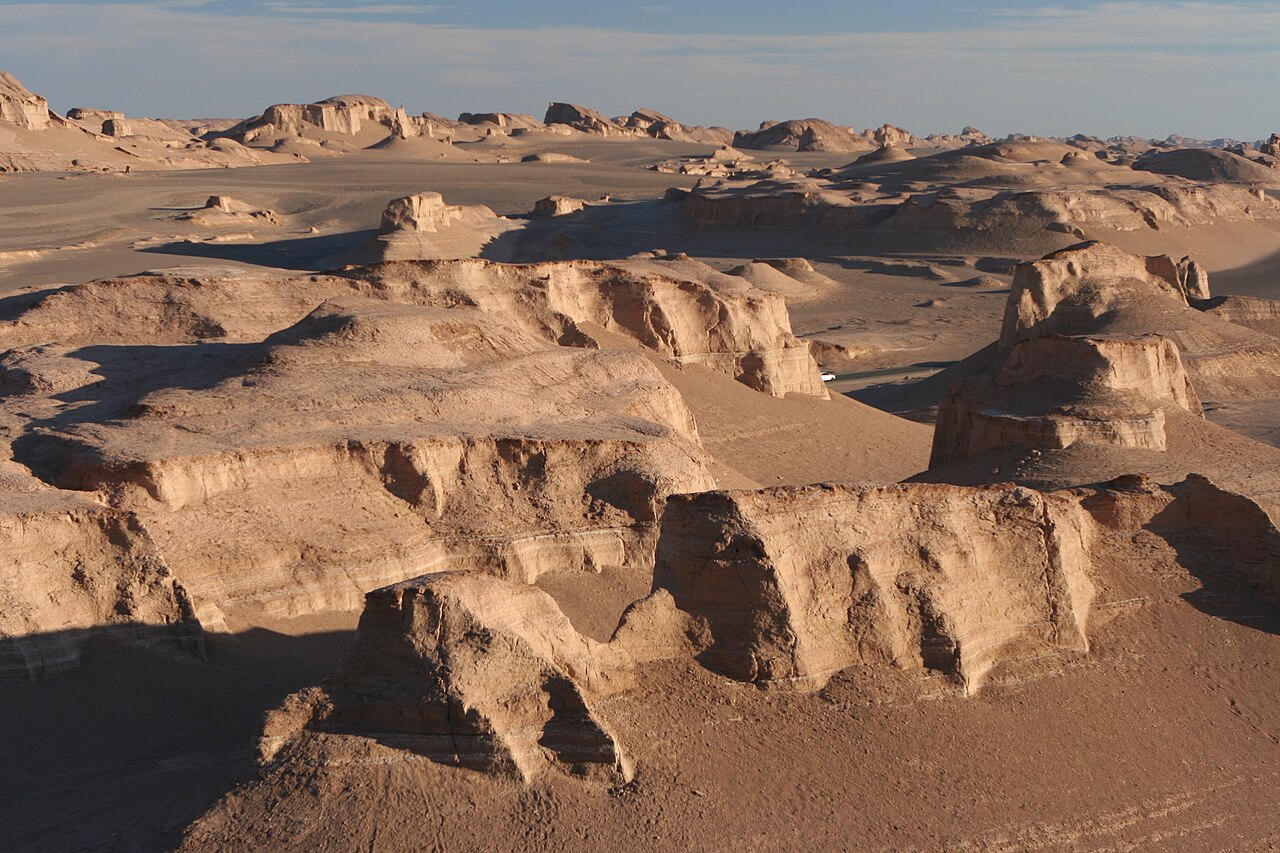
Desert in Iran, UNESCO Site
Lut Desert is a desert with both extensive salt flats and dunes located in the provinces of Kerman and Sistan-Baluchestan, Iran. It is the world's 33rd-largest desert, and was included in UNESCO's World Heritage List on 17 July 2016.
What travel creators say
An extremely dry desert basin with wind-carved rock ridges up to about 155 meters high, sand seas and salt flats, and one of the hottest ground surfaces on Earth, recorded at about 70°C.
The video describes the Lut as the more extreme desert, with the tallest dunes, wind-carved kaluts and the hottest land surface temperatures ever recorded, around 70°C.
The vast golden dunes of the Lut Desert offer a variety of outdoor adventures.
The presenter enters the world of the kaluts, remarkable natural formations shaped by wind and erosion over countless years.
The group enters the world of the kaluts, remarkable natural formations shaped by wind and erosion over countless years.
The hottest place ever recorded on Earth, a vast black basalt landscape stretching over 50,000 square kilometers in southeastern Iran and a UNESCO World Heritage site.
A 20,000 sq mile desert across Kerman and Sistan-Baluchestan where NASA measured the hottest surface on Earth.
The presenter describes Iran's first UNESCO natural heritage site, with a record 159°F surface temperature, black volcanic rock, and the eroded Kalut towers.
The Lut Desert is described as one of the hottest and most mysterious landscapes on Earth, with yardangs, salt springs and strange rock formations.
The main subject of the video: the world's hottest desert, with canyons, dunes, kaluts, black desert and lava fields, where 70.7°C has been recorded.
The presenter says the Lut Desert is one of the hottest places on Earth, with surface temperatures over 70°C and yardang ridges carved by wind.
The Dasht-e Lut holds the world record for the hottest land surface temperature ever measured, 70.7°C, yet microbial life survives on its salt crusts and basalt.
The Lut Desert is one of the hottest places on Earth, with surface temperatures above 70°C, vast wind-shaped formations and a haunting silence.
The presenter says it holds the highest land surface temperatures recorded on Earth, with wind-eroded mudstone ridges and dunes up to 980 ft tall.
A UNESCO World Heritage site and one of the most extreme desert landscapes on Earth, where visitors explore narrow corridors between carved sand and rock formations and camp beneath massive ridges.
The presenter describes the Lut Desert as the most extreme region on Earth, with Kaluts, towering sand dunes and a nearly sterile desert core.
A sea of sand and rock where surface temperatures have exceeded 70°C, making it one of the hottest places on Earth.
One of the largest sand deserts on Earth and the hottest inhabited region in the world, with NASA-recorded ground temperatures up to 70.7°C; its kaluts rise like surreal cathedrals above the dunes.
They ride through the Lut Desert, a UNESCO World Heritage site known as one of the hottest places on Earth, with vast sand dunes of different colors.
The presenter describes the hottest place on Earth, with 70°C ground temperatures, 80-meter wind-carved kaluts and the black volcanic sand of Gandom Beryan.
He reaches the dry salt lake of Lut, a UNESCO site with a no-swimming sign, and notes the hard salt crust over sand that floods when it rains.
The Lut Desert is the biggest, hottest and most desolate collection of sand and salt in Iran, part of the world's natural heritage, with temperatures up to 70 degrees Celsius.
The hottest place ever recorded on Earth, where NASA measured ground temperatures of 159.3°F, yet microbial life was found clinging to salt and stone.
Named with Dasht-e Kavir as one of Asia's largest sand deserts, used to show Iran is more than the desert stereotype.
A vast 23,000 sq km desert in southeast Iran, one of the hottest and driest places on Earth with the highest recorded ground temperature.
The presenter calls the Lut Desert the heart of extremes, an infernal furnace where temperatures reach almost 71 °C and the sand can sing.
A scorching desert offering surreal landscapes of towering dunes, dramatic kaluts and incredible starry nights.
One of the hottest and driest places on Earth, with NASA-recorded temperatures of 70.7 degrees Celsius, and Iran's first natural UNESCO World Heritage site.
Phil takes a 4x4 off-road adventure into the desert, seeing soft salt ground, a desert waterfall, and the hottest place on Earth.
The video describes the Dasht-e Lut in southeastern Iran as one of the hottest and driest places on Earth, with ground temperatures reaching 159°F, hot enough to fry an egg.
From videos in other languages
Arena rojiza y crestas de roca esculpidas por el viento hasta 75 metros de alto; aquí un satélite de la NASA midió 70 grados en el suelo.
亞茲德東南邊的沙漠,衛星曾測到地表溫度將近70度,是地球上有記錄以來最熱的地方之一。
प्रेज़ेंटर बताता है कि बिना लाइसेंस वाले गाइड के लूट डेजर्ट में घुसना मना है और यह यूनेस्को वर्ल्ड हेरिटेज साइट है जहां 2018 में 80.8 डिग्री सेल्सियस सतह का तापमान दर्ज हुआ था।
Uno de los lugares más calurosos del planeta, con temperaturas superficiales superiores a 70 °C y yardangs alargados esculpidos por el viento que parecen olas congeladas.
Deserto nel sud-est dell'Iran, patrimonio UNESCO dal 2016, con yardang (kalut) alti fino a 155 metri e dune che raggiungono i 475 metri; i satelliti hanno registrato temperature superficiali vicine ai 70 gradi.
Deserto no sudeste do Irã, Patrimônio Mundial da UNESCO, com kaluts esculpidos pelo vento e temperaturas de superfície próximas de setenta graus Celsius.
O lugar mais quente já registrado na Terra, com temperaturas de superfície de 70,7ºC medidas pela NASA, e onde pesquisadores encontraram vida microbiana.
Иранская пустыня с самой раскалённой поверхностью на Земле — выше 70°; ветер выточил из пород калюты, похожие на окаменевшие волны.
El desierto de Lut registra temperaturas superficiales superiores a los 70 grados; sus formaciones rocosas de Kalut se elevan desde la arena como castillos alienígenas y la UNESCO lo incluye en el patrimonio natural.
Die Wüste im Südosten Irans erstreckt sich über mehr als 50.000 Quadratkilometer; zwischen Dünen entstehen die Kaluts, steinerne Formationen, die durch Wind über Millionen Jahre geformt wurden.
Uno de los lugares más calientes registrados en la Tierra: la NASA midió 70,7 °C en el suelo, y aun así se encontraron microorganismos adheridos a la sal y la piedra.
Dans le sud-est de l'Iran, ce désert inscrit à l'UNESCO offre des yardangs sculptés par le vent, des champs de dunes et des températures extrêmes, un paysage antérieur à l'histoire humaine.
Die Lut-Wüste oder Dasht-e Lut liegt im Südosten des Iran und ist von der UNESCO als Naturerbe anerkannt. Hier erheben sich die vom Wind geformten Yardangs, und die Landschaft wirkt wie ein Labor der freigelegten Erde mit extremen Temperaturen.
Il Dasht-e Lut, nel sud-est dell'Iran, è presentato come il silenzio più estremo del Paese: un laboratorio della terra esposta con yardang scolpiti dal vento, dune immense e temperature tra le più alte del pianeta.
No sudeste do Irã, um deserto de calor extremo com yardangs esculpidos pelo vento, dunas imensas e superfícies minerais, reconhecido pela UNESCO.
El desierto de Lut registró 71 °C en la superficie del suelo, uno de los puntos más calientes medidos por satélites de la NASA; sus caluts son torres y cañones de sal de hasta 200 m esculpidos por el viento.
वह लूत रेगिस्तान से गुजरता है, जो दुनिया के सबसे गर्म इलाकों में से एक है; तेज हवा से रेत सड़क पर उड़ रही है और बाइक संभालना मुश्किल हो जाता है।
Die Dascht-e Lut im Südosten Irans ist ein Ort der Extreme, hier wurde eine der höchsten Bodentemperaturen der Erde mit über 70 Grad Celsius gemessen. Die vom Wind geformten Kaluts sind bis zu 155 Meter hoch und über 40 Kilometer lang und seit 2016 UNESCO-Welterbe.
Una de las regiones más duras e impresionantes de Irán, con temperaturas extremas registradas por satélites y paisajes moldeados por el viento y el tiempo.
Um dos desertos mais duros e impressionantes do Irã, com temperaturas extremas registradas por satélites, silêncio profundo e paisagens geológicas que parecem outro planeta.