 PlaceTube
Hopewell Rocks
Hopewell Cape, Canada · Videos: 68 · Map
Provincial park of New Brunswick, Canada
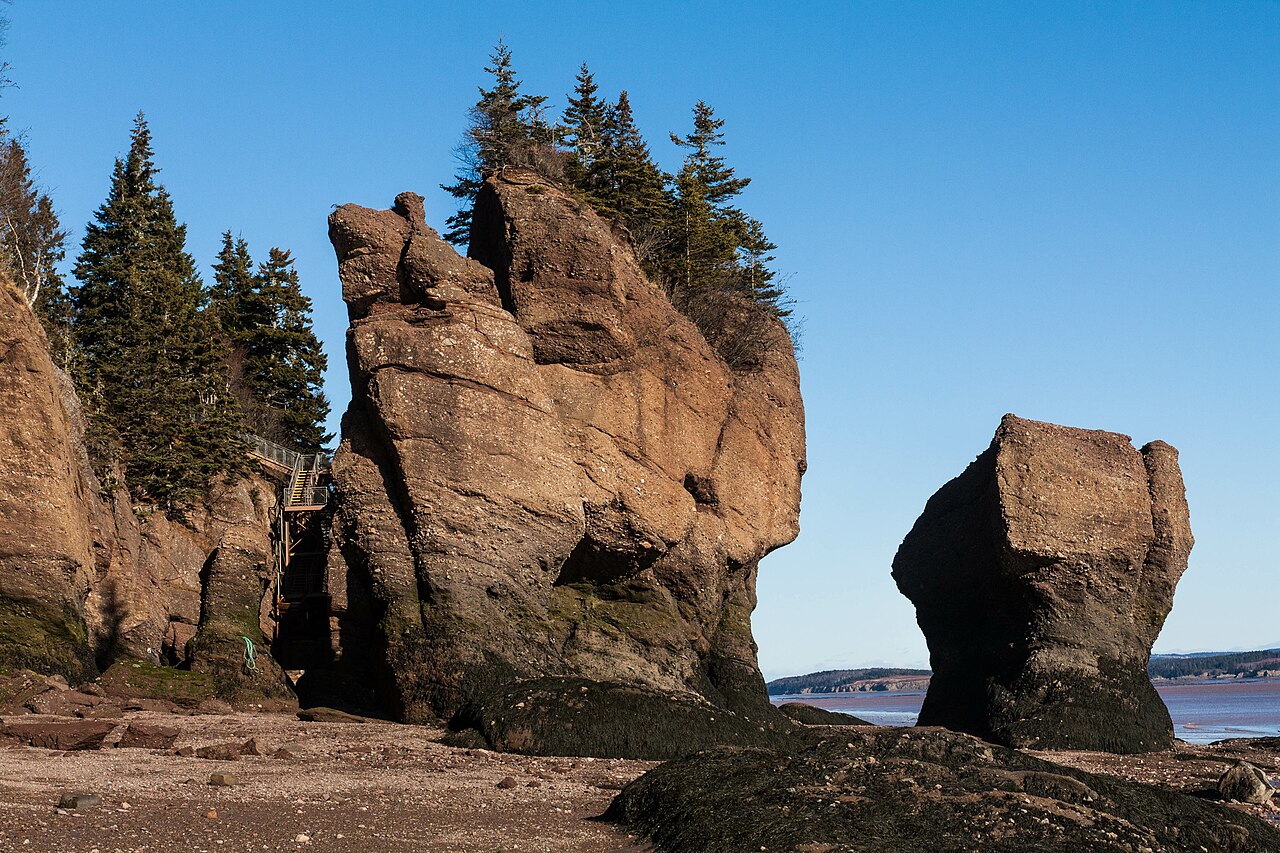
The Hopewell Rocks, also called the Flowerpot Rocks or simply the Rocks, are rock formations known as sea stacks caused by tidal erosion in the Hopewell Rocks Ocean Tidal Exploration Site at the Hopewell Rocks Provincial Park in New Brunswick, Canada. They stand 12–21 metres (40–70 ft) tall.
What travel creators say
At Hopewell the water rises more than ten metres, and ages of tides have carved the cliffs into flowerpot rocks; at low tide people walk on the sea floor beneath them.
The presenter opens with the Bay of Fundy tides at Hopewell Rocks, where the sea bed is dry at low tide and kayaks paddle between the rock formations at high water. He recommends going at opening and says one ticket covers two days.
The flowerpot-shaped rocks are Carboniferous sandstone and conglomerate about 325 million years old, cut faster at the base by the tides; the red floor is walkable at low tide and covered by meters of water six hours later.
Towering flowerpot rock formations sculpted by the highest tides on Earth (up to 16 m); at low tide you can walk the ocean floor and explore sea caves.
Colossal sea stacks rise from the Bay of Fundy, shaped by the world's highest tides; visitors walk the ocean floor at low tide and kayak between the formations when the tide returns.
At the Hopewell Rocks, massive stone formations known as flowerpots rise from the beach at low tide, and visitors walk on the ocean floor among these towering pillars.
The presenter walked the ocean floor at low tide among the famous high tides of the Bay of Fundy; the entry pass is valid for two consecutive days.
Ancient stone guardians shaped by time and water that resemble giant flower pots.
Towering sandstone formations carved by erosion; at low tide visitors can walk on the ocean floor beside them, and when the tide returns they become sea stacks surrounded by water.
At Hopewell Rocks, towering sandstone columns sculpted by the sea can be walked between at low tide and become a maze of tiny islands when the tide returns.
They see the flowerpot rocks at high tide (kayaking is cancelled due to wind) and return at low tide to walk the ocean floor with an interpretive guide.
You can walk the ocean floor at low tide and then kayak the same spot hours later when the water returns.
At Hopewell Rocks, towering stone formations emerge as the tides recede.
The presenters visit these sea stacks (flower pots) at low tide and return the next day to see them submerged at high tide, explaining the Bay of Fundy's 16-metre tides.
The video calls these towering sea stacks, often called the flower pot rocks, one of New Brunswick's most photographed landmarks, carved by the Fundy tides. At high tide you can kayak through the passageways, and at low tide walk among their bases.
The presenter recommends kayaking around the iconic flower pot rocks at high tide and walking the ocean floor among the sea stacks at low tide.
The first stop in New Brunswick, famous for the world's highest tides in the Bay of Fundy, where the water can rise up to 16 meters. They walk the ocean floor at low tide and note the $40 entry for two people.
Iconic rock formations where you can witness the Bay of Fundy's famous highest tides and walk the ocean floor at low tide.
The flowerpot rocks at Hopewell Rocks are pillars topped with trees and plants, carved by the ocean wearing away softer stone.
Towering sandstone formations like giant flowerpots in the Bay of Fundy, where you can kayak around the tops at high tide.
The last stop of the East Coast trip, Hopewell Rocks is very famous; they hoped to catch it at low tide but arrived at high tide.
The group heads to Hopewell Rocks on the Bay of Fundy, home to the world's largest tides, to walk the ocean floor at low tide among the sea stacks known as flower pots.
The presenter visits this provincial park in New Brunswick, famous for towering flowerpot rock formations carved by some of the world's highest tides.
The presenters play tourist at this famous natural attraction about 35 minutes south of Moncton, known for its flowerpot rocks and dramatic tidal shifts.
The presenters walk on the ocean floor at Hopewell Rocks on the Bay of Fundy, home of the world's highest tides, and tour the famous sea stacks.
Mentioned as a great longer day trip to see the dramatic work of the tides, though it's a 3-hour drive from Halifax each way.
They visit Hopewell Rocks Provincial Park over 18 hours to see it at low tide, high tide, and from the water; entry costs CAD 15.54 per person and is valid for two consecutive days.
Famous sandstone formations carved by tidal erosion, dubbed the 'Flowerpot Rocks' for their rounded, vegetation-covered tops.
Rock formations carved by the Bay of Fundy's world-highest tides; they arrive at low tide to walk on the seabed among the towering flowerpot rocks.
They call Hopewell Rocks one of the top things to do in New Brunswick, walking on the ocean floor and taking pictures among the rock formations.
From videos in other languages
Nas Hopewell Rocks, enormes pilares de arenito sustentam árvores sobre a praia, e o chão onde se caminha fica debaixo d'água poucas horas depois, com marés de até 16 m na Baía de Fundy.
होपवेल रॉक्स पर ज्वार का बदलाव सबसे साफ दिखता है; ज्वार उतरने पर पेड़ों के आकार वाली विशाल चट्टानों के बीच पैदल घूमा जा सकता है।
潮差可达十米以上,潮水把峭壁雕成一根根上粗下细、顶上长树的“花盆岩”;退潮时人们走在海底泥滩上仰望巨石。
主持話呢度係新不倫瑞克獨有嘅自然景點,以花盆形岩石聞名,退潮時可以行落海床,近距離睇岩石底部同海藻。
海岸边矗立着被潮汐侵蚀成上大下小形状的奇岩,低潮时可走上滩涂,下午返回时水已没过岩石底部,门票可连续两天使用。
Die Hopewell Rocks werden als eines der Highlights der Bay of Fundy genannt, die man nicht verpassen sollte.
Las rocas Hopewell, esculpidas por el agua, son un icono de la región.
Juste à côté du parc de Fundy, les rochers d'Hopewell sont uniques à voir, surtout en comparant marée basse et marée haute.
Dans la baie de Fundy, ce parc où l'on voit de grands monolithes rocheux sortir de l'eau, avec les plus grandes marées du monde : on peut marcher à marée basse.
조수 간만의 차로 유명한 주립공원으로, 입장료가 다른 주립공원보다 두 배 비싸다. 썰물과 밀물을 모두 보려고 이틀에 걸쳐 다시 찾는다.
Ils paient 14 dollars d'entrée et marchent sur les fonds marins à marée basse, impressionnés par les roches érodées et les 14 mètres de marée.
Lo describe como un parque natural, quizá patrimonio de la UNESCO, con rocas llamadas 'el florero invertido' y mareas que suben 15 metros, creando un paisaje erosionado increíble.
Formaciones rocosas espectaculares que esta vez no visitaron, pero muestra fotos de la visita pasada.
La blogueuse East Coast Mermaid emmène l'équipe à Hopewell Rocks, où l'on peut marcher sur le fond marin avant qu'il ne soit englouti par 16 mètres d'eau à marée haute.
Las famosas rocas en forma de maceta de la bahía de Fundy, donde caminan por el fondo del mar con marea baja y ven la mayor diferencia de mareas del mundo.
Главная цель поездки — парк Хоупвелл-Рокс в заливе Фанди, где бывают самые большие приливы в мире; в отлив обнажается дно и можно ходить среди скал, а вода поднимается на 20–30 метров.
Endroit mondialement connu où les marées de la baie de Fundy font varier le niveau de l'eau de près de 15 mètres, un phénomène impressionnant.