 PlaceTube
What to do in Granada Nicaragua!
Old, Alone and Far From Home ·
Open in PlaceTube Watch on YouTube
Places in this video
- Granada ▶ 0:05
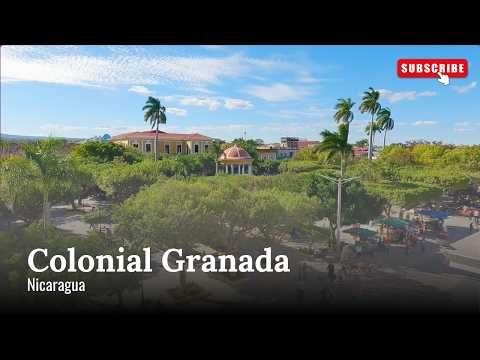
The presenter stays in Granada for four weeks and describes it as a colonial city with abundant architecture, plazas, churches, markets and a waterfront, one of Central America's most atmospheric locations.
- Isletas de Granada ▶ 1:28
A group of 365 islands in Lake Nicaragua formed by eruptions of Mombacho volcano; the presenter tours them by boat with his guide Pancho, passing homes, cemeteries and Monkey Island.
- San Pablo Fort ▶ 2:30
One of the isletas is the site of San Pablo Fort, which was created as a defense against pirates.
- Monkey Island ▶ 2:41
An islet with two resident primates that the boat tour passes by.
- Isletas cafe ▶ 2:47
The only island with a restaurant or cafe; the presenter stops for an early morning coffee and calls it the most incredible place to have a coffee on his Central America trip.
- Lake Nicaragua ▶ 3:23
The largest freshwater lake in Central America, locally called Lago Cocibolca, which connects to the Atlantic and was the reason Granada suffered pirate attacks.
- Granada pier ▶ 4:11
A pier extending 100-200 m into the lake for 15 cordobas, with an old ferry at the end and views of the shore and the lake stretching to the horizon.
- Malecón de Granada ▶ 4:58
An attractive pedestrian walk along the shore with palm trees and places to relax, never crowded, and the start of a road south that the presenter walked every morning.
- Centro Turístico Granada ▶ 5:32
A lakeside recreation area south of the malecón with restaurants and bars, lake access, and Sunday crowds swimming; the presenter walked here most mornings.
- Guadalupe Church ▶ 6:36
A gorgeous, imposing church on the route to the waterfront that has been a religious site since 1626 and was fully renovated in the mid-20th century.
- Parque Azul ▶ 6:39
A small space near the malecón dedicated entirely to the color blue, which the presenter finds very nice.
- Kodiak Bagel Shop ▶ 7:16
A bagel shop and bakery with a full menu of coffee drinks, open-air seating and artwork on the walls; the presenter stopped in often and praises its five-star rating.
- Calzada Street ▶ 7:44
The pedestrian avenue connecting the town center to the waterfront, lined with shops, eateries and bars, with colorful tile mosaics embedded in the pavement and vendors selling souvenirs.
- Granada Cathedral ▶ 8:50
The iconic yellow and white cathedral, Granada's primary landmark, where the presenter climbs a tower for spectacular views and the bell compartment for about a dollar.
- Iglesia La Merced ▶ 9:59
One of the oldest churches in the city, dating to 1539, with a baroque facade; a dollar buys access to the tower, whose views the presenter finds as impressive as the cathedral's.
- San Francisco Convent Museum ▶ 10:28
A sprawling monastery complex with courtyards and five or six galleries covering history, art, ethnography and archaeology, including pre-Columbian stone figures found on Zapatera Island.
- Parque Central ▶ 11:36
The large central square beside the cathedral, filled with paths, trees and benches, where locals play checkers and vendors sell vigoron and juice from corner kiosks.
- Palacio de la Cultura ▶ 13:25
A building on the west side of the square opposite the cathedral with an original facade and a grand interior holding art; entry is free and the upper floor offers views of the park.
- Palacio Episcopal ▶ 14:07
A building near the cathedral on the opposite side of the plaza, cited as a good example of colonial-era architecture.
- Plaza de la Independencia ▶ 14:18
An extension of the central plaza with an obelisk carrying the date 1821, marking Nicaragua's independence from Spain.
- Fortaleza de la Pólvora ▶ 14:36
A Spanish-style fort built in 1748 to store gunpowder against pirate attacks, later an army garrison and jail during the Somoza dictatorship, with a small museum on the revolution.
- Parque Xalteva ▶ 15:31
The presenter's favorite park in Granada, notable for a dozen or more stone pillars from a 19th-century revitalization, said to be the oldest and most historically significant park in the city.
- Iglesia Xalteva ▶ 16:13
A 16th-century church next to the park with baroque and Islamic-style design features, damaged over the centuries and since restored.
- Plaza Xalteva ▶ 16:40
An open space across from the church and park where the presenter believes remnants of the Xalteva walls that separated the indigenous community from the Spanish city can be seen.
- Chapel Maria Auxiliadora ▶ 17:02
A relatively recent neo-Gothic church built in 1922 west of the center; its doors were closed when the presenter stopped by.
- Old railroad station ▶ 17:20
The old station on the north side of the city where the first train arrived in 1886; trains stopped rolling in 1993 and it now stands as a reminder of the past.
- Mercado de Granada ▶ 17:52
A bustling market south of the center with more than 1,500 vendors, where commerce has been carried out since 1892.
- Cafe de las Sonrisas ▶ 18:23
A cafe with an open-air courtyard where the presenter eats a Nica breakfast of eggs, gallo pinto, plantain, cheese and slaw; all employees are deaf and signs teach customers sign language.
- Guy Fours Cafe and Bistro ▶ 19:25
A restaurant the presenter found dazzling, where he had coffee many times and one day ordered indio viejo, a beef stew with corn masa that tastes better than it looks.
- The Garden Cafe ▶ 20:05
A place with a lush courtyard where the presenter had a craft beer, coffee and dinner, calling it a one-stop trifecta that works for him.