 PlaceTube
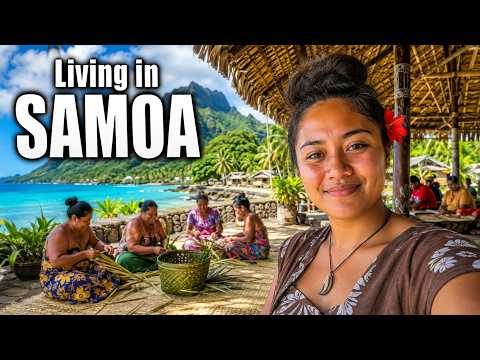
Living in Samoa | How People Live 4,000 KM From the Mainland | 4K Documentary
Open in PlaceTube Watch on YouTube
Places in this video
- Savai'i ▶ 0:30
The larger, greener and less crowded island, circled by a road that keeps returning to villages, plantations, churches and the sea.
- Apia ▶ 1:50
The capital on Upolu, where brightly painted buses, vans, markets and offices concentrate the country's urban movement.
- Upolu ▶ 1:50
The island carrying the capital Apia and most of the country's urban life, with villages and plantations along its coast.
- Fugalei Market ▶ 2:07
A market where bananas, coconuts, taro, tropical fruit and cooked Samoan food move from family-run stalls into bags and baskets.
- Apia Fish Market ▶ 2:25
The fish market adds tuna, octopus, crabs and other catch brought in from the sea, compressing several parts of island life into one place.
- 'Ie Samoa (fine mat) ▶ 7:53
Fine mats woven patiently from pandanus leaves over months or years, displayed and exchanged at weddings and funerals to reaffirm kinship.
- Salelologa Market ▶ 17:01
Along with the markets in Apia, Salelologa's stalls compress the relationship between local harvests, seafood and social life.
- Saleaula Lava Fields ▶ 17:33
On Savai'i, hardened lava from the 1905 to 1911 eruption of Mount Matavanu reshaped the landscape and buried villages, with dark rock still running around the remains of a church.
- Mulifanua Wharf ▶ 19:11
At Mulifanua Wharf vehicles line up and passengers carry bags toward the ferry crossing to Savai'i.
- Salelologa ▶ 19:28
The main arrival point on Savai'i, reached after a crossing of about an hour to an hour and a half from Upolu.