 PlaceTube
Hallstatt in 5 Minutes: Painted Skulls, a Bronze Age Staircase & the Village China Copied
Open in PlaceTube Watch on YouTube
Places in this video
- Hallstatt ▶ 0:00
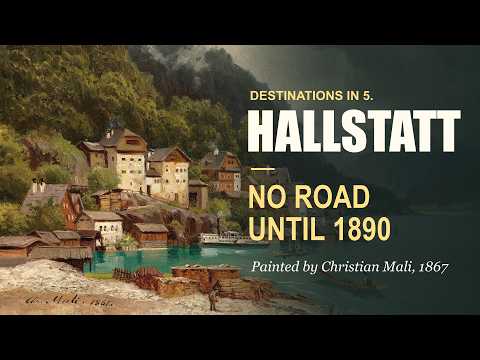
A village of fewer than 800 people on a ledge between cliff and lake, reached by boat from the train station across the lake; until 1890 there was no road.
- Salzkammergut ▶ 0:25
The region whose name means roughly 'salt estate', where Hallstatt lies; its salt mines belonged to the Habsburgs for centuries.
- Hallstatt Salt Mine ▶ 0:47
A funicular climbs to the high valley above the village where the salt mine has been worked for about seven thousand years, often called the oldest in the world; visitors ride down the miners' wooden slides.
- Hallstatt Boathouses ▶ 1:56
Flat land is so scarce that the village grew up the slope and out over the water, with boathouses on stilts; seven houses on piles had to go when the lakeside road was blasted through in 1890.
- Hallstatt Catholic Church ▶ 2:49
The churchyard on the hillside cannot grow, so graves were reopened after ten to fifteen years and the bones moved into the Bone House beside the church.
- Hallstatt Bone House ▶ 3:07
The Bone House beside the church holds about twelve hundred skulls, six hundred and ten of them painted with names, dates of death and garlands from 1720; the newest arrived in 1995.
- Hallstatt replica in Huizhou ▶ 3:25
In 2012 a copy of Hallstatt's centre, church and fountain included, opened in southern China.
- Lake Hallstatt ▶ 4:02
The presenter advises staying the night to see the lake early before day visitors arrive; in late spring decorated boats have carried the Corpus Christi procession across the lake for about four hundred years.