 PlaceTube
【神戸旅行♯1】地元民が選ぶ神戸の王道観光&グルメ!お得なスマートパスポートで巡る1泊2日
Open in PlaceTube Watch on YouTube
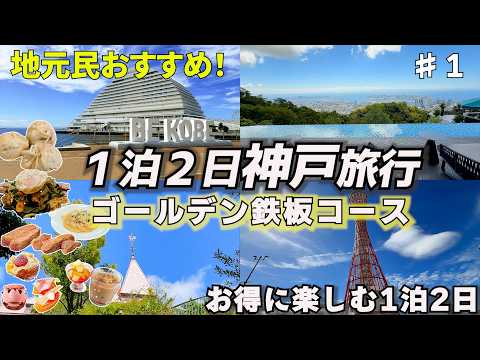
Places in this video
- Sannomiya Station ▶ 0:34
The presenter starts his Kobe trip at Sannomiya Station, the gateway to the city.
- Nishimura Coffee Sannomiya ▶ 2:04
A long-established kissaten founded in 1948, one minute from JR Sannomiya Station. He has the fruit set with open toast and cocktail fruit, and coffee brewed with Miyamizu water.
- Kobe Nunobiki Herb Gardens ▶ 5:42
He rides the ropeway up to the mountaintop herb garden with 12 themed gardens and about 75,000 herbs and flowers, enjoying the view of Kobe and Osaka Bay along the way.
- Nunobiki Falls ▶ 10:25
The waterfall comes into view from the ropeway; it is counted among Japan's three great sacred waterfalls, its name meaning white cloth hanging down.
- Nunobiki Gohonmatsu Dam ▶ 10:58
Japan's first gravity-type concrete dam built exclusively for water supply, visible from the ropeway and selected as one of the top 100 dam lakes.
- The Veranda Kobe ▶ 15:35
A newly opened mountain resort space in the herb garden combining a cafe lounge, sky bar, hammock area and the Emerald Lounge, with sweeping views over Kobe.
- Kitano Ijinkan ▶ 24:13
The historic district of Western-style foreign residences built from the Meiji to Taisho periods on the hill above the port.
- Kazamidori no Yakata (Weathercock House) ▶ 25:15
The most famous Ijinkan, officially the Former Thomas Residence, built around 1909 by German merchant Gottfried Thomas and designated a National Important Cultural Property; entrance is 500 yen and covered by the Smart Passport.
- Starbucks Coffee Kobe Kitano Ijinkan ▶ 29:48
A Starbucks inside the historic Kitano Monogatari-kan, a 1907 Western-style building registered as a National Registered Tangible Cultural Property.
- Ikuta Shrine ▶ 30:41
A shrine with over 1800 years of history whose supporting households, called Kanbe, are said to be the origin of the name Kobe; he visits the sacred forest of Ikuta no Mori behind it.
- Sannomiya Center Street ▶ 32:23
He passes through the covered shopping arcade on his way to Motomachi, noting how much it has changed.
- Kobe Daimaru ▶ 32:41
The symbol of Motomachi, a department store whose building is one of the landmarks of the former foreign settlement streetscape.
- Peony Garden Annex ▶ 32:41
A Cantonese restaurant founded in 1952 near Motomachi Station, where he orders the Gomoku Yakisoba with a fried egg for 2090 yen.
- Kobe Nankinmachi (Chinatown) ▶ 35:17
Kobe's Chinatown, entered through the Chang'an Gate completed in 1985, where he enjoys eating pork buns and sweets while strolling.
- Estroyal ▶ 36:43
A long-loved Western confectionery in Nankinmachi known for cream puffs; he tries the panda cream puff for 450 yen, sold only at the main store.
- Ganso Butamanju Roshoki ▶ 37:51
A long-established pork bun shop founded in 1915, about 10 minutes from Nankinmachi, serving small Tianjin-style buns at 330 yen for three.
- Motomachi Cake Motomachi Main Store ▶ 39:38
A Western confectionery founded in 1946 with a coffee corner, famous for its pomegranate cake and the founding idea of '1000 yen for a family of four'.
- Kobe Port Tower Hotel ▶ 42:04
His hotel for the night near Meriken Park, known for good value, with some rooms facing the Port Tower.
- Royal Princess night cruise ▶ 43:40
A roughly 40-minute sightseeing cruise around Kobe Port departing at 18:45, covered by the Smart Passport, with views of the Port Tower, Kobe Bridge and waterfront illuminations.
- Kobe Harborland umie Mosaic ▶ 50:44
The Harborland shopping complex where he arrives after the cruise, now full of souvenir shops.
- Kobe Brick Warehouse ▶ 51:31
Late-1890s Meiji-era brick warehouses built with British bricks, used as port warehouses until 1987, with only two buildings remaining today.
- Old Spaghetti Factory Kobe ▶ 52:06
An American-born spaghetti restaurant inside the brick warehouse at the edge of Harborland, where he has the carbonara course menu for 1930 yen with all-you-can-eat bread.
- Old Kobe Port Signal Station ▶ 56:22
A 46.3-meter signal station installed in Kobe Port in 1921, the oldest surviving signal station building in the port, now displaying reproduction signals.
- Kobe Port Tower ▶ 57:47
The red drum-shaped landmark built in 1963, renovated in 2024 with a new rooftop deck; he visits the observation floors, the Brilliance Museum, the revolving cafe and the souvenir shop.
- Meriken Park ▶ 1:06:50
A waterfront park opened in 1987 on reclaimed Meiji-era pier land, home to the BE KOBE monument and views of the port and Rokko Mountains.
- Otonaka-dori ▶ 1:07:54
An 800-meter east-west street once home to shipping cargo businesses, now a fashionable area of retro buildings, cafes and shops.
- Former Foreign Settlement ▶ 1:09:23
The district developed in 1868 with the opening of Kobe Port for foreigners to live and do business, lined with tree-lined streets and imposing stone buildings.
- CAFFERA Kobe Daimaru ▶ 1:09:40
A Milanese-style Italian bar on the first floor of Daimaru Kobe, said to be frequented by King Kazu; he has the Cafe Freddo Shakerato with pastry for 890 yen.
- Mitsui O.S.K. Lines Building ▶ 1:12:38
A 1927 historical building representing the former foreign settlement, with an imposing stone-like exterior, still used as offices.
- Former Foreign Settlement Building No. 15 ▶ 1:13:10
A Meiji-era building that once housed the British Bank, destroyed in the Great Hanshin-Awaji Earthquake and restored with original materials; it now houses a TOOTH TOOTH shop.
- Steakland Kobe-kan ▶ 1:14:23
A teppanyaki steak restaurant established in 1973 in Sannomiya, where he has the 150-gram Kobe beef steak lunch for 3500 yen cooked in front of him.