 PlaceTube
The Living History of Old San Juan (Colonial Architecture, Origins of the Piña Colada & More)
Open in PlaceTube Watch on YouTube
Places in this video
- Castillo San Felipe del Morro ▶ 0:17
The presenter introduces the fort El Morro, built in 1539 to defend Puerto Rico from European powers and pirates, and points out its entrance and guard towers overlooking San Juan Bay.
- Escuela de Artes Plásticas y Diseño de Puerto Rico ▶ 1:21
The colorful building near the field of armor was a Spanish colonial asylum and is today an art school of the University of Puerto Rico.
- Calle Fortaleza ▶ 1:40
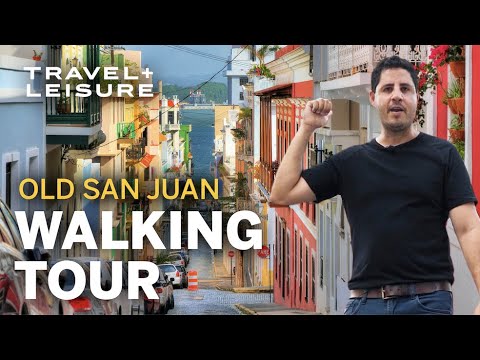
The presenter walks the hilly cobblestone streets of Old San Juan, noting the blue cobblestones brought from Europe as ship ballast and the colorful colonial architecture with restaurants serving Puerto Rican food.
- San Juan Casino ▶ 2:45
From this point the presenter points out the San Juan Casino from 1917, a neoclassical building where the Sylvester Stallone movie Assassins was filmed.
- Castillo San Cristóbal ▶ 3:18
The presenter views Fort San Cristóbal, built in the 17th century and now a national park, noting restoration work and that it was the largest fort the Spanish built in the Americas.
- World War II Bunker ▶ 3:49
Near the national park sign is a bunker built by the American military during World War II to defend Puerto Rico from possible German attack, once covered with grass to hide it.
- Iglesia de San Francisco ▶ 4:52
On Calle San Francisco, the presenter shows the church built in 1756 by the Franciscans, known for people buried in its walls to be closer to heaven and for its historical religious artifacts.
- Calle Fortaleza ▶ 5:08
The presenter walks Fortaleza Street, home to most of the shops in Old San Juan, admiring the Spanish balconies, colorful doors and views toward San Juan Bay.
- Calle San Sebastián ▶ 5:56
At the highest part of Old San Juan, the presenter shows San Sebastián Street, its tile of Saint Sebastian, the January street festival, and a decorative cannon on the corner.
- La Taberna Lúpulo ▶ 6:28
The presenter calls La Taberna Lúpulo a famous bar on San Sebastián Street for good Puerto Rican beer, mojitos and piña coladas, and one of his favorite spots in the city.
- La Puerta de San Juan ▶ 7:01
The presenter stands at the San Juan Gate, one of seven colonial gates, with 1749 mahogany doors and 20-foot-thick walls, where important visitors entered and walked up to the church to thank God for a safe trip.
- Catedral de San Juan Bautista ▶ 7:48
The presenter points out one of the first buildings in Puerto Rico, a church first built in wood in 1511, destroyed by a hurricane and rebuilt in concrete in 1540, with John the Baptist on its tile.
- Hotel El Convento ▶ 8:04
The presenter shows Hotel El Convento, a 1646 convent funded by a wealthy lady's donation and Spanish money, now a beautiful hotel.
- Old San Juan City Hall ▶ 8:37
The presenter points out the orange building, the first city hall of Puerto Rico built in 1523, and nearby the first prison, today a nice Spanish restaurant.
- La Fortaleza ▶ 8:53
The presenter shows La Fortaleza, the 16th-century house of the governor of Puerto Rico, home to Spanish, American military and Puerto Rican governors, topped by a huge Puerto Rican flag.
- Barrachina ▶ 9:08
The presenter stands at the spot where the piña colada was invented by Ramón Portas Mingot at Barrachina, describing it as a mix of Puerto Rican rum, coconut cream and pineapple.
- Plaza de Armas ▶ 9:41
The presenter stands in the city center at Plaza de Armas, the weapon square where troops were organized, with a fountain of four statues representing the seasons and pigeons children feed.