 PlaceTube
The “Fake” Ancient Village Every Chinese Tourist Loves! | Travel Vlog, Attraction, Architecture
Open in PlaceTube Watch on YouTube
Places in this video
- Xintiandi ▶ 3:30
The presenter visits Xintiandi, a supposedly historic quarter in central Shanghai, and finds that almost all the 19th-century houses were demolished and rebuilt with new bricks, plaster and windows. He notes it has the most expensive housing in China and is full of shops, restaurants and tourists taking photos.
- Beijing hutongs ▶ 6:33
The presenter strolls through Beijing's hutongs, explaining that most were demolished and the remaining ones were rebuilt and embellished for tourists. He walks into courtyards, admires the renovated gray facades, and notes the clean public toilets and the mix of trendy coffee shops and real local life.
- Hutong coffee shop ▶ 17:30
The presenter points out a fancy coffee shop with a small store in the hutongs, saying they make really good coffee, and mentions luxury brands and a vintage clothing store nearby.
- Anshun Bridge ▶ 19:05
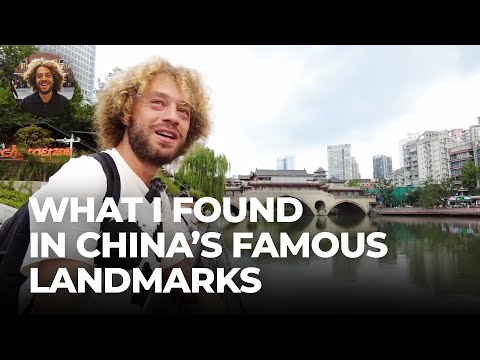
The presenter calls the Anshun Bridge one of Chengdu's architectural symbols, a bridge with shops and bars that looks ancient but was actually built in 2003 after earlier versions were washed away by floods. He notes it is a popular gathering spot with music and cafes along it.
- Great Wall of China ▶ 20:42
The presenter climbs a tourist-friendly, heavily rebuilt section of the Great Wall, explaining its history and the different tourist, semi-wild and wild sections. He notes the uneven stone pavement, the heat, and the rental machines for umbrellas and strollers at the base.
- Gubei Water Town ▶ 24:51
The presenter visits Gubei Water Town, a fake 'ancient' village built near the Great Wall on the site of the old settlement of Gubei. He pays 280 yuan for entry plus cable car, walks the canals and bridges, and calls it a well-made amusement park where nothing is authentic.
- Porcelain House ▶ 33:19
The presenter visits Tianjin's Porcelain House, a former Ministry of Finance building decorated with porcelain vases, cups and shards by a local collector. He describes it as primitive folk art turned into a crowded tourist attraction with ticket offices and souvenir shops.
- The Bund ▶ 36:34
Standing on the Bund embankment, the presenter recounts how Western powers built banks and trading houses here after the Opium War, making Shanghai Asia's leading city in the 1920s and 30s. He explains the area's purge under Mao and its later return to commercial and entertainment use.
- 1933 Shanghai (former slaughterhouse) ▶ 37:37
The presenter explores a former slaughterhouse designed by a British architect in 1933, with air bridges for cattle and rough concrete staircases. He notes it was later a textile factory and is now an art center with cafes, shops and galleries, and that it was unusually preserved rather than remodeled.
- Shanghai workers' ghetto ▶ 40:09
The presenter visits one of the last authentic workers' ghettos in Shanghai, where families built their homes floor by floor near the factories. He talks with a local Russian resident about the shared kitchens and the neighborhood's gradual disappearance.
- Shamian Island ▶ 43:45
The presenter describes Shamian Island in Guangzhou as a rare well-preserved colonial district built by the French and British in the mid-19th century. He notes that only the Polish consulate remains, with galleries, stores and a Starbucks in the historic buildings, and that it is unusually green and shady.
- Wenshu Monastery ▶ 45:10
The presenter visits the old Buddhist monastery in Chengdu, built in the 6th century, housing more than 300 Buddha statues and representing the Mahayana tradition. He notes its authentic, unrestored feel, the worshippers, the firefighting station inside, and a tea house selling expensive teapots.