 PlaceTube
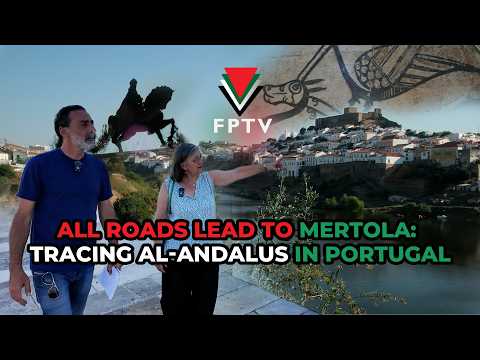
All Roads Lead to Mertola: Tracing Al-Andalus in Portugal
Open in PlaceTube Watch on YouTube
Places in this video
- Mértola ▶ 0:37
The presenter introduces the city just outside its walls, describing it as a beautiful old city in the Algarve province of Portugal whose history reaches back to the seventh century BC.
- Guadiana River ▶ 1:28
The professor explains that Mértola sits at the last navigable point of the Guadiana, whose name comes from the Arabic Wadi Ana, meaning river of ducks.
- Islamic Neighborhood of Mértola ▶ 3:44
The presenter and professor walk through excavated foundations of Almohad-period houses, noting the latrines, kitchens, shared walls and the narrow street that was later built over.
- Early Christian Mosaic and Necropolis ▶ 6:10
They view sixth-century Early Christian mosaics and structures, and the professor notes that after the Christian conquest the space became a cemetery.
- Islamic Hammam of Mértola ▶ 6:46
The professor points out the remains of a real Islamic hammam dating from the beginning of the fifteenth century.
- Mértola Islamic Art Museum ▶ 7:40
The presenter tours the museum's collection of twelfth- to fifteenth-century Islamic objects, including water jars with Khamsa symbols, ceramics, a mosque model, tombstones and jewelry-making tools.
- Mértola Mosque ▶ 11:14
The professor shows the model and preserved remains of the mosque, the only mosque preserved in Portugal, built in Almohad style with its mihrab and doors intact.
- Statue of Ibn Qasi ▶ 26:14
They stop at the statue of the Sufi leader Ahmad ibn al-Hussein ibn Qasi, who founded a short-lived independent kingdom in Mértola around 1144 to 1147.
- Mértola Castle ▶ 28:38
The castle is closed, but the professor shows the original Almohad-period door of the building, whose first structure dates to the ninth century.