 PlaceTube
Plymouth: Pirates, Ports, and the Past (Travel Documentary)
Open in PlaceTube Watch on YouTube
Places in this video
- Sutton Harbour ▶ 0:47
The presenter calls Sutton Harbour the most beautiful of Plymouth's many marinas and harbours, noting its name comes from a word meaning 'south of the town' and that it was once a town in its own right called Sutton.
- Levia Statue ▶ 1:07
A fish statue by Brian Fowl that overlooks the surrounding harbour, pointed out as one of the spots of interest in Sutton Harbour.
- West Pier ▶ 1:22
Today known as the West Pier, in the 1620s this jutting piece of land was called the Barbican, meaning fortified gate, and is believed to be near where the Mayflower departed.
- Mayflower Memorial ▶ 1:38
The memorial commemorates the Mayflower's departure, and a nearby wall bears plaques for Plymouth people lost at sea.
- Mayflower Museum ▶ 2:12
The presenter says you can learn more in depth about the impact of colonization on indigenous peoples of North America in the Mayflower Museum.
- Barbican ▶ 2:44
The historic port district of Plymouth, once a hotspot for pirates and privateers, now filled with cosy cafes, shops, boutiques and historic pubs.
- Southside Street ▶ 3:16
One of the main thoroughfares through the Barbican, home to places of interest like the Plymouth Gin Distillery.
- Plymouth Gin Distillery ▶ 3:16
The oldest working gin distillery in Britain, dating back to 1793, with the Mayflower on its logo; you can take a guided tour or enjoy gin cocktails in the upstairs bar.
- Jacka Bakery ▶ 4:43
Founded in 1593, it is said to be the oldest commercially working bakery still in operation in Britain, and is rumoured to have supplied biscuits to the Mayflower.
- Old Custom House ▶ 5:04
The old custom house in the Barbican has now been turned into a delightful cafe.
- The Minerva Inn ▶ 5:46
Described as probably the oldest of Plymouth's many historic pubs, dating all the way back to 1540.
- Elizabethan Gardens ▶ 6:02
Laid out in 1970 to commemorate the 350th anniversary of the Mayflower's sailing, planted with species that would have existed in Elizabethan England.
- Plymouth Hoe ▶ 6:48
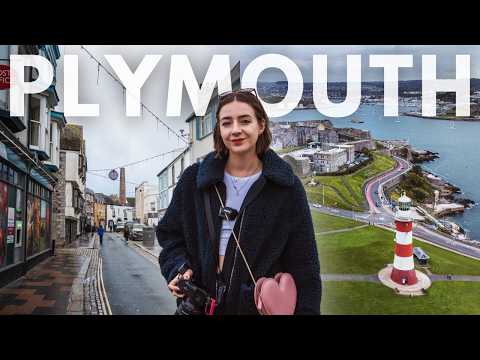
Called the most picturesque area of Plymouth, with panoramic views over Plymouth Sound and Smeaton's Tower as its most iconic attraction.
- Smeaton's Tower ▶ 7:04
An 18th-century decommissioned lighthouse on the Hoe; the presenter notes 93 steep steps lead to the top for an even better view.
- Elliot Terrace ▶ 7:38
Some of the most attractive properties in Plymouth, dating from the latter half of the 19th century and therefore Victorian.
- Royal Citadel ▶ 7:54
A bastioned artillery fortress on the edge of the Hoe managed by English Heritage; visits are by guided tour only and no photos or phones are allowed.
- Drake's Island ▶ 8:32
A 10-minute boat ride from Plymouth, the 6.5-acre island has a storied past as part of the city's defences; the presenter found the 3-hour tour a bit long but worthwhile for military history fans.
- Tamar Bridge ▶ 10:49
A 300-metre suspension bridge seen from a sunset viewpoint at the edge of Devon overlooking the Tamar and Cornwall.
- Royal Albert Bridge ▶ 11:06
An impressive feat of Victorian engineering by Brunel, opened in 1859 with an innovative design and still carrying trains over the river into Cornwall.
- Saltram House ▶ 18:43
An 18th-century Georgian house on the banks of the Plym with interiors by Robert Adam and original Chinese wallpapers, plus gardens for a nature walk near the city.
- Plymouth Miniature Steam ▶ 19:55
A group of volunteers maintain steam and battery-powered locomotives here; the presenter calls it one of the city's best-kept secrets and a fun family day out at around £1 per ride.