 PlaceTube
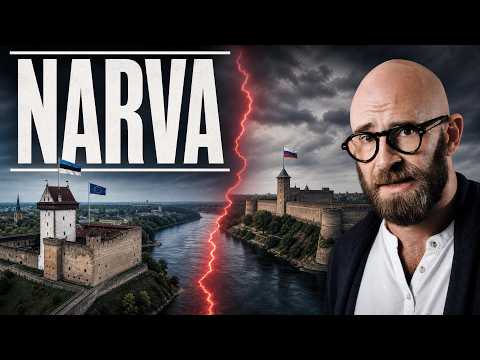
The Russian City in the EU
Places ·
Open in PlaceTube Watch on YouTube
Places in this video
- Narva ▶ 1:42
Estonia's third-largest city, sitting on the Russian border and roughly 87–90% ethnically Russian; the video explores its history, demographics and its role in questions of divided loyalties.
- Friendship Bridge ▶ 1:55
The 160 m bridge over the Narva River linking Narva with the Russian town of Ivangorod, now closed to vehicles and dotted with razor wire and anti-tank obstacles.
- Ivangorod ▶ 2:02
The Russian town across the river, historically a twin settlement of Narva known in Estonian as Jaanilinn, now firmly a Russian city.
- Hermann Castle ▶ 3:01
Narva Castle, built by the Danes in the 1300s; it survived the Second World War bombing and now flies Estonian, EU and Ukrainian flags visible across the border.
- Narva Town Hall ▶ 3:10
The landmark of Narva's Swedish-built baroque old town, one of the few buildings to survive the war intact.
- Swedish Lion of Narva ▶ 4:50
A golden lion statue installed in 1936 facing Russia as a homage to Sweden's 1700 victory; destroyed in the war and reconstructed in 2000.
- Narva railway station ▶ 17:41
A monument to the Soviet deportees stands in front of the station, from which Estonians were sent to their fates in the 1940s.
- Ida-Viru County ▶ 21:44
The eastern county around Narva, home to shale oil and power plants producing most of Estonia's electricity and populated largely by ethnic Russians.
- Kohtla-Järve ▶ 22:50
Estonia's fifth-largest city in Ida-Viru County, about 70% ethnic Russian and overwhelmingly Russian-speaking.
- Kreenholm Textile Factory ▶ 24:42
Once the largest factory in the Russian Empire, it went bankrupt after independence, leaving an enormous derelict complex and 12,000 lost jobs.
- Sillamäe ▶ 26:56
A nearby Russian-speaking town that, like Narva, held an autonomy referendum in 1993 which Tallinn declared unconstitutional.
Cities in these videos
Narva · Ivangorod · Jõhvi · Kohtla-Järve · Sillamäe