 PlaceTube
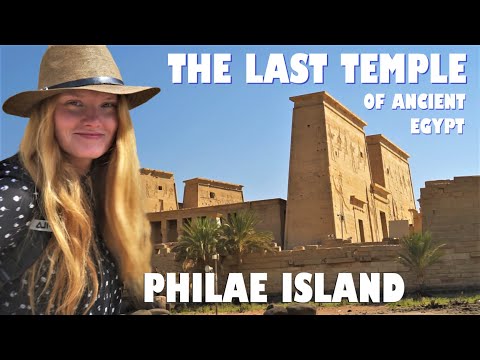
PHILAE ISLAND - THE LAST ANCIENT EGYPTIAN TEMPLE! ASWAN EGYPT
Open in PlaceTube Watch on YouTube
Places in this video
- Philae Island ▶ 0:00
The presenter introduces Philae Island, home to the beautifully preserved Temple of Isis, located between the old Aswan Dam and the High Dam at the first cataract.
- Temple of Isis ▶ 0:08
The presenter explores the great Temple of Isis, initiated by Ptolemy II around 270 BC, walking through its pylons, forecourt, hypostyle hall and sanctuary.
- Temple of Arensnufis ▶ 2:26
The exploration begins at the Temple of Arensnufis, dating to the 3rd century BC and probably built over an older structure dedicated to the Nubian god Arensnufis.
- Kiosk of Nectanebo I ▶ 2:58
The presenter admires the oldest extant temple structure on the island, the Kiosk of Nectanebo I from the 4th century BC, with its finely crafted sistrum columns.
- Western Colonnade ▶ 3:52
The kiosk connects to a western colonnade with 32 columns and 12 window-like openings offering views of the Nile and neighboring islands, ornamented under Augustus, Tiberius, Claudius and Nero.
- Trajan's Kiosk ▶ 5:53
The symbol of Philae Island, also called the Pharaoh's Bed, measures 20 by 15 meters, stands almost 16 meters high with 14 floral-capital columns, and was never completed; its interior is covered in 18th- and 19th-century traveler graffiti.
- First Pylon ▶ 8:23
The enormous first pylon, 45.5 by 18 meters, shows the ritual massacre of the unfaithful, with Cleopatra's father Ptolemy XII depicted on both towers; two pink granite Roman-style lions guard the entrance.
- Second Pylon ▶ 12:03
In the forecourt stands the second pylon, probably built by Ptolemy VIII but depicting Ptolemy XII making offerings to Horus and Isis.
- Granite Altar of Taharqa ▶ 12:36
In the southeast corner of the forecourt is a small granite altar dedicated to Amun-Ra, the oldest object on the island, raised around 670 BC by the Kushite pharaoh Taharqa.
- Mammisi (Birth House) ▶ 14:17
The most beautifully adorned structure in the forecourt is the birth house, where rituals of the divine birth dedicated to young Horus took place once a year, symbolizing the rebirth of the pharaoh.
- Hypostyle Hall ▶ 15:38
Inside the temple, the hypostyle hall displays superb columns with floral capitals, presumably depicting the first primordial plants.
- Sanctuary of Isis ▶ 17:29
In the inner sanctuary, on a granite pedestal founded around 240 BC by Ptolemy III and Berenice, originally stood the statue of Isis carried in processions to Biga Island.
- Hadrian's Gateway ▶ 19:24
West of the temple are the remains of the gateway and vestibule built by the emperor Hadrian, a monument the presenter notes seeing in many countries.
- Temple of Harendotes ▶ 20:08
Next to Hadrian's gateway stood the Temple of Harendotes, built by Nero and Claudius, of which almost nothing remains as its material was reused in Byzantine churches.
- Temple of Augustus ▶ 20:57
At the northern end of the island are the remains of the Temple of Augustus, built in 9 BC, and the triumphal arch erected by the emperor Diocletian.
- Temple of Hathor ▶ 22:24
On the eastern side of the island is a small Ptolemaic temple dedicated to Hathor, adorned with joyful scenes of musicians and dancers and images of the dwarf god Bes.