 PlaceTube
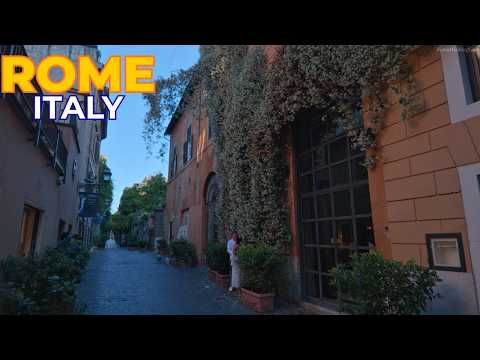
Rome Italy, The Perfect Time for a Walk | Walks in Rome
Roma Walks | Roma Walking Tours ·
Open in PlaceTube Watch on YouTube
Places in this video
- Campo Marzio ▶ 0:45
Welcome to the heart of Campo Marzio. I'm Luca, and today I'll take you to one of Rome's oldest neighborhoods.
- Verdini Antiques Roma-Londra ▶ 1:20
This shop is called Verdini Antiques Roma-Londra — it's truly magnificent. I love stopping to look at their window displays.
- Piazza Borghese ▶ 2:20
Piazza Borghese is home to Palazzo Borghese, nicknamed by Romans "il cembalo" — the harpsichord — because its floor plan resembles the instrument, visible only from above.
- Palazzo Borghese ▶ 2:20
Piazza Borghese is home to Palazzo Borghese, nicknamed by Romans "il cembalo" — the harpsichord — because its floor plan resembles the instrument, visible only from above.
- Via del Leone ▶ 4:00
Via del Leone — a name that recalls the medieval presence of exotic animals kept nearby by Roman nobles, a common practice during the Renaissance.
- Piazza di San Lorenzo in Lucina ▶ 5:00
Piazza di San Lorenzo in Lucina is one of Rome's oldest places of worship. The church here is documented as far back as the 5th century AD.
- Basilica of San Lorenzo in Lucina ▶ 5:00
The church here is documented as far back as the 5th century AD. According to tradition, Saint Lawrence was martyred right here in 258 AD, burned on a grill — and the grill remains his symbol to this day.
- Via Frattina ▶ 7:07
Via Frattina is one of the main shopping streets of the historic center, connecting Piazza di Spagna with the area around Piazza San Lorenzo in Lucina.
- Via Bocca di Leone ▶ 9:22
Via Bocca di Leone — the fascinating name comes from an old stone mask with an open mouth that stood here, used as a letter box in the 17th century.
- Fontana dei Torlonia ▶ 10:45
The Fontana dei Torlonia — an elegant neoclassical fountain commissioned by the powerful Torlonia family, bankers who became Roman princes through their great wealth.
- Via Condotti ▶ 11:49
Via Condotti — one of the most famous streets in the world. The name comes from the underground "condotti," the channels of the Acqua Vergine aqueduct running right beneath it.
- Caffè Greco ▶ 12:31
Caffè Greco at number 86 is Rome's oldest historic café, open since 1760. Goethe, Keats, Stendhal, Liszt — they all sat at these tables.
- Piazza di Spagna ▶ 13:50
Here we are at Piazza di Spagna! Perhaps the most photographed square in the world — and yet its name is Spanish only because of the Spanish Embassy, located here since 1647.
- Fontana della Barcaccia ▶ 14:04
The Fontana della Barcaccia at the foot of the steps was created by Pietro Bernini, father of the more famous Gian Lorenzo. It represents a half-sunken boat in the Tiber.
- Spanish Steps ▶ 14:32
The Spanish Steps were built between 1723 and 1726 with French funding — which is why Romans also called them "la scalinata dei Francesi," the French Staircase.
- Keats-Shelley House ▶ 15:08
In the small red house to the right of the steps, the English poet John Keats spent his final days. He died here on February 23, 1821, at just 26 years old. Today it's a small literary museum.
- Via del Babuino ▶ 17:45
Via del Babuino — the name comes from a fountain featuring a statue of a satyr, nicknamed "il Babuino" — the baboon — by Romans, for how ugly it looked.
- Via Alibert ▶ 18:55
Via Alibert — a small, secluded street that still has the feel of 19th-century Rome. It's named after Jean Toussaint Alibert, a French entrepreneur who opened a theater here.
- Via Margutta ▶ 19:35
Via Margutta — the artists' street! The name may come from the Latin "maris gutta," meaning "drop of the sea" — an ironic nickname for a foul-smelling medieval stream.
- Fontana degli Artisti ▶ 20:55
The Fontana degli Artisti — also known as the Fontana delle Arti — was designed in 1927 by Pietro Lombardi. It has a triangular shape, topped with buckets of paintbrushes.
- Palazzo Patrizi Naro Montoro ▶ 22:00
Palazzo Patrizi Naro Montoro — built in 1858 by the noble Patrizi family. For decades it housed the International Art Association, a cultural heart of Rome.
- Monument to Giordano Bruno Ferrari ▶ 25:06
The monument to Giordano Bruno Ferrari — not the philosopher burned at Campo de' Fiori, but a local figure from this neighborhood.
- Piazza del Popolo ▶ 29:30
Piazza del Popolo — one of Rome's largest and most dramatic squares. Valadier redesigned it between 1816 and 1820, giving it the oval shape we see today.
- Obelisco Flaminio ▶ 29:44
At the center stands the Obelisco Flaminio, nearly 26 meters tall: Augustus brought it to Rome in 10 BC after the conquest of Egypt, and it originally stood in the Circus Maximus.
- Porta del Popolo ▶ 29:58
The Porta del Popolo at the far end was commissioned by Pope Pius IV from Michelangelo. The great artist, too old by then, passed the work to his student Nanni di Baccio Bigio.
- Santa Maria in Montesanto ▶ 31:31
The twin churches on the south side — Santa Maria in Montesanto and Santa Maria dei Miracoli — look identical, but they're not!
- Santa Maria dei Miracoli ▶ 31:31
The twin churches on the south side — Santa Maria in Montesanto and Santa Maria dei Miracoli — look identical, but they're not! Rainaldi adapted them to different-sized plots using a brilliant optical trick.
- Prati ▶ 34:40
Via Ferdinando di Savoia — one of the streets in the Prati neighborhood, built after 1870 for the new capital of Italy. Prati is the only neighborhood in Rome built on a modern grid plan.
- Via Ferdinando di Savoia ▶ 34:40
Via Ferdinando di Savoia — one of the streets in the Prati neighborhood, built after 1870 for the new capital of Italy.
- Via Maria Adelaide ▶ 36:15
Via Maria Adelaide — one of the most elegant residential streets in Prati. The street names in this neighborhood honor the House of Savoy, the royal family of unified Italy.
- Via della Penna ▶ 37:15
Via della Penna takes its name from the old port of Ripetta, where boats arrived carrying goods — including goose quills for writing, one of the most traded items of the time.
- Via di Ripetta ▶ 39:20
Via di Ripetta — one of the three branches of the Trident. The name comes from "Ripetta," the small river port that stood here until 1900, used for trade with the inland regions.
- Via del Vantaggio ▶ 41:30
Via del Vantaggio — the mysterious name refers to an old customs toll collected here. Anyone entering the city from this side had to pay a levy — to give the "vantaggio" to the taxman.
- Via del Corso ▶ 42:55
Via del Corso — the ancient Via Lata of the Romans, then known as Via Flaminia within the city. Over two kilometers of straight road cutting through Rome from Piazza del Popolo to Piazza Venezia.
- Via Antonio Canova ▶ 45:15
Via Antonio Canova — named after the great Venetian neoclassical sculptor who lived and worked in this area.
- Via delle Colonnette ▶ 46:45
Via delle Colonnette — the name refers to the small columns that marked property boundaries along this street in ancient times.
- Via della Frezza ▶ 47:28
Via della Frezza — arrows were made and sold here for the archers of the papal militias in the Middle Ages.
- Mausoleum of Augustus ▶ 49:31
There it is — the Mausoleum of Augustus! The largest circular tomb of the ancient world: about 87 meters in diameter. Augustus built it in 29 BC for himself and his family.
- Ara Pacis ▶ 50:20
On the right, the Ara Pacis — the Altar of Augustan Peace, built between 13 and 9 BC to celebrate peace following military victories in Gaul and Spain.
- Museo dell'Ara Pacis ▶ 50:48
The museum housing it today was designed by American architect Richard Meier and opened in 2006. A modern intervention in the heart of the ancient Campo Marzio — and a controversial one.
- Church of San Rocco all'Augusteo ▶ 51:40
The Church of San Rocco all'Augusteo — built in 1499 as a chapel for the boatmen of the nearby Porto di Ripetta. Saint Roch was the patron of sailors and plague victims.
- Piazza Augusto Imperatore ▶ 55:20
Piazza Augusto Imperatore — created in the 1930s by Mussolini, who demolished an entire medieval neighborhood to isolate the Mausoleum.
- Church of San Girolamo dei Croati ▶ 55:55
The Church of San Girolamo dei Croati — founded in 1453 by Rome's Croatian community, one of many national churches that foreign communities built across the Eternal City.
- Piazza del Porto di Ripetta ▶ 58:40
Piazza del Porto di Ripetta — this is where one of the most important river ports of pre-unification Rome stood. The port of Ripetta served the trade in wine, oil, and grain from Umbria.
- Fontana del Porto di Ripetta ▶ 59:55
The Fontana del Porto di Ripetta — one of the last reminders of the magnificent baroque staircase that once descended to the Tiber. Designed by Alessandro Specchi in 1704.
- Lungotevere Marzio ▶ 1:00:55
Lungotevere Marzio — the long riverside road takes its name from the ancient Campo Marzio. From here you have one of the finest views of the Tiber and Rome's bridges.
- Arco del Piacentini ▶ 1:03:10
Via dei Somaschi and the Arco del Piacentini — a small arch that marks the former presence of the Somaschi Fathers, a religious order founded in the 1500s to care for abandoned children.
- Piazza Nicosia ▶ 1:04:00
Piazza Nicosia with the Fontana del Moro — the historic Fontana del Trullo once stood here, later moved to Piazza del Popolo by Pope Sixtus V.