 PlaceTube
Roots of Portugal: ‘Portus Cale’ the beautiful port | WIDE | FULL DOCUMENTARY
Open in PlaceTube Watch on YouTube
Places in this video
- Braga ▶ 0:00
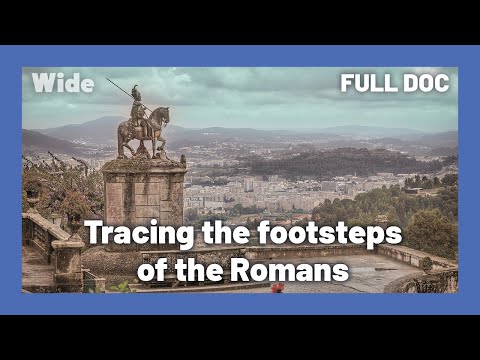
The video opens in Braga, where Emperor Augustus founded Bracara Augusta, capital of the Gallaecia region.
- Roman Amphitheatre of Bracara Augusta ▶ 0:34
The presenter shows the remains of the Roman amphitheatre of Bracara Augusta, part of Portugal's Roman heritage.
- Termas Romanas de Maximinos ▶ 0:50
The 2,000-year-old Roman public baths, built in the 1st century BC, were only preserved starting in the 1970s.
- Douro Valley ▶ 1:23
The terraced port wine vineyards of the Douro Valley, shaped by the Romans, are described as the heart of Portuguese wine culture.
- Ponte de Lagoncinha ▶ 1:54
The 12th-century bridge over the Ave river, built on the ruins of a Roman bridge, is shown on the route toward Porto.
- Porto ▶ 2:15
The video explains that the Greeks called the trading center 'Cale' and the Romans 'Portus Cale', the root of the name Portugal.
- Douro River shipyard ▶ 3:41
The presenter visits one of the last working shipyards on the Douro, where traditional wooden boats are still built.
- Cais de Gaia ▶ 7:27
At the quay of Vila Nova de Gaia a small fleet of wooden rabelo boats, once used to transport port wine, is kept by the wine cellars.
- Aveiro ▶ 8:46
Called Aviarium in Roman times, Aveiro's lagoon made it a well-protected harbor and a starting point of Portuguese exploration.
- Ria de Aveiro ▶ 8:52
In the Ria de Aveiro, locals have used the tides to extract salt for thousands of years.
- Arte-Xávega fishing ▶ 9:24
Near Aveiro the presenter witnesses the 3,000-year-old arte-xávega fishing method, once spread across the Mediterranean by the Romans.
- Coimbra ▶ 16:13
The district of Coimbra, set among rice fields along the Mondego, was Portugal's capital from 1139 to 1260.
- Conímbriga ▶ 16:25
One of Portugal's largest Roman archaeological sites, with city walls, mosaics and heated baths, abandoned in the Middle Ages.
- Aqueduto de São Sebastião ▶ 22:39
The foundations of the aqueduct, rebuilt in the 16th century, are reminders of Coimbra's Roman past.
- University of Coimbra ▶ 22:55
One of Europe's oldest universities, where students in capes and gowns sing the Fado de Coimbra; JK Rowling drew inspiration from their costumes.
- Aqueduto dos Pegões ▶ 28:53
Built in 1614, about 3.7 miles long and resting on 58 arches, the aqueduct carried water to Tomar.
- Convent of Christ ▶ 29:40
The Knights Templar stronghold built from 1160, serving as monastery, fortress and seat of the order, with its round church modeled on the Temple in Jerusalem.
- Santarém ▶ 34:43
Known to the Romans as Scalabis, Santarém lies on the Tagus and is described as the Portuguese center of bullfighting.
- Quinta de Brois ▶ 35:56
A stud farm run by the seventh generation of the same family, raising Lusitano horses and fighting bulls for almost 200 years.
- Lisbon ▶ 42:27
The Romans called it Olisipo; Julius Caesar made it the western capital, and it was built on seven hills like Rome.
- Alfama ▶ 42:53
The Alfama's subsoil is full of Roman remains, including garum fish-sauce tanks and mosaics from a bath, found in 1991.
- Praça do Rossio ▶ 43:24
The calçada portuguesa paving, inspired by Roman mosaics, is shown at the Praça do Rossio.
- Escola de Calceteiros ▶ 46:21
The Lisbon city council school for paving-stone artists, where the craft of calçada portuguesa is taught and preserved.
Cities in these videos
Braga · Peso da Régua · Vila Nova de Famalicão · Porto · Vila Nova de Gaia · Aveiro · Coimbra · Condeixa-a-Nova · Tomar · Santarém · Lisbon