 PlaceTube
Is Nesebar, Sunny Beach and Pomorie Worth Visiting in October? Here’s the Honest View.
BZ Travel – Unfiltered Journeys ·
Open in PlaceTube Watch on YouTube
Places in this video
- Pomorie ▶ 0:38
First stop on the trip north from Sozopol, a town 20 kilometers up the coast from Burgas that made its name on wine and salt.
- Abandoned resort on the Pomorie seafront ▶ 1:00
On the way into town you pass an unfinished resort on the seafront that looked the same in summer as it does now.
- Museum of Salt ▶ 1:18
They came for the Salt Museum, which calls itself the only salt museum in southeast Europe, but it was closed on Sunday.
- Pomorie salt pans ▶ 1:30
The salt pans behind the museum don't close; seawater is let into shallow pans, the sun does the rest, and people rake up the salt as they have since the Greek colony of Anchialos.
- Pomorie lagoon ▶ 2:16
Beside the pans is a lagoon saltier than the sea, where in summer people wade in and cover themselves in its black mud.
- Pomorie beach ▶ 2:31
The beach below the big hotel is empty in October, with the bar's chairs stacked and the boardwalks piled out back, though in July the parking lot is completely packed.
- Sunny Beach ▶ 3:06
The famous resort 18 kilometers north, created in 1958 as a weekend place for Bulgarian families, with a 5-kilometer hotel strip and a walking street that is unrecognizable in October.
- Sunny Beach promenade ▶ 3:23
In summer you can't walk shoulder to shoulder along this walking street with its vendors and temporary restaurants; in October it's shuttered.
- Sunny Beach beachfront ▶ 4:15
On October 11th there are no sun beds, umbrellas or lifeguard, and swimming is prohibited, though in summer chairs and umbrellas run all the way to the waterline.
- Nesebar ▶ 5:36
A short drive from Sunny Beach, they look back at the hotels across the bay from this old town on a rock that has been inhabited for more than 3,000 years.
- Nesebar old town ▶ 5:52
The old town was once an island reached by a man-made road; Thracians lived here first, then Greeks from Megara in the 6th century BC, and UNESCO listed the whole town in 1983.
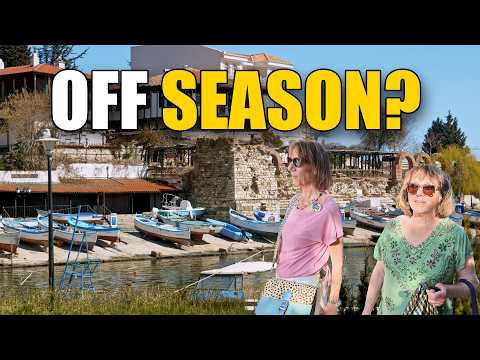
- Nesebar harbour ▶ 6:09
The harbour is getting ready for winter with the boats out, and they ask about renting a boat with fuel included for 45 euros an hour.
- Church of Christ Pantocrator ▶ 7:28
Church number one, about 700 years old, with stripes of red brick and pale stone and green glazed pottery disks set into the walls; today it is an art gallery showing Bulgarian painters.
- Church of St. John the Baptist ▶ 8:01
Church number two, 11th century and about 300 years older than the striped one, plain stone with no pottery or stripes.
- Church of St. Sophia ▶ 8:52
Church number four in the middle of town, the old bishopric from the 5th or 6th century, now roofless, which they think looks better that way.
- Nesebar back lanes ▶ 9:30
In summer you shuffle through these lanes behind a tour group, but in October you can actually see the architecture and the old wooden houses.
- Nesebar leather shops ▶ 10:18
Victoria found the leather shops, with all-leather goods and little fur details that she calls unique.