 PlaceTube
Alabaster and Quartzite Chapels of Karnak - Ancient Egypt GEMS
Open in PlaceTube Watch on YouTube
Places in this video
- Karnak Open Air Museum ▶ 0:00
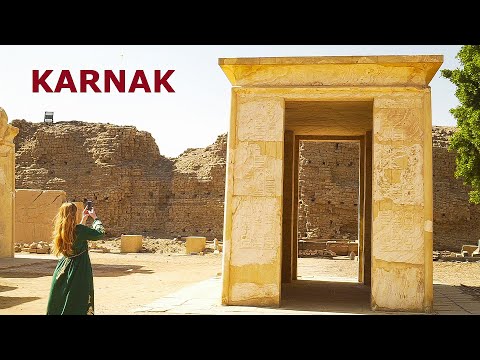
The presenter introduces the open-air museum in the northwestern corner of the Karnak precinct, opened in 1987, which displays structures dismantled, buried or abandoned in antiquity.
- White Chapel of Senusret I ▶ 0:34
The oldest building shown, from the 12th Dynasty in the 20th century BC, where rulers were crowned; its blocks were found in 1927 inside the third pylon of Amenhotep III and reassembled in the 1930s, with only three blocks missing.
- Alabaster Chapel of Amenhotep I ▶ 2:23
A small chapel from the 16th century BC, probably Karnak's central bark shrine, built with alabaster imported from Hatnub; its fragments were found in the pylon of Amenhotep III and it has stood reconstructed here since 1947.
- Granite statues of Senusret I ▶ 3:48
The presenter passes beautiful granite statues of Senusret I, a few of the numerous ones commissioned by Amenhotep III, coming from the Temple of Mut or his mortuary temple on the West Bank.
- Red Chapel of Hatshepsut ▶ 4:28
Built at the end of Hatshepsut's reign and completed by Thutmose III, this prefabricated chapel of red quartzite from Gebel Ahmar was never roofed and about two-thirds of its blocks are missing; its reliefs were originally painted yellow to imitate gold.
- Calcite Chapel of Amenhotep II ▶ 5:51
The calcite chapel of Amenhotep II, incorporated into pink granite pillars, was probably part of the festival court of the Temple of Amun; the presenter notes how incompetently it has been reconstructed.
- Calcite Chapel of Thutmose IV ▶ 7:13
Another calcite chapel, from the 14th century BC, built by Thutmose IV, son of Amenhotep II; it is unique because the pharaoh intended it for the faithful who could not enter the main Temple of Amun.