 PlaceTube
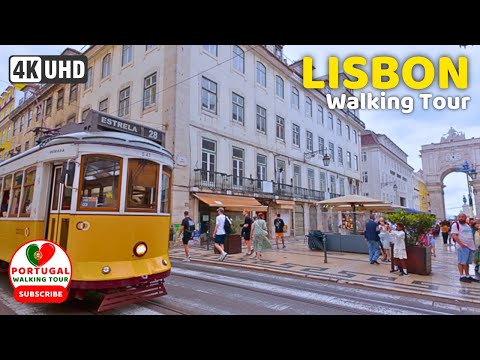
🇵🇹 [4K WALK] Iconic Tram 28 Route | Walking Tour from Martim Moniz to Campo Ourique 🚋
Open in PlaceTube Watch on YouTube
Places in this video
- Martim Moniz Square ▶ 0:46
The presenter explains that the square is named after a hero of the 1147 Siege of Lisbon and has long been a crossroads linking parts of the city, surrounded by diverse communities.
- Rua da Palma ▶ 2:24
The walk goes down this street named after the 16th-century Convento da Palma, noting its craftsman shops, tile façades and role as a route to Avenida Almirante Reis.
- Avenida Almirante Reis ▶ 5:57
The presenter describes this broad avenue created in the late 19th century, named after a hero of the 1910 republican revolution, with art nouveau and neoclassical buildings.
- Rua Maria Andrade ▶ 10:34
The tram turns onto this quieter residential side street with modest tiled façades and wrought-iron balconies, developed in the early 20th century.
- Rua Maria da Fonte ▶ 14:48
The street is named after the heroine of the 1846 uprising in the Minho region, a symbol of resistance and civic action.
- Rua Angelina Vidal ▶ 17:38
Named after a Portuguese writer and activist born in 1847, the street runs through a late 19th-century residential zone with blue-and-white azulejo façades.
- Graça ▶ 18:58
The presenter describes Graça as one of Lisbon's oldest areas on a prominent hill, known for historic charm and sweeping viewpoints over the city and the Tagus.
- Rua da Graça ▶ 21:25
This central street of the historic district has been a main route since the Middle Ages, lined with 18th- and 19th-century buildings and long-standing local shops.
- Largo da Graça ▶ 23:25
The square beside the Convento da Graça has been the heart of the neighbourhood for centuries, shaded by jacaranda and plane trees and hosting local events and markets.
- Convento da Graça ▶ 23:25
Founded in 1271 by Augustinian monks, its church has a striking baroque façade and richly decorated interior, with panoramic views from the adjoining viewpoint.
- Miradouro da Graça ▶ 26:44
One of Lisbon's best-known viewpoints, offering views across the city including the castle and the river.
- Rua da Voz do Operário ▶ 27:24
Named after a workers' association founded in 1883, the street follows the slope down from Graça hill past modest residential buildings with azulejo façades.
- Calçada de São Vicente ▶ 30:03
This steep street in the São Vicente parish retains historic paving and layout, lined with buildings with arched doorways and tiled façades, leading to the monastery.
- Monastery of São Vicente de Fora ▶ 31:51
Founded in the late 12th century outside the city walls, the current Mannerist structure holds the royal pantheon of the Braganza dynasty and one of Portugal's largest collections of baroque tile panels.
- Rua das Escolas Gerais ▶ 33:11
Named after public schools established here in the 16th century, the street descends through old Alfama past tiled façades and wrought-iron balconies.
- Alfama ▶ 33:51
The presenter calls Alfama Lisbon's oldest district, dating back to Moorish times, whose name comes from the Arabic for thermal springs and whose medieval layout survived the 1755 earthquake.
- Travessa de São Tomé ▶ 36:56
A short lane linking two key streets in Alfama, named after Saint Thomas the Apostle, preserving the intimacy of Lisbon's oldest neighbourhood.
- Rua de São Tomé ▶ 37:16
Lined with small houses and traditional tiled façades, this medieval route leads directly to the Portas do Sol viewpoint.
- Largo das Portas do Sol ▶ 39:08
One of Lisbon's most iconic panoramic viewpoints, named after a medieval gate of the Moorish wall, with views over Alfama's rooftops and the Tagus River.
- Largo de Santa Luzia ▶ 39:48
Its terrace overlooks the river and Alfama's tiled rooftops, with azulejo panels depicting Lisbon's past including the 1147 reconquest and Praça do Comércio before the earthquake.
- Church of Santa Luzia ▶ 40:05
The church here dates back to the 12th century and was rebuilt after 1755, dedicated to Saint Lucy, patron saint of eyesight.
- Rua do Limoeiro ▶ 41:05
Descending toward the cathedral quarter, the street is named for lemon trees once planted nearby and was known in the 19th century for the Limoeiro Prison.
- Largo do Limoeiro ▶ 44:16
A small square bordering the cathedral precinct, tied to Lisbon's religious administration for centuries, with historic façades and stone-paved surfaces.
- Rua Augusto Rosa ▶ 44:36
Named after a 19th-century actor and playwright, the street runs alongside the cathedral and descends toward Baixa past religious and civic buildings.
- Lisbon Cathedral (Sé) ▶ 45:17
The city's oldest church, built soon after 1147 on the site of a former mosque, blending Romanesque origins with Gothic and Baroque additions and holding the remains of Saint Vincent.
- Largo da Sé ▶ 47:30
The square directly in front of the cathedral has been a gathering place for centuries, hosting markets and processions, with views of the cathedral's fortress-like façade.
- Largo Santo António da Sé ▶ 48:10
Named after Saint Anthony of Lisbon, born here in 1195, the square is home to the church marking the site believed to be his birthplace.
- Church of Saint Anthony ▶ 49:01
The current 18th-century church, rebuilt after the 1755 earthquake, replaced earlier chapels honouring Saint Anthony at his birthplace.
- Rua Santo António da Sé ▶ 49:41
This narrow street with traditional paving and façades passes through one of Lisbon's oldest commercial areas, linking the cathedral quarter with Baixa.
- Largo Madalena ▶ 51:02
The square is named after the Church of Santa Maria Madalena, which dates back to the 12th century and was rebuilt after 1755 with a notable Manueline-style portal.
- Church of Santa Maria Madalena ▶ 51:02
Standing on Largo Madalena, the church dates back to the 12th century but was rebuilt after the 1755 earthquake and is notable for its Manueline-style portal.
- Rua da Conceição ▶ 51:20
Part of the Baixa Pombalina grid designed after the 1755 earthquake, lined with shops and cafés and connecting Largo Madalena to Praça do Comércio.
- Calçada de São Francisco ▶ 52:43
This steep street is named after the nearby Convent of Saint Francis, once among Lisbon's largest religious complexes, heavily damaged in 1755 and later demolished.
- Rua Vítor Cordon ▶ 57:11
Named after a 19th-century military officer, the street features elegant townhouses and early 20th-century buildings and links the lower city to Chiado.
- Rua Duques de Bragança ▶ 59:05
Named for the Dukes of Bragança, whose dynasty ruled Portugal from 1640, the street is lined with late 19th-century neoclassical townhouses and forms a transition between Baixa and Chiado.
- Largo Picadeiro ▶ 1:01:32
This open space takes its name from an old riding arena once located here, near former aristocratic residences and cultural institutions.
- Rua Paiva de Andrada ▶ 1:02:50
Named after a Portuguese noble and military officer, the street in the heart of Chiado is lined with elegant multi-storey buildings with ornamental stonework and iron balconies.
- Chiado ▶ 1:03:59
The presenter describes Chiado as long associated with writers, artists and intellectual life, with cafés and theatres central to Lisbon's 19th-century cultural scene.
- Largo do Chiado ▶ 1:04:19
A lively square anchored by the Church of Nossa Senhora da Encarnação and the iconic A Brasileira café, opened in 1905 and a meeting place for poets and artists.
- Church of Nossa Senhora da Encarnação ▶ 1:04:34
Built in the late 18th century, the church anchors Largo do Chiado and features a richly decorated interior.
- A Brasileira ▶ 1:04:54
The iconic café opened in 1905 and was a meeting place for poets and artists across the square from the Encarnação church.
- Praça de Luís de Camões ▶ 1:05:14
The square honours Portugal's greatest poet, author of Os Lusíadas, with a bronze statue erected in 1867, and sits at the boundary between Chiado and Bairro Alto.
- Rua do Loreto ▶ 1:06:50
Beginning at Camões square and leading uphill to Bairro Alto, the street is named after the 16th-century Church of Nossa Senhora do Loreto, historically linked to Lisbon's Italian merchant community.
- Largo Calhariz ▶ 1:09:06
A compact square linking several important streets, long a junction for tram and road traffic, developed in the 18th century as Lisbon expanded westward.
- Calçada do Combro ▶ 1:09:50
This street climbs toward the São Bento quarter, known for elegant 18th-century palaces and townhouses with ornate portals and ironwork, some housing embassies.
- Rua Poiais de São Bento ▶ 1:11:29
Branching from Calçada do Combro, the street recalls the Benedictine monks once associated with the area and retains much of its 18th-century character.
- Calçada da Estrela ▶ 1:15:33
The route rises to one of Lisbon's hilltops, known for wide views and stately 19th-century buildings, with glimpses of the Basílica da Estrela ahead.
- Basílica da Estrela ▶ 1:18:19
Commissioned in the late 18th century by Queen Maria I, the basilica dominates the skyline with its white marble façade and combines Baroque and neoclassical elements, with intricate marble work and a remarkable nativity scene inside.
- Jardim da Estrela ▶ 1:18:59
A 19th-century public garden opposite the basilica, filled with exotic plants, ponds and ornamental kiosks.
- Praça da Estrela ▶ 1:19:19
The square framed by the basilica and the Jardim da Estrela has been a focal point for civic and religious gatherings, serving as a gateway to the area.
- Rua Domingos Sequeira ▶ 1:27:42
Named after a celebrated Portuguese painter active in the late 18th and early 19th centuries, the street marks the transition to Campo de Ourique and is lined with mid-20th-century apartment blocks.
- Rua Saraiva de Carvalho ▶ 1:31:47
A main thoroughfare in Campo de Ourique named after a 19th-century military leader, lined with shops, markets and traditional eateries.
- Campo de Ourique ▶ 1:35:12
The neighbourhood developed in the late 19th century with a planned grid layout and has a reputation for gourmet food shops, traditional bakeries and a strong community spirit.
- Campo Ourique (Prazeres) ▶ 1:35:52
The terminus marks the end of the famous Tram 28 route, with the nearby Prazeres Cemetery containing ornate tombs of notable Portuguese figures.
- Prazeres Cemetery ▶ 1:36:12
The nearby cemetery contains ornate tombs of notable Portuguese figures, offering a peaceful conclusion to the journey across Lisbon.