 PlaceTube
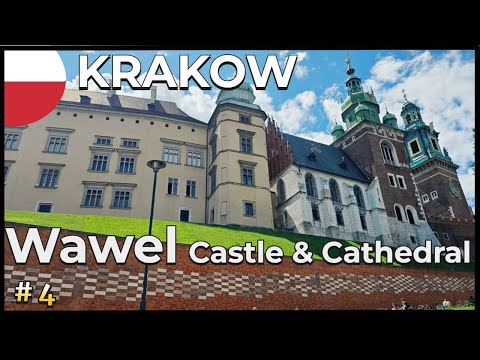
Krakow Strolls #4: Wawel Castle & Cathedral | Narrated Walking Tour
Open in PlaceTube Watch on YouTube
Places in this video
- Wawel Hill ▶ 0:22
The narrator introduces Wawel as a limestone hill above the Vistula that is a symbol of Polish statehood, a legend, and a place where identity and tradition were shaped over the centuries.
- Kanonicza Street ▶ 3:31
The approach to Wawel follows Kanonicza Street, the historic route to the cathedral and royal residence, where a wall set with the so-called Wawel bricks commemorates donors to the castle's restoration.
- Gate of Coats of Arms ▶ 4:56
The climb reaches the Gate of Coats of Arms, adorned with heraldic emblems of the former lands of the Polish-Lithuanian Commonwealth as a stone sign of unity and remembrance.
- Vasa Gate ▶ 5:29
Beyond the first gate lies the Baroque Vasa Gate, built during the reign of the Vasa dynasty, through which visitors step onto the courtyard before Wawel Cathedral.
- Wawel Cathedral ▶ 5:48
The narrator calls Wawel Cathedral the most important church in Poland, where monarchs were crowned and buried, and describes the silver sarcophagus of Saint Stanislaus, the Sigismund Chapel with its golden dome, and the three towers including the Sigismund Tower and its great bell.
- Sigismund Chapel ▶ 7:35
The most famous of the chapels encircling the cathedral is the Sigismund Chapel, whose golden dome, according to legend, was funded by Queen Anna Jagiellon with a sack of gold ducats.
- Sigismund Tower ▶ 8:31
The Sigismund Tower holds the mighty Sigismund Bell, cast in 1520, weighing over 12 tons and rung only on the most important national and religious occasions; legend says touching its clapper grants a wish.
- Cathedral Museum ▶ 11:45
Medieval buildings by the Vasa Gate have housed the Cathedral Museum since 1978, preserving the old treasury's treasures, most notably the Spear of St. Maurice said to have been given to Bolesław the Brave by Emperor Otto III.
- Wawel Royal Castle ▶ 12:20
The narrator traces the Royal Castle from a modest Piast palatium to a Gothic fortress and then a Renaissance residence, entering through a portal inscribed with words of St. Paul and into the arcaded courtyard with Queen Bona's famous window.
- Church of St. Gereon ▶ 16:31
On the left side of the castle courtyard lie the remains of the 11th-century Romanesque Church of St. Gereon, where the modern legend of the mystical Wawel chakra was born.
- Crown Treasury and Armory ▶ 19:54
On the ground floor of the eastern and northern wings are the Crown Treasury and Armory, once home to the coronation insignia, looted in 1795, though the Szczerbiec coronation sword survived.
- Jordanka Tower ▶ 22:29
Of the ten defensive towers that once surrounded Wawel, seven survive; the oldest, the 13th-century Jordanka Tower, takes its name from the royal official Jan Jordan.
- Senators' Tower ▶ 23:06
The tallest surviving tower is the brick Senators' Tower, also called Lubranka after Bishop Jan Lubrański, which closes the southern wing of the residence.
- Tęczyński Tower ▶ 23:37
Among the towers on the southern walls are the Noblemen's, Maidens' and Tęczyński towers; the last recalls the 1461 killing of the nobleman Andrzej Tęczyński by townspeople and the executions that followed.
- Sandomierz Tower ▶ 25:15
The well-preserved 14th-century Sandomierz Tower guarded the entrance to the hill from the direction of Sandomierz and later served as a prison and military storehouse.
- Thieves' Tower ▶ 26:07
Near the former Vicar's House stands the Thieves' Tower, once a prison for petty criminals and today a fine vantage point with panoramic views of Kraków.
- Dragon's Den ▶ 26:26
By the defensive wall is the entrance to the Dragon's Den, a limestone cave described by the chronicler Jan Długosz as the lair of a monstrous dragon, giving rise to Kraków's most famous legend.
- Wawel Dragon sculpture ▶ 27:14
Emerging from the Dragon's Den onto the banks of the Vistula, visitors are greeted by Bronisław Chromy's huge Wawel Dragon sculpture, which from time to time breathes fire.
- Kazimierz ▶ 28:05
The narrator previews the next walk, which will lead from the foot of Wawel into Kazimierz, once a separate town founded by King Casimir the Great and for centuries the heart of Jewish life in Poland.