 PlaceTube
De l’Orient à l’Argentine : un tour du monde culturel entre histoire et art | Trésors du Patrimoine
Open in PlaceTube Watch on YouTube
Places in this video
- Bosphorus ▶ 1:46
The presenter explains the strait that separates Europe and Asia and tells the Greek legend of Io that gave the Bosphorus its name.
- Rumeli Hisarı ▶ 3:59
Mehmet II built this fortress in just four months at the narrowest point of the Bosphorus to cut off Constantinople's supplies.
- Adrianople Gate ▶ 4:33
It was through this gate of the city walls that Mehmet II entered Constantinople after the conquest.
- Hagia Sophia ▶ 4:51
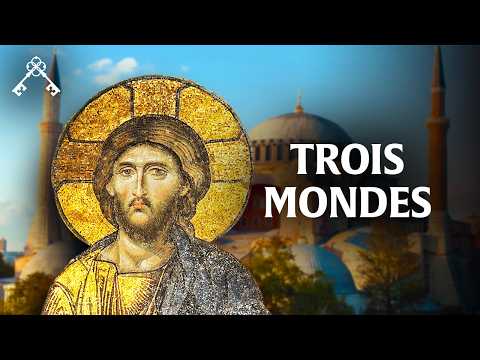
The presenter shows the mosaics of Christ, the Virgin and Zoe, and explains how Mehmet II turned the great church into a mosque and how it later became a museum.
- Hippodrome of Constantinople ▶ 8:10
The presenter points out the Egyptian obelisks still standing on the site of the ancient 2nd-century hippodrome.
- Topkapı Palace ▶ 8:28
Built on the ancient acropolis, it was the sultans' residence and seat of government; the presenter visits the council chamber, the golden grille of the sultan's private apartments and the harem.
- Atik Valide Mosque ▶ 12:20
The mosque built for Nurbanu, called the Mosque of the Queen Mother, a veritable city within a city designed by Sinan.
- Süleymaniye Mosque ▶ 13:20
Considered the most beautiful imperial mosque of Istanbul, built by Sinan for Suleiman the Magnificent, with its stained glass and Iznik ceramics.
- Galata Tower ▶ 15:31
The last remnant of the Genoese colony of Galata, where the presenter meets historian Edhem Eldem to discuss the district's reputation as a place of perdition.
- Museum of Innocence ▶ 19:26
Orhan Pamuk created this museum modeled on his novel, filled with hundreds of everyday objects collected from Istanbul.
- Grand Bazaar ▶ 21:05
Built by Mehmet II in 1455, it has 4,000 shops over 58 streets; the presenter shows rose essence perfume and objects from Bukhara and Anatolia.
- Basilica Cistern ▶ 29:21
The presenter explores the 336-column cistern with the Medusa head base and the Column of Tears, and talks there with Tchéky Karyo.
- Vienna ▶ 34:56
The presenter recounts the 1683 Ottoman siege and the city's flourishing afterwards, from the Hofburg and Belvedere to Schönbrunn.
- Hofburg ▶ 38:28
The Habsburg residence for over 600 years, where Sissi spent most of her time and which houses the Spanish Riding School.
- Belvedere ▶ 38:40
One of Vienna's largest Baroque palaces, now home to the world's largest collection of Gustav Klimt paintings, including The Kiss.
- St. Charles Church ▶ 38:52
Mentioned among the monuments recalling the splendor of Vienna after 1683.
- Schönbrunn Palace ▶ 39:08
The Habsburg summer residence with 1,441 rooms, its hall of mirrors where young Mozart played, and the portraits of Maria Theresa's children.
- Spanish Riding School ▶ 50:04
The oldest riding school in the world, inside the Hofburg, where the Lipizzaner horses train daily in the riding arena.
- Ringstrasse ▶ 53:21
Franz Joseph had the medieval fortifications replaced by this four-kilometer circular boulevard, served by Europe's first electric tram.
- Austrian National Library ▶ 54:33
The presenter examines the emperor's anthem manuscript, translated into many languages of the multinational empire.
- Imperial Crypt ▶ 56:10
The Capuchin crypt where Empress Zita's ritual entry took place and where 138 Habsburgs, including Maria Theresa and Sissi, are buried.
- Hotel Sacher ▶ 58:32
Anna Sacher took over this hotel in 1892 and made it one of the most popular establishments of the aristocracy; its manager Elisabeth Gürtler tells her story.
- Secession Building ▶ 1:04:18
Klimt's monumental Beethoven frieze, made for the 1902 exhibition, is preserved in this Secessionist pavilion.
- Church of St. Leopold ▶ 1:05:09
Otto Wagner's church at the psychiatric hospital, considered the first modern church in Europe, with its rounded edges, holy water dispenser and peacock-feather angels.
- Otto Wagner Apartment ▶ 1:08:18
Wagner's own apartment with the first elevator installed in a Viennese residence, restored as a work of art.
- Prater ▶ 1:10:02
One of the world's most famous amusement parks, on a former Habsburg hunting reserve, home to the Great Wheel used as an observation post in WWI and filmed in The Third Man.
- Teatro Colón ▶ 1:12:26
The opera house where Margaret Wallmann directed the ballet for ten years, renowned for its acoustics and eclectic Italian-French style.
- La Boca ▶ 1:15:04
The port neighborhood built by Italian immigrants, with its brightly painted houses, the metal bridge where Onassis worked, and the legacy of painter Quinquela Martín.
- Eusko Etxea ▶ 1:20:44
One of Buenos Aires' Basque cultural centers, where Martin Labat explains Basque immigration and the pelota court with its hard black stone.
- Pablo Reinoso's Studio ▶ 1:24:07
The Franco-Argentine sculptor shows his production workshop where he builds gigantic works such as a 24-meter mast and his talking benches.
- Palermo Woods ▶ 1:29:56
Charles Thaïs's creation, the green lung of the city, with its artificial lake, pedal boats, botanical garden and rose garden inspired by Paris.
- Café Tortoni ▶ 1:31:59
The oldest cafe in the city, founded in 1858 by a French immigrant and modeled on the Parisian Café Tortoni, frequented by Gardel, Quinquela Martín and Lorca.
- Villa Ocampo ▶ 1:33:22
Victoria Ocampo's luxurious villa where she hosted Camus, Stravinsky and other intellectuals; the presenter reads Camus's travel journal about the house.
- El Ateneo Grand Splendid ▶ 1:36:14
A 1919 theatre turned into the largest bookstore in Latin America, with reading nooks on the balcony, in the box seats and on stage.
- Confitería Ideal ▶ 1:42:38
A historic tango venue where Carlos Gardel performed; the presenter meets the Tango Passion troupe there.
- Río de la Plata ▶ 1:46:28
The fifty-kilometer-wide Silver River that borders Argentina and Uruguay and likely gave the country its name, where the journey ends.