 PlaceTube
Why Nobody Wants to Live in Jacksonville, Florida Anymore
Open in PlaceTube Watch on YouTube
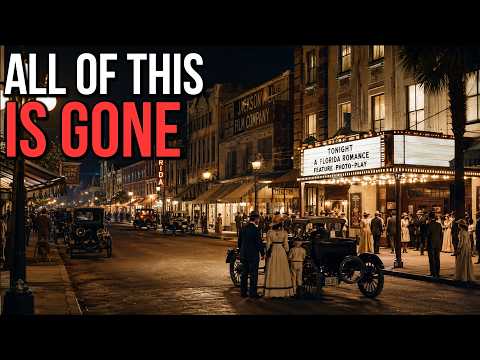
Places in this video
- Cleveland Fiber Factory site (Beaver and Davis Streets) ▶ 0:46
The 1901 Great Fire of Jacksonville began here when a spark from a chimney ignited Spanish moss laid out to dry at the Cleveland Fiber Factory.
- State and Davis Streets (Fire Alarm Box 57) ▶ 1:40
16-year-old George Hodan pulled the fire alarm at box number 57 here at about 12:35 p.m. as the blaze was already out of control.
- Hogan's Creek ▶ 2:12
Families fleeing the fire ran east toward Hogan's Creek with whatever they could carry.
- Laura Street ▶ 2:24
Firemen made a last stand at Laura Street, saving a 12-block section near the river while the rest of downtown burned.
- Main and State Streets ▶ 3:43
The first building permit after the fire was issued three days later to Rudolph Grunthal for a temporary structure at the corner of Main and State Streets.
- St. James Building ▶ 4:52
Henry Klutho's Prairie School masterpiece opened in 1912 as the first reinforced concrete high-rise in the American South; it is now Jacksonville's city hall.
- Forsyth Street ▶ 5:05
Klutho's commercial blocks along Forsyth Street were part of the architecturally progressive city that rose after the fire.
- Bay Street ▶ 5:05
Klutho built commercial blocks along Bay Street that would have looked at home in Chicago or Buffalo.
- St. Johns River ▶ 7:18
The river alone offered a dozen backdrops — bridges, docks, sandbars and overhanging oaks trailing Spanish moss — that drew early filmmakers.
- Roseland Hotel ▶ 8:24
Kalem Studios set up operations at this old three-story wooden hotel on Clarkson Street in Fairfield, where cast and crew lived during their Jacksonville winters; it is long gone.
- Arlington ▶ 9:09
Crews took the ferry across the St. Johns to shoot on location in Arlington, where creeks, old bridges and moss-draped live oaks gave them settings New York audiences had never seen.
- Dixie Land Park ▶ 10:15
This 30-acre amusement park on the south bank of the river became a Selig Polyscope studio, complete with real lions and elephants for jungle pictures and westerns; it is now only a memory.
- 750 Riverside Avenue (Lubin and Vim studio site) ▶ 11:38
The Lubin Manufacturing Company opened a studio here in 1912, later taken over by the Vim Comedy Company where Oliver Hardy worked; the site is now buried under the Fuller Warren Bridge approach ramps.
- Metropolitan Park ▶ 15:50
The spot where Metro Pictures, the company that became MGM, was incorporated is now this public riverbank venue hosting concerts and festivals, with no plaque.
- Norman Studios ▶ 24:32
Richard Norman bought the bankrupt Eagle Studios complex on Arlington Road in 1920 and made race films with all-black casts here, including The Flying Ace; four of the five buildings survive as a national historic landmark museum open free on the first and third Saturdays of each month.
- 6337 Arlington Road ▶ 27:19
Norman lived with his family on the second floor of the main production building here and hosted weekend screening parties in a small upstairs theater.