 PlaceTube
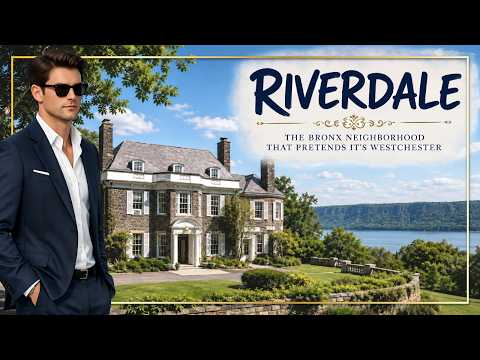
RIVERDALE: The Bronx Neighborhood That Pretends It's Westchester
Schmancy ·
Open in PlaceTube Watch on YouTube
Places in this video
- Riverdale ▶ 0:01
The video's subject: a leafy, affluent corner of the Bronx along the Hudson that looks and behaves like Westchester, with curving streets, Tudor mansions and lawns.
- Spuyten Duyvil Creek ▶ 1:04
The narrator notes that colonial-era Riverdale was rocky countryside overlooking the Hudson River and Spuyten Duyvil Creek.
- Hudson River ▶ 1:36
Homes could stand above the street with the Hudson and the Palisades visible in the distance; the river views are central to Riverdale's appeal.
- The Palisades ▶ 1:36
The cliffs across the Hudson are repeatedly cited as the dramatic backdrop visible from Riverdale's hills and estates.
- Riverdale Historic District ▶ 4:01
Grew from seven estates connected by a shared carriage lane, now Sycamore Avenue; five original villas survive along with carriage houses, stone walls and gardens.
- Sycamore Avenue ▶ 4:01
The old shared carriage lane of the historic district's seven estates, now a street lined with surviving villas and estate traces.
- Wave Hill ▶ 4:16
A surviving 1840s estate once occupied or leased by Theodore Roosevelt's family, Mark Twain and Arturo Toscanini; now known for its gardens, greenhouses, lawns and views of the Hudson and Palisades.
- Horace Mann School ▶ 4:47
One of the prestigious private schools that established a campus in Riverdale in the early 20th century, attracting affluent families.
- Riverdale Country School ▶ 4:47
A prestigious private school that set up in Riverdale, part of the neighborhood's status-symbol institutions.
- Ethical Culture Fieldston School ▶ 4:47
The third of the elite private schools that established campuses in Riverdale, reinforcing its suburban private-school appeal.
- Fieldston ▶ 5:19
The clearest example of Riverdale's planned suburban identity: a private residential park developed from Major Joseph Delafield's estate, with large lots, approved designs and winding roads following the terrain.
- 242nd Street subway station ▶ 5:38
The subway reached the nearby 242nd Street in 1908, prompting the Delafield family to subdivide their land as an accessible country-style community.
- Central Riverdale ▶ 6:42
The neighborhood's practical center, especially around Riverdale and Johnson Avenues, with shops, restaurants, schools, brick apartments, co-ops and condos; more recognizably urban than the rest.
- Riverdale Avenue ▶ 6:58
Along with Johnson Avenue, the main commercial avenue anchoring Central Riverdale's shops, restaurants and houses of worship.
- Johnson Avenue ▶ 6:58
One of the two main avenues forming Central Riverdale's commercial center.
- Hudson Hill ▶ 7:14
The slopes closer to the river, also called Riverdale Estates, containing Gothic and Georgian mansions, stone villas, Arts and Crafts houses and modernist homes built into the hillside.
- North Riverdale ▶ 7:47
Near the Yonkers border, with no major urban center, it feels calmer and more suburban, with detached Tudors, Colonial Revival and mid-century houses and modest apartment complexes.
- Grosvenor Avenue ▶ 8:21
Near Fieldston's northern edge, this avenue leads into the newer private enclave of Villanova Heights.
- Villanova Heights ▶ 8:21
A newer private enclave of enormous traditionally styled mansions, often associated with Fieldston but distinct from its original historic houses.
- Spuyten Duyvil ▶ 8:38
At Riverdale's southern end, dominated by post-war co-op and condo towers with terraces, doormen and river views, with smaller houses on winding streets between them.
- Villa Charlotte Bronte ▶ 8:55
Spuyten Duyvil's architectural treasure: a picturesque 1926 co-op by Robert W. Gardner on a steep hillside, resembling a cluster of Italian villas with tiled roofs, balconies and a sunken courtyard.
- Independence Avenue ▶ 10:15
A young John F. Kennedy lived with his family on this avenue; the narrator lists it among Riverdale's notable-resident addresses.