 PlaceTube
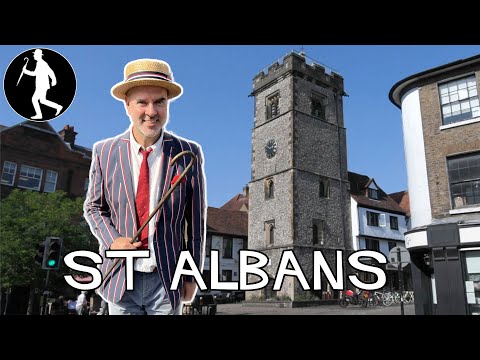
Splendid St Albans Medieval and Roman Walk - London Day Trip
Joolz Guides - London History Walks - Travel Films ·
Open in PlaceTube Watch on YouTube
Places in this video
- St Albans Register Office ▶ 0:34
The walk starts outside the registry office, which the presenter notes was used as Slade Prison in the TV series Porridge.
- Alban Way ▶ 1:06
A former railway line between St Albans and Hatfield (1865–1951), now a leafy walking and cycling path about six miles long.
- Old London Road Station ▶ 1:40
The old station building where passengers waited between 1865 and 1951, now a nursery.
- Odyssey Cinema ▶ 2:43
A 1904 cinema founded by film pioneer Arthur Melbourne Cooper, once played host to the Rolling Stones, closed in 1995 and later restored; the presenter goes inside and meets staff and a Barbie collection.
- Clarence Park ▶ 7:03
A park with a cricket pavilion where a match was first played in 1875, and the ground of St Albans City FC, scene of a famous 1989 charity match instigated by Bobby Moore.
- Peacock Pump ▶ 8:26
One of the town's old water pumps, decorated with a peacock, part of a suggested 'pump crawl'.
- Veer Dhara ▶ 9:15
An Indian curry house where Tom Cruise is said to have ordered lobster and chicken tikka masala.
- St Peter's Church ▶ 10:24
A church dating to 948, over a thousand years old, under renovation; its churchyard once housed an anchoress, and it appears in EastEnders as a wedding venue.
- St Albans Museum + Gallery ▶ 12:18
The former town hall and courthouse, now a museum with a cafe where you can sit in the old courtroom dock.
- St Albans Market ▶ 13:07
A market held on Wednesdays and Saturdays since 1553, when Edward VI granted the right to hold it twice a week.
- Marks and Tilt ▶ 14:25
A picture framer and art gallery on London Road run by the presenter's friend Ralph, hosting an exhibition of cameraman Simon's paintings of St Albans.
- St Albans Clock Tower ▶ 16:15
Completed in 1405, said to be the only surviving medieval belfry in England, with a 600-year-old bell called Gabriel rung at the Battle of St Albans; later a semaphore station.
- The Boot ▶ 18:06
A famously wonky old building, once a smokehouse and pub, now home to an antiques and gifts shop.
- Verdun Tree ▶ 19:30
A conker tree grown from a conker of one of the last trees standing at the Battle of Verdun, planted in St Albans.
- Crispin House ▶ 21:24
Said to be the oldest dwelling in the area, from around 1470, formerly a pub and now a residence.
- St Albans Cathedral ▶ 21:56
The former abbey, made a cathedral in 1877, dating to the 8th century with much Norman work; the presenter tells the story of St Alban's martyrdom and notes Johnny English was filmed inside.
- Great Gateway ▶ 24:51
The 1385 gateway to the old Benedictine monastery, one of the last monastic buildings besides the abbey; nearby the hot cross bun is said to have been invented in 1381.
- St Albans School ▶ 25:26
One of England's oldest public schools, dating to 948, attended by Stephen Hawking and the only school to have educated an English pope, Adrian IV.
- Fishpool Street ▶ 26:35
A lovely street of beautiful old houses leading down the hill from the abbey.
- The Fighting Cocks ▶ 27:07
A pub claiming to be the oldest in England, with a pub on the site since the 8th century, where Oliver Cromwell reputedly stayed and stabled his horse.
- Verulamium Park ▶ 29:06
The presenter's favourite part of the walk, a beautiful park by the river where otters have been spotted.
- Roman City Gate ▶ 29:22
The remains of the main gate of Roman Verulamium from around 270 AD, with arches for pedestrians and carts on Watling Street.
- Roman Mosaic ▶ 31:32
A preserved Roman mosaic floor found over a hypocaust heating system, part of a Roman house in the park.
- Verulamium Museum ▶ 32:07
A museum of finds from the Roman town of Verulamium, near the site of the Roman forum and basilica.
- St Michael's Church ▶ 32:57
A significant Anglo-Saxon church from the 10th or 11th century, containing a monument to Sir Francis Bacon, who asked to be buried here.
- Roman Theatre of Verulamium ▶ 34:01
A rare Roman theatre from around 140 AD, half-oval rather than a full amphitheatre, with one surviving pillar and the stage area visible.