 PlaceTube
Tottenham and Seven Sisters - Spiffing London Walk
Joolz Guides - London History Walks - Travel Films ·
Open in PlaceTube Watch on YouTube
Places in this video
- Seven Sisters ▶ 0:24
The presenter explains the area's name: seven elm trees planted around a walnut tree in 1350, later replanted by a new group of sisters in 1997.
- Wards Corner ▶ 1:30
An old Edwardian furniture store that later housed around a hundred Latin American shops in a little market, now closed due to regeneration.
- Uncle John's Bakery ▶ 2:04
A Ghanaian bakery on West Green Road famous for its original sweet bread, the first of its kind in the country, running for 25 years.
- West Green Road ▶ 2:04
A road full of shops of many different nationalities, including Uncle John's Bakery.
- Austro-Bavarian Lager Beer and Crystal Ice Company ▶ 4:33
Only a little gate remains of this 19th-century brewery, the first dedicated lager brewery in the UK, later the Tottenham Lager Brewery.
- Chuku's ▶ 5:36
A highly recommended Nigerian tapas restaurant the presenter points out but doesn't visit.
- Tottenham Green ▶ 5:52
The green where the original village of Tottenham started, with houses from the 1500s to 1700s and charitable institutions around it.
- Tottenham Old Town Hall ▶ 6:09
The old town hall on Tottenham Green, which stopped being the seat of local government when the boroughs merged into Haringey in 1965.
- Cynthia Jarrett Memorial ▶ 6:41
A memorial for Cynthia Jarrett, whose death sparked the Broadwater Farm riots.
- Tottenham Well ▶ 7:14
A well sunk in 1791 for Tottenham's 3,000 inhabitants, paid for by Thomas Smith, later rebuilt in the late 19th century with a pump.
- Tottenham Bus Depot ▶ 8:17
A bus depot built in 1913, once home to one of London's longest bus routes, the 171 from Bruce Grove to West Norwood.
- Forster's Cottages ▶ 9:04
Almshouses on Philip Lane built in 1860 by Josiah Forster, a Quaker and abolitionist, for widows over 50.
- Philip Lane ▶ 9:04
A lane with beautiful houses, including Forster's Cottages and workers' housing with decorative details.
- Tottenham High Cross ▶ 11:00
A grand cross from the 1600s replacing a wayside cross of 1409, marking a crossroads and once warning pilgrims of dangers.
- Tottenham High Road ▶ 12:56
The main road, site of the 1909 Tottenham Outrage robbery and chase near Chestnut Road, opposite an old theater.
- VIP Paint Shop ▶ 14:37
A graffiti-covered paint shop opposite Bruce Grove, run by proprietor Billy, selling spray paints and street art supplies; the presenter tries spray painting.
- Luke Howard Blue Plaque ▶ 16:56
The only blue plaque in Tottenham, marking where Luke Howard, the father of meteorology who named the clouds, lived.
- Broadwater Farm Estate ▶ 17:47
A 1960s Corbusier-inspired estate famous for the 1980s riots, later regenerated; the presenter notes its Saturday food market and spacious living.
- River Moselle ▶ 18:19
A tributary of the Lee, mostly covered up, which the presenter spots running beneath a grid cover and later plays pooh sticks in.
- Bruce Castle ▶ 20:35
A 16th-century house named after the Bruce family, once home to lords of the manor, now a museum with archives and exhibitions and a haunted history.
- Bruce Castle Park ▶ 22:05
The park grounds hold a 450-year-old oak tree, entered in the Tree of the Year competition, which the presenter measures at seven meters around.
- All Hallows Church ▶ 22:53
Tottenham's oldest building, with a 14th-century tower, a peal of eight bells plus the separate Quebec Bell, and the finest collection of Gibbs glass in the country.
- Tottenham Friends Meeting House ▶ 27:34
A Quaker meeting house where the Tottenham cake was invented by Quaker baker Henry Chalkley, using mulberries from the tree behind the house.
- Blue Coats Restaurant ▶ 29:10
A lovely-looking restaurant in a former Blue Coat school, decorated with Tottenham Hotspur memorabilia and the club motto.
- Tottenham Hotspur Stadium ▶ 30:10
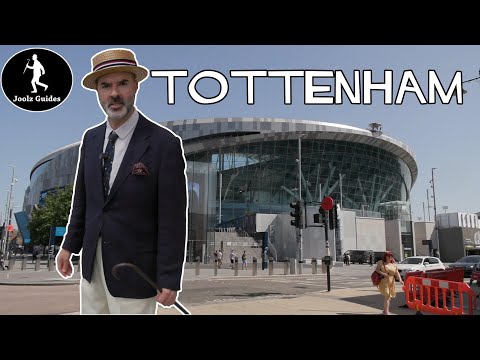
The billion-pound home of Tottenham Hotspur, founded in 1882 by Bobby Buckle; the presenter recounts the club's history and players like Walter Tull.