 PlaceTube
What Happened to CUMBERLAND?
Open in PlaceTube Watch on YouTube
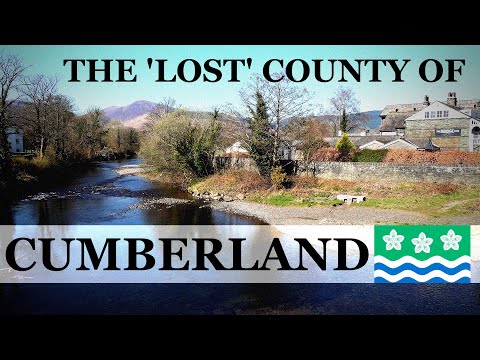
Places in this video
- Carlisle ▶ 1:15
The presenter explains that the Carvetii tribe centred their territory around what is today Carlisle, and that the Romans established a fort here called Luguvalium.
- Hadrian's Wall ▶ 1:49
The video describes Hadrian's Wall as the defensive frontier built in the 2nd century, spanning the mainland from east to west, with forts nearby to maintain it.
- Maryport ▶ 2:09
The presenter says the Romans built a fort here called Alauna, which we today call Maryport, serving as a garrison and part of the coastal defence of the Solway Firth.
- Bowness-on-Solway ▶ 2:21
It is named as the westernmost point of Hadrian's Wall, within marching distance of the fort at Maryport.
- Brampton ▶ 3:03
The presenter uses Brampton, just east of Carlisle and a couple of miles south of the wall, as a backdrop to explain the fall of Rome and the Anglo-Saxon era that followed.
- Penrith ▶ 4:18
Penrith is cited as an example of a Brythonic place name meaning ford by the hill, illustrating the county's historic place names and Anglo-Saxon political turmoil.
- Carlisle Castle ▶ 4:40
The presenter says William II brought an army north in 1092 and built Carlisle Castle to secure the town for the English.
- Egremont Castle ▶ 4:57
The ruined castle dates from the early 12th century and its imposing position overlooking many miles is still evident today.
- Egremont Crab Fair ▶ 5:50
The annual fair, born in 1267, features the parade of the apple cart, wrestling, greasy pole climbing, egg throwing and the World Gurning Championships.
- Carlisle Citadel ▶ 6:38
Henry VIII ordered the construction of the Citadel, whose two round towers were designed to withstand artillery fire and remain a grand first impression for those arriving by train.
- Keswick ▶ 7:31
The presenter explains that graphite, or black lead, was found in the surrounding landscape of this former mining town, sparking a pencil-making cottage industry.
- Whitehaven ▶ 8:26
Whitehaven transformed from a fishing village into a planned settlement and, at its peak, Britain's second busiest port, later attacked by John Paul Jones in 1778.
- Cockermouth ▶ 11:14
Cockermouth is noted as the 1770 birthplace of William Wordsworth, whose poetry helped popularise the Lake District.
- Lake District ▶ 11:44
The presenter describes the landscape that inspired Wordsworth's daffodils poem, with Keswick at its heart, and notes it became a national park in May 1951.
- Skiddaw ▶ 12:54
Skiddaw is named as one of the mountains that draw mountaineers to the Lake District.
- Helvellyn ▶ 12:54
Helvellyn is listed among the peaks that attract mountaineers to the area.
- Scafell Pike ▶ 12:58
Scafell Pike is highlighted as England's tallest mountain, drawing mountaineers to the Lake District.
- Bassenthwaite Lake ▶ 13:06
Bassenthwaite Lake is named as one of the lakes Cumberland has to its name.
- Derwentwater ▶ 13:06
Derwentwater is listed among Cumberland's lakes, and the video closes on the celebrated view of Friar's Crag over it.
- Ullswater ▶ 13:06
Ullswater is named as the inspiration for Wordsworth's daffodils poem.
- Workington ▶ 13:58
Workington grew as a coal mining town and became a centre for steel production in northwest England, and still has a functioning port.
- Silloth ▶ 15:03
Silloth grew from a coastal hamlet into a planned port settlement with a grid of workers' houses, doubling as a Victorian seaside resort with views of Scotland on the horizon.
- Friar's Crag ▶ 18:25
The video closes out on one of Cumberland's most celebrated views, Friar's Crag over Derwent Water.
Cities in these videos
Carlisle · Maryport · Bowness-on-Solway · Brampton · Penrith · Egremont · Keswick · Whitehaven · Cockermouth · Workington · Silloth