 PlaceTube
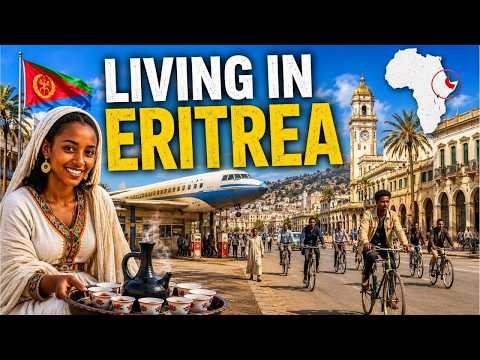
ERITREA: Africa’s Hidden Cycling Nation You Know Nothing About | 4K Documentary
Open in PlaceTube Watch on YouTube
Places in this video
- Asmara ▶ 0:09
The capital, sitting more than 7,600 feet above sea level, is where the journey begins; the presenter describes its cool mornings, its cycling culture and its Italian-era streets.
- Massawa ▶ 0:09
The road descends about 70 miles east to this Red Sea port, where the dry heat feels like another country; it is presented as the coastal counterpart to the Highlands.
- Harnet Avenue ▶ 9:16
Mornings in Asmara begin with buses, bicycles gliding along Harnet Avenue and cafes opening beneath Art Deco facades built decades ago.
- Medebar Market ▶ 9:52
At Medebar market, old pieces of metal are cut, heated and turned into new tools, showing how familiar systems still support daily life.
- Kohaito ▶ 10:08
Across the Highlands around Kohaito, livelihoods remain tied to land and livestock; later the plateau's stone columns, foundations and ancient structures along the Adulis-Aksum trade route are described.
- Cinema Impero ▶ 17:57
Completed in 1937, Cinema Impero is cited as one of the modernist buildings erected during the fascist colonial transformation of Asmara.
- Fiat Tagliero ▶ 17:57
Built in 1938 as a gas station shaped almost like an airplane, with two concrete wings extending outward without supporting columns; a local legend says the architect used a gun to force workers to remove the scaffolding.
- Dahlak Archipelago ▶ 22:50
Off the coast of Massawa, more than 200 islands and islets are scattered across the Red Sea, with coral reefs, sea grass beds, green turtles and dugongs; only a few are permanently inhabited and trips require carrying supplies and permits.
- Filfil and Semenawi Bahri ▶ 23:57
Moist air from the Red Sea condenses along the mountain slopes, sustaining a green belt with mist, hamadryas baboons and many birds, though the forest faces pressure from grazing and resource use.
- Sahira Dam ▶ 25:19
One of Kohaito's most notable features, a structure with ancient origins that remains connected to supplying water for livestock in the area.