 PlaceTube
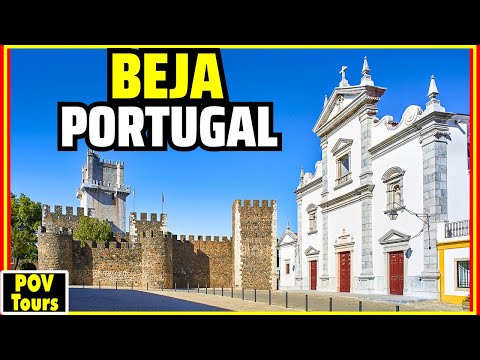
BEJA, Portugal: The Secrets of a 2000-Year-Old City | Alentejo
Open in PlaceTube Watch on YouTube
Places in this video
- Rua 5 de Outubro ▶ 1:27
The walking tour begins on this central street in Beja's historic center.
- Carmo Church ▶ 2:03
An 18th-century church the presenter passes on the walk.
- Monument to Our Lady of Carmo ▶ 3:06
A monument near the Carmo Church pointed out during the tour.
- Rua Almirante Cândido dos Reis ▶ 4:03
A street in the center where the presenter discusses Beja's Roman and Islamic heritage.
- Rua de Mértola ▶ 5:44
The walk continues along this street while the presenter describes the flat Alentejo landscape.
- Rua Capitão João Francisco de Sousa ▶ 7:50
A street where the presenter tells the legend of the snake and the bull on Beja's coat of arms.
- Praça Diogo Fernandes de Beja ▶ 10:54
A square where the presenter talks about the Lusitanians and Roman Pax Julia.
- Rua da Liberdade ▶ 11:57
The tour passes along this street while discussing Pax Julia's importance in Roman Lusitania.
- Avenida Miguel Fernandes ▶ 13:45
An avenue walked while the presenter covers the Visigothic period and the name Paca.
- Rua Abel Viana ▶ 16:36
A street where the presenter notes Beja's title as Capital of Visigothic Art in Portugal.
- Church of Our Lady of Pleasures ▶ 17:03
A 17th-century church seen along the route.
- Church of Mercy ▶ 17:44
A 16th-century building originally planned to house the municipal butchers, deemed too magnificent for that purpose by the Duke of Beja.
- Praça da República ▶ 19:06
The main square, where the presenter points out the city hall.
- Rua dos Infantes ▶ 21:14
A street walked on the way to the municipal theater.
- Pax Julia Municipal Theater ▶ 22:17
Beja's municipal theater, named after the city's Roman name.
- Rua do Sembrano ▶ 23:49
A notably narrow street the presenter marvels at.
- Rua Alexandre Herculano ▶ 24:34
A street where the presenter explains how Paca became the Arabic Baja and eventually Beja.
- Largo Engenheiro Duarte Pacheco ▶ 25:19
A square passed while discussing the Christian reconquest attempts from 910 onward.
- Beja Courthouse ▶ 26:01
The city's courthouse, pointed out along the route.
- Rua da Ancha ▶ 26:32
A street where the presenter discusses Beja becoming an independent taifa in 1031.
- Church of the Savior ▶ 28:14
A very old church completely rebuilt in the 16th century.
- Rua Marquês de Pombal ▶ 28:39
A street leading toward one of Beja's largest public parks.
- Beja Public Park ▶ 29:27
One of Beja's largest public parks, containing a statue of Gonçalo Mendes da Maia.
- Statue of Gonçalo Mendes da Maia ▶ 29:58
A statue of a knight from the time of Afonso Henriques, considered a hero of Beja.
- Rua D. Nuno Álvares Pereira ▶ 30:41
A street walked while the presenter covers the Almohad conquest of 1175.
- Rua Conde da Boavista ▶ 33:33
A street where the presenter notes Beja stayed under Muslim rule until 1234.
- Regional Museum of Beja (Museum Queen Leonor) ▶ 35:30
The best museum in the city, documenting the civilizations that settled the region, though temporarily closed.
- Largo dos Duques de Beja ▶ 36:09
A square next to the Regional Museum and the Church of Santa Maria da Feira.
- Church of Santa Maria da Feira ▶ 36:37
A 13th-century church possibly built over a 7th- or 8th-century Visigothic temple, later converted into a mosque.
- Rua Dr. Aresta Branco ▶ 38:14
A street where the presenter recounts the Napoleonic sack of Beja in 1808.
- Beja Cathedral ▶ 40:18
A 16th-century cathedral visited inside, including the tomb of Bishop José do Patrocínio Dias.
- Beja Castle ▶ 44:32
Beja's most imposing monument, a 13th-century castle built over a Roman fortification, with Portugal's tallest keep at 40 meters.
- Roman Arch of Beja ▶ 57:13
A 2000-year-old Roman arch, one of the few remains of the Roman fortification that stood here.
- Visigothic Center of the Beja Regional Museum ▶ 59:19
Housed in the former Church of Santo Amaro, one of Portugal's oldest churches, with 6th-century elements and 7th-century columns; it holds Portugal's most important collection of Visigothic artifacts.