 PlaceTube
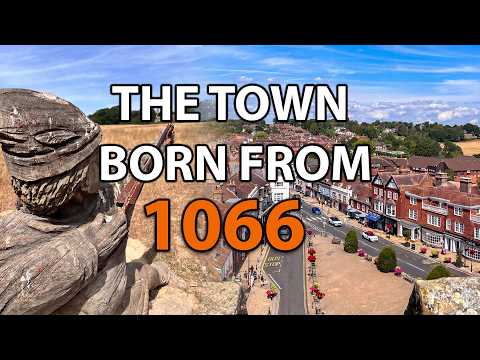
The Town Born from the Battle of Hastings 1066 - Battle East Sussex
Open in PlaceTube Watch on YouTube
Places in this video
- Battle Abbey ▶ 1:21
The presenter explains that Battle Abbey sits at the heart of the town, cared for by English Heritage, built around 1071 and paid for largely by William the Conqueror.
- Battlefield of Hastings (Senlac Hill) ▶ 1:40
Walking down into the valley and up Senlac Hill, the presenter recounts the 1066 battle, the shield wall, William's feigned retreats and the death of King Harold.
- Harold Stone ▶ 8:25
Set into the gravel on the abbey terrace, the Harold stone marks the site of the high altar, said to sit exactly where King Harold was cut down.
- Great Gatehouse ▶ 10:11
The presenter describes the imposing Great Gatehouse and defensive walls built around 1338, and later climbs to the top for views over Abbey Green and the High Street.
- Burton's ▶ 13:05
The presenter stops for lunch at Burton's, a restaurant in a 16th-century timber-framed building overlooking Abbey Green, and enjoys Coronation chicken sandwiches.
- Abbey Green ▶ 14:35
The presenter shows the pretty green where the old bull ring stood, where people gather for bonfire night, and where the abbey's weekly market and fairs were held.
- St Mary the Virgin Church ▶ 16:10
Founded between 1107 and 1124 as the townsfolk's church, the presenter points out its Norman origins, 13th-century roof timbers, faded wall paintings, crusader graffiti and the Browne tomb.
- Abbey Hotel ▶ 19:01
Flanking Abbey Green, the Abbey Hotel traces its origins to the 16th and 17th centuries and served as a coaching inn and civic gathering place.
- Pilgrim's Rest ▶ 19:17
One of the finest surviving Wealden Hall Houses in Sussex, dating to the early 15th century, it traditionally sheltered pilgrims bound for Harold's high altar and is now a wedding venue.
- 1066 Monument ▶ 22:35
Unveiled in 2016 for the 950th anniversary, the sculpture on the roundabout shows a Norman cavalryman fighting a Saxon warrior, with glass mosaic shields made with local schoolchildren.
- The Almonry ▶ 23:11
A 15th-century timber-framed building near the top of the High Street, named after the abbey almoner, now serving as the town council offices and local museum.
- Mount Street ▶ 23:46
The presenter walks this architecturally intact residential lane with jettied timber frames, tile roofs and chimney stacks, once the site of the town's open marketplace.
- Old Lady's Court ▶ 26:01
A picturesque pedestrianised medieval courtyard off Mount Street, now housing independent boutiques and a cafe.