 PlaceTube
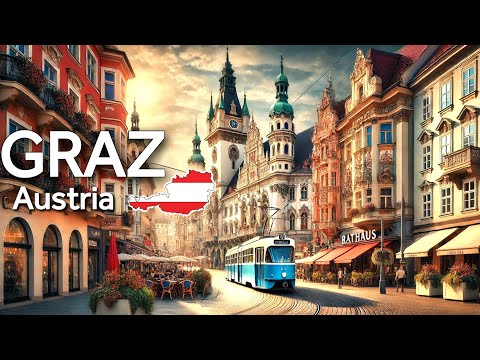
🇦🇹 Graz, Austria’s Second-Largest City After Vienna –A Hidden Treasure-4K Video 60fps with Captions
Open in PlaceTube Watch on YouTube
Places in this video
- Herrengasse ▶ 3:55
The presenter describes Herrengasse as one of Graz's most iconic streets in the historic center, lined with old buildings, boutiques, cafés and restaurants.
- Church of the Holy Blood ▶ 4:21
The presenter notes the Church of the Holy Blood is the city's main parish church and a significant Roman Catholic landmark.
- Hauptplatz ▶ 9:42
The presenter calls Hauptplatz Graz's central hub and one of the most vibrant spots in the city, surrounded by historic buildings, cafés and shops.
- Equestrian Statue of Archduke Johann ▶ 9:57
The presenter points out the equestrian statue of Archduke Johann at the center of the main square as a prominent symbol of Graz.
- Graz Town Hall ▶ 10:50
The presenter describes the Town Hall as an impressive Renaissance Revival landmark with an elegant façade in the heart of the city.
- Franziskanergasse ▶ 15:41
The presenter calls Franziskanergasse a charming, quiet historic street near the Franciscan Church, ideal for a peaceful walk.
- Franciscan Church and Monastery ▶ 20:28
The presenter describes the Franciscan Church and Monastery as one of Graz's oldest landmarks, offering a peaceful retreat near the Mur River.
- Schmiedgasse ▶ 27:55
The presenter explains Schmiedgasse is a picturesque old-town street named after medieval blacksmiths, now a main shopping street with cafés and restaurants.
- Advent Lounge ▶ 31:42
The presenter describes the Advent Lounge on Schmiedgasse as a cozy December spot with mulled wine, hot drinks and stalls selling Christmas decorations and crafts.
- Mariensäule ▶ 34:07
The presenter points out the Baroque Marian Column at the southern end of Herrengasse near Jakominiplatz.
- Burgergasse ▶ 34:45
The presenter describes Burgergasse as a charming street with boutiques, cafés and Baroque and Renaissance facades, good for local dishes like Wiener Schnitzel and Sachertorte.
- Graz Cathedral ▶ 41:38
The presenter visits Graz Cathedral (Dom St. Ägidius), highlighting its Gothic architecture, stained glass windows, side altars and organ.
- Mausoleum of Ferdinand II ▶ 42:52
The presenter describes the Mausoleum of Ferdinand II next to the cathedral as the Baroque resting place of the Holy Roman Emperor and other Habsburgs.
- Freiheitsplatz ▶ 55:35
The presenter notes Freiheitsplatz, or Freedom Square, has hosted public gatherings, festivals, markets and open-air concerts throughout Graz's history.
- Hofgasse ▶ 56:15
The presenter describes Hofgasse as a historic old-town street near the cathedral and mausoleum, lined with Baroque and Renaissance buildings.
- Sporgasse ▶ 58:22
The presenter calls Sporgasse one of the oldest and most charming streets, connecting Hauptplatz with the Schlossberg and lined with shops and cafés.
- Murgasse ▶ 1:01:50
The presenter describes Murgasse as a lively street connecting Hauptplatz with the Mur River, leading to the Archduke Johann Bridge, Murinsel and Kunsthaus.
- Kunsthaus Graz ▶ 1:06:20
The presenter calls the Kunsthaus Graz, nicknamed the 'Friendly Alien', a futuristic modern art museum and one of the city's most iconic landmarks.
- Mariahilferstraße ▶ 1:07:05
The presenter walks the vibrant Mariahilferstraße on the west bank of the Mur, opposite the Old Town, with the Mariahilf Church tower in view.
- Mariahilf Church ▶ 1:12:00
The presenter describes the Baroque Mariahilf Church with its twin towers as a key landmark dating to the 17th century.
- Lendplatz ▶ 1:15:52
The presenter describes Lendplatz as a lively, historically rich square in the trendy, diverse Lend district known for local markets.
- Maria Stromberger Gasse ▶ 1:20:24
The presenter walks Maria Stromberger Gasse in the northern residential part of the city, noting a building that houses a kindergarten and nursery.
- Schlossberg ▶ 1:32:45
The presenter points out Schlossberg Hill in the distance and later rides the lift up for panoramic views of the city.
- Mur River ▶ 1:34:34
The presenter explains the Mur River flows through Graz, originating in the Alps and eventually joining the Drava in Slovenia.
- Murinsel ▶ 1:38:47
The presenter describes the Murinsel as a futuristic floating island on the Mur serving as a pedestrian bridge and café with a small stage.
- Schlossberggasse ▶ 1:43:30
The presenter describes Schlossberggasse as the main route up to the Schlossberg, with shops, cafés and access to the funicular, cable car and lift.
- Schlossberg Lift ▶ 1:46:40
The presenter buys a ticket and rides the Schlossberg Lift through a rock tunnel to the top, noting the grotto and the underground slide inside.
- Schlossberg Slide ▶ 1:48:39
The presenter mentions the Schlossberg Slide, a 175-meter underground ride through the hill reaching speeds up to 25 km/h.
- Uhrturm ▶ 1:48:55
The presenter stands before the Uhrturm, the city's most iconic landmark, known for its distinctive clock face and views over Graz.
- Schlossberg Castle ▶ 1:58:31
The presenter describes the castle atop Schlossberg Hill as a fortress dating to the 12th century that defended Graz during wars including the Ottoman invasions.
- Arnold Schwarzenegger Birthplace Museum ▶ 2:01:22
The presenter notes Arnold Schwarzenegger was born in Thal near Graz, where his childhood home is now a museum and a statue honors him.
- Chinese Pavilion ▶ 2:06:31
The presenter describes the 19th-century Chinese Pavilion in Schlossberg Park as a quiet place to relax with views of the city.
- Schlossberg Museum ▶ 2:11:00
The presenter says the Schlossberg Museum covers the hill's history and fortifications, including the castle's destruction in the Napoleonic Wars in 1809.