 PlaceTube
PNYX HILL MEGALITHS - ATHENS GREECE
Open in PlaceTube Watch on YouTube
Places in this video
- Areopagus Hill ▶ 1:39
The presenter begins the tour at the Areopagus, a 115 m rocky outcrop that served as the meeting place of the earliest aristocratic council of elders before the 5th century BC, and notes it offers the most mesmerizing view of the Acropolis.
- Acropolis of Athens ▶ 4:25
Standing on the Areopagus, the presenter points to the Acropolis just 500-600 m behind her, calling it the most iconic place in Greece whose every structure influenced Western civilization.
- Pnyx ▶ 6:31
The presenter explores the Pnyx, the meeting place of the Athenian assembly where orators like Themistocles and Aristides spoke; its name means 'tightly packed together' because up to 13,000 participants could see and hear the speakers.
- Sanctuary of Zeus Hypsistos ▶ 7:19
The rock-cut niches on the eastern side of the bema are remains of the sanctuary of Zeus Hypsistos from the Roman period, where the largest niche probably held a statue of Zeus and smaller ones held plaques, many depicting human body parts.
- Pnyx Retaining Wall ▶ 7:54
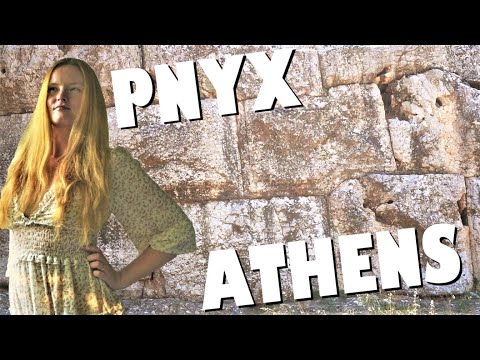
The presenter walks along the massive retaining wall on the northern side of the Pnyx, built in the second half of the 4th century BC, and argues its polygonal stones look much older, resembling Bronze Age Cyclopean walls.
- Socrates' Prison ▶ 15:49
On the slope of Filopappou Hill the presenter visits the cave known as the prison of Socrates, where the philosopher was allegedly held before his trial in 399 BC, though she notes there is no hard evidence for this.
- Tomb of Kimon ▶ 17:54
On the main pathway over Filopappou Hill the presenter points out an empty rock-cut tomb from the 5th century BC that originally belonged to Kimon, the celebrated Athenian statesman and general.