 PlaceTube
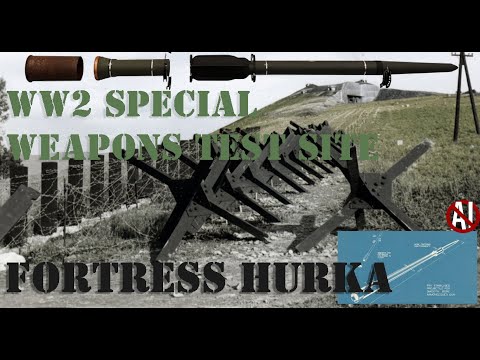
WW2 Fortress Hurka. German Special Weapons test-bed.
Lost Battlefields w Tino Struckmann ·
Open in PlaceTube Watch on YouTube
Places in this video
- Museum of Czechoslovak Fortifications (Infantry Blockhouse KS-14) ▶ 0:51
The presenter recalls visiting this museum of Czechoslovak fortifications in the blockhouse KS-14 just below the hill on a previous trip.
- Infantry Block KBgS-13 ▶ 3:34
The second largest infantry block of the Czechoslovak line, poured in nine days in 1937, with a 40 m shaft and 222 steps; the Germans used it as a target for casemate gun and 47 mm anti-tank tests.
- Fortified Block KBgS-12 ▶ 6:02
This block housed a retractable rotating gun turret weighing over 440 tons, armed with two 10 cm howitzers and able to dominate 448 square kilometers of the valley.
- Artillery Block KBgS-11 ("Pin Cushion") ▶ 12:20
The largest combat installation of the Czechoslovak system, 48 m long with three 10 cm casemate howitzers; it became the test bed for the Röchling shell, with impacts over 210 mm deep.
- Nazi-era forced labor camp barracks ▶ 14:46
Under the trees are the remains of wooden barracks on concrete foundations from a Nazi-era forced labor camp, whose workers produced engines and parts for the German army.
- Artillery Fort Hůrka (Horka) ▶ 17:12
The presenter enters the underground artillery fort built 1936-1938, with its entrance bunker, 20-ton steel gate, narrow-gauge railway, filter rooms, engine room and barracks tunnels.
- Emergency exit shaft of Hůrka ▶ 37:08
The presenter is shown the long emergency exit shaft with its curve and stairs, which is frequently forbidden to climb.
- Röchling shell ▶ 55:10
The presenter explains the German subcaliber bunker-busting Röchling shell, its fin-stabilized dart design, its penetration of over 4 m of reinforced concrete, and its link to the V3 cannon.