 PlaceTube
I Spent Months Investigating the Barabar Caves. Here's What I Found
Open in PlaceTube Watch on YouTube
Places in this video
- Barabar Caves ▶ 0:53
Seven rock-cut caves carved into twin granite hills in remote Bihar, reached on foot, with mirror-polished walls, barrel-vaulted ceilings and long reverberating echoes.
- Gopika Cave ▶ 2:44
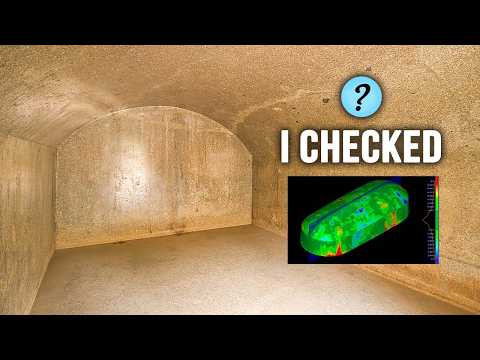
Laser scans show about 50.5% of its surface deviations fall within 5mm, ceiling radii offset by 9 cm and side walls leaning at 87 degrees; a 5th–6th century Sanskrit addition appears in its passageway.
- Vadathika Cave ▶ 3:19
Its barrel-vault ceiling radius varies between 2.02 and 2.25 meters, with long walls at roughly 87 degrees and short end walls at 89; its reverberation peaks at 63 Hz.
- Vapiyaka Cave ▶ 3:35
The vault radii differ by 2 cm and floor widths fluctuate by 1 cm, showing precision that is masterful but not mathematically perfect.
- Karan Chaupar Cave ▶ 3:52
The junction where wall meets floor is bumpy and far from perfect; a Gupta-period inscription from 320–550 CE labels it 'The Cave of Beggars.'
- Sudama Cave ▶ 3:52
Two corners are slanted at varying angles and the walls pitch over one degree from perpendicular; it is inscribed by Ashoka and its dome reverberates at both 50 and 80 Hz.
- Lion Capital of Ashoka ▶ 6:12
Cited as an example of the same Mauryan polish seen at Barabar; it is the sculpture India uses as its national emblem.
- Didarganj Yakshi ▶ 6:20
A life-sized sandstone figure in the Bihar Museum, still gleaming after 2,300 years, showing the same Mauryan polish as the caves.
- Bihar Museum ▶ 6:32
The museum notes that the Mauryan polish appears to have been an imported technique, since Achaemenid Persian masonry shows the same characteristics.
- Persepolis ▶ 7:33
Alexander the Great burned Persepolis and dismantled the Achaemenid administration, putting the craftsmen who built and polished it out of work — the craft transfer that explains the Mauryan polish.
- Sitamarhi Cave ▶ 10:14
A small cave carved in isolation inside a single massive granite boulder about 15 miles from Barabar, with the same barrel-vaulted ceiling and polished finish, attributed to Jainism in the Mauryan period.
- Lomas Rishi Cave ▶ 13:31
The most elaborate exterior at Barabar, with a carved arched facade and a frieze of marching elephants, but inside the ceiling is raw with chisel marks and the floor unfinished — a construction site frozen mid-process.
- Vishwa Jhopri Cave ▶ 17:22
Inscribed by Ashoka and the least visited of the group, so the best preserved; its inscriptions are sharp, deep and comparable in quality to those on Ashoka's polished pillars.
- Nagarjuni Caves ▶ 17:35
Three virtually identical caves on the neighboring hill, about 150 m away, all inscribed not by Ashoka but by his grandson Dasharatha roughly 30 years later.
- Karla Caves ▶ 26:14
Cited as part of the same rock-cut architectural tradition scaled up dramatically, showing the craft continuum the Barabar caves fit into.
- Bedse Caves ▶ 26:14
Mentioned alongside Karla as evidence that the rock-cut tradition continued and scaled up in western India.
Cities in these videos
Barabar Hills · Sarnath · Patna · Marvdasht · Lonavala · Pune