 PlaceTube
Barcelona, Spain ☀️ Gràcia to City Center | 4K Walking Tour
Open in PlaceTube Watch on YouTube
Places in this video
- Gràcia ▶ 1:30
The presenter calls Gràcia his most beloved neighborhood in Barcelona and uses it as the starting point for the walk.
- Casa Vicens ▶ 1:45
Gaudí's first major project, built 1883–1885, blending Neo-Mudéjar and oriental influences; it became a World Heritage Site in 2005.
- Gran de Gràcia Street ▶ 4:30
A street lined with modernist houses, described as Passeig de Gràcia's little brother; on weekends it closes to cars for the Obrim Carrers event.
- Astúries Street ▶ 14:55
One of Gràcia's liveliest streets, full of shops and great food, more walkable and relaxed than Travessera de Gràcia.
- Mistral ▶ 16:50
A traditional bakery on Astúries Street that the presenter cites as an example of Gràcia's excellent bread.
- Baluard ▶ 16:57
A more modern bakery with several locations across Barcelona, mentioned as an alternative to traditional bakeries.
- Diamant Square ▶ 18:55
Made famous by Mercè Rodoreda's novel La plaça del Diamant; the statue La Colometa honors the heroine, and a Civil War air-raid shelter was found beneath it in 1992.
- Plaça de la Virreina ▶ 23:00
Built in 1878, this square keeps its small-town charm and is a favorite of Gràcia residents; locals still call it Plaça de Sant Joan after the 1884 church.
- Verdi Street ▶ 28:45
One of Gràcia's busiest streets, a cultural hub with Cinemes Verdi, galleries, design shops, bars and restaurants; it has won the Festes de Gràcia decoration contest many times.
- Revolució Square ▶ 31:34
Once unpaved, now with reddish slabs and a children's play area; a hidden Civil War air-raid shelter was discovered beneath it during a 1995 remodel.
- Plaça del Sol ▶ 34:50
Built in 1840, one of Gràcia's favorite meeting spots, with the Astrolabi sculpture, Cafè del Sol and Sol Soler tapas bar; reachable from Carrer de la Lluna or Carrer del Planeta.
- Cafè del Sol ▶ 35:37
A café on Plaça del Sol that keeps its vintage charm.
- Sol Soler ▶ 35:37
A spot on Plaça del Sol serving popular fusion tapas.
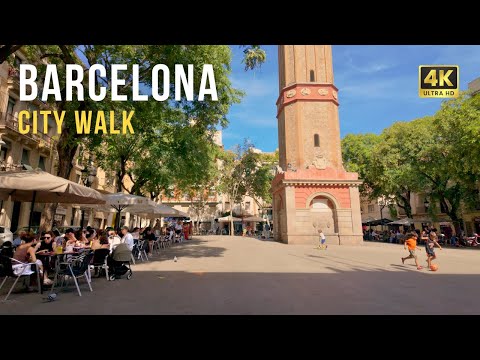
- Plaça de la Vila de Gràcia ▶ 40:30
The square has had four official names and witnessed the 1870 Conscripts' Revolt; its 33-meter bell tower was built 1862–1864 by Antoni Rovira i Trias, and the former town hall by Francesc Berenguer stands out with its sky-blue façade.
- Casa Fuster ▶ 55:06
An elegant building by Lluís Domènech i Montaner (1908–1911), a gift from Mariano Fuster to his wife, with white marble, pink columns and a corner turret; it once housed Cafè Vienès and is now a luxury hotel.
- Casa Comalat ▶ 1:00:40
Designed by Salvador Valeri i Pupurull in 1909, famous for vivid colors, curved balconies and playful asymmetry inspired by Gaudí.
- Palau Baró de Quadras ▶ 1:13:30
A Modernist palace by Josep Puig i Cadafalch (1904–1906) with a Gothic Revival balcony and floral motifs on the rear façade on Carrer Rosselló.
- La Pedrera (Casa Milà) ▶ 1:19:28
Gaudí's celebrated work completed in 1912, nicknamed "the stone quarry" for its undulating stone façade and designed with no straight lines.
- Passeig de Gràcia ▶ 1:20:54
Barcelona's most elegant avenue, a showcase of modernist architecture that began as a road to Gràcia and became the city's most prestigious boulevard in the 19th century.
- Block of Discord ▶ 1:29:25
A famous stretch of Passeig de Gràcia where Casa Batlló, Casa Amatller and Casa Lleó Morera stand side by side, each by a different top architect.
- Casa Batlló ▶ 1:30:04
One of Gaudí's most famous creations, with organic interiors, colorful mosaics, bone-like balconies ("House of Bones") and a roof resembling a dragon's back.
- Casa Amatller ▶ 1:31:14
Designed by Josep Puig i Cadafalch in the early 20th century for chocolatier Antoni Amatller, preserving many original decorative details inside.
- Plaça de Catalunya ▶ 1:32:00
The city center where the walk down Passeig de Gràcia ends, in the heart of Barcelona.