 PlaceTube
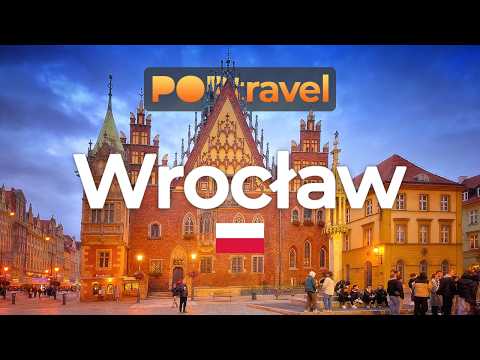
WROCLAW, Poland - Walking Tour - 4K HDR
Open in PlaceTube Watch on YouTube
Places in this video
- Bolesław I the Brave Monument ▶ 1:08
The bronze equestrian statue of Bolesław I the Brave, the first King of Poland, unveiled in 2007, serves as the starting point of the walk.
- Świdnicka Street ▶ 1:53
One of the oldest routes in the city, running south from the Market Square toward the railway station, and the main artery of the walk.
- Compass Rose ▶ 2:08
A stone compass set in 1997 on the pavement, pointing to partner cities like Dresden and Lviv with distances in kilometres.
- Pogodynka ▶ 2:23
A 19th-century cast-iron weather column from the 1880s that once showed temperature, pressure and forecasts.
- Corpus Christi Church ▶ 2:39
A Gothic brick church just off Świdnicka Street, begun around 1320, with Baroque altars and a nave around 25 to 27 metres high.
- Wrocław Opera ▶ 3:21
The opera house on Świdnicka Street, opened in 1841 and designed by Carl Ferdinand Langhans, with seating historically quoted at about 1,600.
- Opera Singer Dwarf ▶ 3:53
A bronze dwarf near the opera house wearing a helmet and singing with a raised score, part of the city's 600-plus dwarf statues.
- Hotel Monopol ▶ 4:35
A grand hotel at Świdnicka Street 33, opened in 1892, once hosting Thomas Mann and Pablo Picasso, renovated and reopened in 2009.
- Church of Sts. Stanislaus, Dorothy and Wenceslaus ▶ 5:46
A tall Gothic church near Świdnicka Street, founded in 1351, with a main tower reaching about 73 metres.
- Sisyphus Dwarfs ▶ 9:10
Two bronze dwarfs installed in 2005 on Świdnicka Street, pushing a stone ball in opposite directions as a nod to the myth of Sisyphus.
- Market Square ▶ 9:30
One of Europe's largest medieval squares, the wide heart of the old town, surrounded by rebuilt townhouses and the Gothic City Hall.
- Wrocław City Hall ▶ 9:41
The Gothic City Hall built from the 13th to 16th century, with a tower about 66 metres high, late Gothic forms from around 1470 to 1510, and a famous bell dated 1368.
- Oławska Street ▶ 9:57
A largely pedestrian shopping axis running east from the Market Square, busy until late evening.
- Galeria Dominikańska ▶ 10:02
A shopping mall opened in 2001 at the far end of Oławska Street, with around 100 shops near the former Dominican monastery site.
- Piwnica Świdnicka ▶ 10:29
One of Europe's oldest restaurants, first noted in 1273, located inside the City Hall.
- St Elizabeth's Church ▶ 13:47
A Gothic church on the northwest corner of the Market Square, dating mainly from the 14th and 15th centuries, with a tower about 91.46 metres high and a viewing platform.
- Zdrój Fountain ▶ 14:19
A modern fountain of granite and glass plates installed in 2001 on the Market Square near the City Hall, designed by Alojzy Gryt.
- Suitcase Dwarf ▶ 15:41
A small dwarf carrying a suitcase, as if ready for a trip, spotted near the Market Square streets.
- Aleksander Fredro Monument ▶ 16:47
A bronze statue of the comedy writer Aleksander Fredro on the south side of the Market Square, unveiled in 1956 after being moved from Lwów.
- Salt Square ▶ 18:13
A quieter square just west of the Market Square where salt was traded in medieval times, now known for its 24-hour flower stalls and Christmas Market.
- Iglica ▶ 19:20
A slender, pointed steel artwork installed in 1996 in the middle of Salt Square, designed by Adam Wyspiański.
- Kiełbaśnicza Street ▶ 20:32
A street near the Market Square that once housed medieval sausage sellers.
- St Nicholas Street ▶ 22:19
A busy street running along the north side of the Market Square, beside St Elizabeth's Church.
- Jaś ▶ 22:54
A small white 15th-century house at the corner by St Elizabeth's Church, part of the pair called Jaś i Małgosia, once altarist residences and now hosting cultural offices and exhibitions.
- Więzienna Street ▶ 24:18
A street leading north toward the University of Wrocław, named Prison Street after a medieval jail once located here.
- University of Wrocław ▶ 24:38
The university traces its roots to 1702 under Leopold I, merged with Viadrina in 1811, and today has about 20,000 to 21,000 students across 10 faculties.
- University of Wrocław Museum ▶ 27:08
A museum inside the main university building, including the Baroque Aula Leopoldina completed in 1732, the Oratorium Marianum and the Mathematical Tower with views over the Odra.
- Odra Południowa ▶ 27:50
A branch of the Odra River flowing along the university embankment, part of a river system splitting across more than 10 islands.
- Ostrów Tumski ▶ 28:06
The oldest part of Wrocław, dating back to the 10th century, where gas lamps are still lit by hand each evening by a lamplighter.
- Fencer Fountain ▶ 28:55
A fountain unveiled in 1904 in front of the university, showing a young fencer holding a foil upright; students often rub his foot before exams for luck.
- Church of the Holy Name of Jesus ▶ 29:49
A Baroque Jesuit church next to the university building, built between 1689 and 1698, with frescoes by Johann Christoph Handke from 1734.
- Museum of Man ▶ 30:10
A museum near the university presenting anthropological collections on human evolution and skeletal research.
- Kuźnicza Street ▶ 30:43
A street between the university and the Market Square, used as a point to discuss Wrocław's sister city partnerships.
- Wita Stwosza Street ▶ 33:56
A street through the historic centre, used to introduce the city's districts like Śródmieście and Krzyki.
- Cathedral of St Mary Magdalene ▶ 34:34
A Gothic church dating from the 14th century, with two towers linked by the Bridge of Penitents at about 45 metres high.
- Wrocław Municipal Stadium ▶ 35:12
The stadium that hosted UEFA Euro 2012 matches, holding around 42,000 spectators and home to Śląsk Wrocław.
- Pillory ▶ 38:32
A pillory on the south side of the Market Square, originally from 1492, destroyed in 1945 and reconstructed in 1985, where offenders were chained for public punishment.