 PlaceTube
Experience the REAL KICHWA Culture in OTAVALO ECUADOR
Open in PlaceTube Watch on YouTube
Places in this video
- Otavalo ▶ 0:25
The presenter introduces Otavalo in northern Ecuador as the home of the Kichwa indigenous people, one of the country's largest and most culturally influential native groups.
- Josefina and Emanuel's weaving workshop ▶ 3:24
The presenter visits the workshop of Kichwa weavers Josefina and Emanuel, a husband-and-wife team who make textiles for retail sale and teach their backstrap loom weaving skills.
- Plaza de los Ponchos ▶ 5:46
The presenter shops at Plaza de los Ponchos, which she calls the largest outdoor artisan market in South America, known for ponchos and handwoven products.
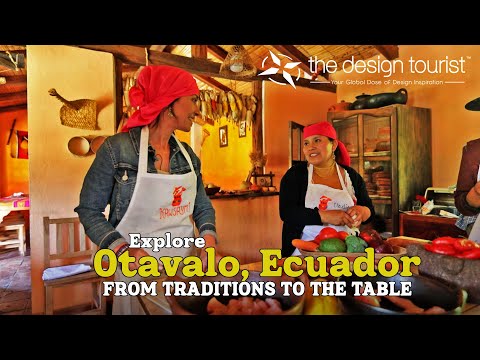
- Claudia's cooking school and restaurant ▶ 9:08
Kichwa chef Claudia runs a restaurant and cooking school whose name means 'it is our life'; she teaches ancestral recipes like chicken chimichurri and empanadas, and serves chicha de jora.
- Bagüeche ▶ 15:08
The presenter heads to Baguche, a community home to many musicians and artisans who craft the bamboo instruments behind Andean music.
- Segundo Lima's instrument workshop (Casa de Música Andina) ▶ 15:44
Musician Segundo Lima welcomes the presenter to his workshop filled with handcrafted bamboo wind instruments and teaches her to make a coco, a bamboo whistle.
- Arte Naya ▶ 19:06
Mother-daughter duo Monica and Nia run Arte Naya, a dream catcher workshop in their home that employs indigenous women to harvest willow vines, feathers and beads; the presenter weaves her own dream catcher.
- Pan-American Highway ▶ 20:55
The presenter drives the Pan-American Highway connecting Quito with Otavalo, a roughly 1.5 to 2 hour ride lined with signs advertising bizcochos.
- Intiñan Solar Museum ▶ 22:12
A short detour takes the presenter to the Solar Museum, which presents Ecuador's equator line scientifically, with a large sundial tube you can walk inside at latitude 0-0-0-0.
- Cayambe ▶ 24:53
The presenter passes through Cayambe in Pichincha Province, about 43 miles northeast of Quito, known for growing some of the world's finest roses.
- Hacienda El Molino San Juan ▶ 25:10
The presenter visits Hacienda El Molino San Juan, a former Jesuit estate now a restaurant, museum and hotel, with an 1890s hydraulic mill, a rose showroom and a four-century-old soup recipe called uchujaku.
- Former Jesuit compound at Hacienda El Molino San Juan ▶ 27:57
Down the road from the hacienda lies the former Jesuit compound where the order lived, worshiped and worked, with a storage room, a little chapel and 300-year-old embroidered ceremonial robes.
- Hotel Otavalo ▶ 30:37
The presenter stays at Hotel Otavalo, decorated with local artisan crafts and home to one of the largest collections of works by Ecuadorian artist Oswaldo Guayasamín; she dines pampa mesa style in its basement restaurant.
- San Pablo Lake ▶ 31:58
The presenter heads down a dirt road to San Pablo Lake at the base of Imbabura volcano, an iconic landmark tied to indigenous traditions and folklore, where she boards a reed boat for a breakfast cruise.
- Imbabura Volcano ▶ 32:01
Kevin explains that the surrounding volcanoes are entities watching over the people: Imbabura is the father, Cotacachi the mother, and Mojanda the grandfather.